

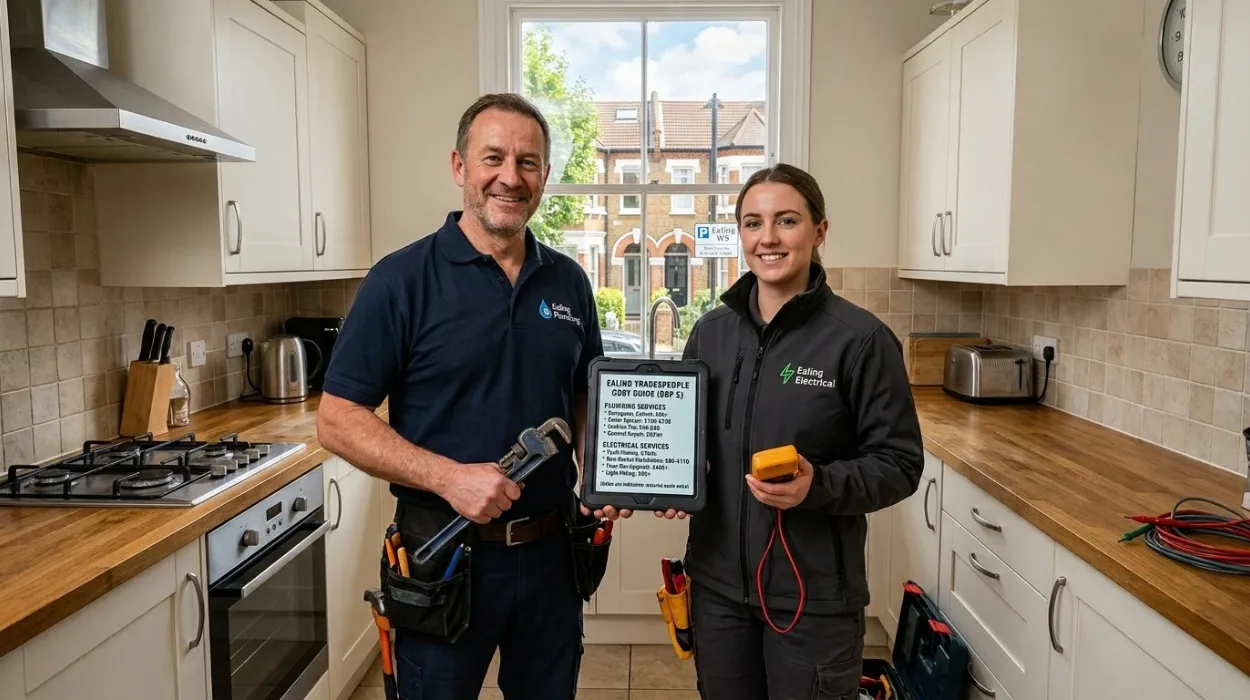
The cost of hiring a tradesperson in Ealing can vary considerably depending on the type of work, urgency, property, materials required and experience of the professional. A straightforward plumbing repair may cost far less than replacing a boiler, while an electrician installing a new consumer unit or carrying out a full rewiring project will usually charge much more than someone fitting a light.
For homeowners, tenants, landlords and people moving into the area, understanding typical tradesperson pricing can make it easier to plan household maintenance and avoid unexpected costs. Ealing includes areas such as Ealing Broadway, West Ealing, South Ealing, Acton, Hanwell, Northfields, Perivale, Greenford and Northolt, where property types and the age of buildings can also influence the complexity of work.
Rather than looking for one fixed hourly rate, it is more useful to understand how plumbers and electricians usually structure their charges and what can make a job more expensive.
What Affects Tradespeople Charges In Ealing?
Tradespeople do not necessarily charge the same amount for every visit. The final price can depend on several factors, including labour, materials, travel, access, job complexity and whether the work is required urgently.
An experienced professional may charge more per hour but complete a complicated job considerably faster. A cheaper hourly rate does not automatically mean a cheaper overall job.
The type of property also matters. Older homes in parts of Ealing may have ageing plumbing systems, outdated wiring, restricted access or previous alterations that make apparently simple work more complicated.
For example, replacing an accessible tap may be relatively straightforward. Repairing a leak underneath a fitted kitchen, however, could involve removing cupboards or flooring before the actual fault can be reached.
How Much Do Plumbers Charge In Ealing?
Plumbers in Ealing may charge by the hour, by the job or through a combination of a call-out fee and labour charge.
For smaller jobs, customers may receive a fixed price. Larger repairs are more likely to require an inspection before an accurate quotation can be provided.
Typical plumbing work includes repairing leaking taps, replacing toilets, fixing pipes, unblocking drains, repairing radiators and dealing with water leaks. More substantial work can include boiler-related plumbing, bathroom installation and central-heating alterations.
A useful way to compare plumbers is to ask whether the quoted price includes labour, VAT where applicable, materials and the initial call-out. A quote that appears inexpensive may become considerably higher if these costs are added separately.
Emergency plumbing can also cost more. A burst pipe discovered late at night, during a weekend or on a bank holiday may attract an emergency or out-of-hours charge because the plumber is providing immediate availability.
What Do Electricians Charge In Ealing?
Electrician pricing works in a similar way, although electrical jobs can vary dramatically in complexity.
A simple task such as replacing a light fitting may require considerably less time than installing additional sockets, upgrading a consumer unit or rewiring part of a property.
Electricians may charge an hourly rate, a minimum attendance fee or a fixed price for specific work. Some jobs require an assessment before a final price can be provided because the electrician needs to inspect the existing installation.
Common electrical jobs include installing sockets, replacing light switches, fitting lighting, investigating electrical faults, installing outdoor electrical equipment and carrying out electrical inspections.
More extensive work such as partial or complete rewiring can involve significant labour, materials and disruption. The age and condition of the existing wiring are important considerations when estimating the cost.
Emergency Call-Outs Can Cost More
One of the biggest differences between routine and urgent tradesperson pricing is the call-out.
If a toilet is leaking slightly, a socket needs replacing or a radiator is not working properly, you may have time to obtain several quotations. A serious water leak or electrical fault can require immediate attention.
Emergency plumbers and electricians may therefore charge additional fees for evening, overnight, weekend or bank holiday attendance.
This does not necessarily mean that an emergency price is unreasonable. The tradesperson is providing availability outside normal working hours and may need to rearrange other work.
Before agreeing to emergency work, ask what the call-out includes, whether there is a minimum charge and whether the hourly rate changes after the initial attendance.
Common Plumbing Jobs And Their Pricing Factors
Different plumbing jobs require different levels of skill and preparation.
A dripping tap may appear simple, but the cost can depend on whether the washer or cartridge can be replaced or whether the entire fitting needs to be changed.
A blocked sink may also have different costs depending on where the blockage is located. A local blockage that can be cleared quickly is different from a deeper drainage problem requiring specialist equipment.
Boiler problems are another category where customers should avoid relying on a basic hourly rate alone. Diagnosis, replacement parts, labour and the type of boiler can all affect the final cost.
Bathroom work tends to be more expensive because it can involve several trades and materials. Installing a new bathroom may involve plumbing, electrical work, tiling, flooring and sometimes building alterations.
Common Electrical Jobs And Their Pricing Factors
Electrical work can range from small household repairs to major installation projects.
Replacing a light fitting may be relatively straightforward if the existing wiring is suitable. Adding new sockets can be more involved because the electrician may need to access walls, floors or existing circuits.
Consumer unit upgrades can involve inspection of existing circuits and testing after installation. The final price can therefore depend on the condition of the electrical installation rather than simply the time needed to fit the new equipment.
Rewiring is significantly more complex. The size of the property, number of circuits, accessibility, wall construction and amount of making-good required can all affect the overall cost.
Why Two Tradespeople May Give Different Quotes
It is normal for two reputable tradespeople to provide different prices for the same job.
One professional may have lower overheads, while another may have more experience with a particular type of property or specialist equipment. One quote may include materials and finishing work while another may cover labour only.
For this reason, homeowners should compare quotations based on what is included rather than choosing the lowest number automatically.
A useful quotation should make the scope of work clear. For example, if an electrician is installing several sockets, the quote should explain how many sockets are included, whether materials are included and whether decorating or making-good is part of the work.
How To Get A Fair Quote In Ealing
Before contacting a tradesperson, describe the problem as clearly as possible. Photographs can sometimes help a professional understand the situation before visiting.
Ask whether there is a call-out fee and whether the initial assessment is chargeable. For larger jobs, request a written quotation explaining the work and materials.
It is also sensible to ask when the work can be completed and whether there are circumstances that could increase the quoted price.
For substantial projects, obtaining more than one quotation can provide a better understanding of the local market. However, quotes should be compared on quality, qualifications, insurance, scope and guarantees as well as price.
Choosing A Plumber Or Electrician Safely
Price should never be the only consideration when hiring a tradesperson.
Electrical work can present serious safety risks if carried out incorrectly. Certain electrical work may also have specific certification and notification requirements depending on the nature and location of the installation.
For gas-related work, customers should ensure that the professional has the appropriate credentials for the work being undertaken.
Homeowners should also check reviews, references, insurance and relevant qualifications. A professional who clearly explains the work and provides transparent pricing can be preferable to someone offering an unusually low quote without explaining what is included.
A Practical Example For An Ealing Homeowner
Imagine a homeowner in West Ealing discovers water underneath a kitchen sink.
If the leak is coming from an easily accessible connection, a plumber may be able to identify and repair it relatively quickly. If the leak has damaged the cupboard, flooring or concealed pipework, the job may take considerably longer.
Now consider an electrical issue in the same property. If one light fitting has stopped working, the electrician may identify a faulty fitting or connection. If several circuits are repeatedly tripping, however, investigation could be required to identify an underlying electrical fault.
These examples demonstrate why online price estimates should be treated as guidance rather than guaranteed quotations.
Should You Choose An Hourly Rate Or Fixed Price?
Neither pricing model is automatically better.
An hourly rate can work well when the amount of work is uncertain because the tradesperson can charge for the actual time spent. However, customers should understand the minimum charge and whether materials are additional.
A fixed price provides greater certainty when the scope of work is clear. It can be particularly useful for defined installations or straightforward repairs.
For complicated jobs, a quotation based on an inspection is often more useful than trying to estimate the total cost from an hourly rate.
How Ealing Property Type Can Influence Costs
Property characteristics can have a surprisingly large effect on tradesperson pricing.
A modern flat with accessible services may be easier to work on than an older terraced or semi-detached property where pipes and cables are concealed behind walls or floors.
Access is another consideration. Parking restrictions, narrow access, upper-floor flats and limited working space can increase the time required for certain jobs.
For landlords and property managers, repeated maintenance issues can also make preventative inspections worthwhile. Fixing a small plumbing or electrical problem before it develops into a major fault can potentially reduce disruption and repair costs.
What Should You Ask Before Hiring A Tradesperson?
Before accepting a quotation, ask:
- Is the price fixed or hourly?
- Is there a call-out charge?
- Are materials included?
- Is VAT included where applicable?
- Is there a minimum labour charge?
- Will emergency or out-of-hours rates apply?
- Is the work guaranteed?
- What qualifications or certifications are relevant?
- Will the tradesperson provide documentation after the work?
- Could additional costs arise if an underlying problem is discovered?
These questions make it easier to compare different quotations fairly.
Are Tradespeople In Ealing Expensive?
Ealing is part of West London, so local household service costs can reflect wider London labour and operating costs. However, there is no single standard price for plumbers or electricians across the borough.
The most important factors are the job itself, urgency, materials, accessibility, professional experience and whether specialist equipment or certification is required.
For a minor repair, the total cost may be relatively manageable. Larger projects such as bathroom renovations, boiler-related work, consumer unit upgrades or rewiring can require substantially larger budgets.
The best approach is therefore to establish the exact scope of work and obtain transparent quotations rather than relying on a generic hourly figure.
Understanding how much tradespeople like plumbers and electricians charge in Ealing requires looking beyond a simple hourly rate. Labour, materials, call-out fees, urgency, property type, accessibility and job complexity can all influence the final bill.
Whether you live around Ealing Broadway, Acton, Hanwell, South Ealing, Northfields, Perivale, Greenford or Northolt, getting a clear quotation and understanding what is included can help you budget more confidently.
For routine repairs, compare several reputable professionals where possible. For urgent plumbing or electrical problems, prioritise safety, qualifications and transparent pricing rather than simply choosing the cheapest available option.
Frequently Asked Questions About Tradespeople Charges In Ealing
How much does a plumber charge in Ealing?
Plumber costs depend on the job, labour time, materials, urgency and whether a call-out fee applies. Emergency and out-of-hours visits generally cost more than planned appointments.
How much does an electrician charge in Ealing?
Electrician charges vary according to the complexity of the work. Small repairs can be relatively straightforward, while consumer unit upgrades, fault finding and rewiring can require considerably more labour and materials.
Do plumbers and electricians charge a call-out fee?
Many tradespeople use a call-out or minimum attendance charge, although pricing structures differ. Always ask whether the initial visit is included in the quoted price.
Are emergency plumbers more expensive in Ealing?
Emergency plumbing can cost more because professionals may charge additional rates for evenings, weekends, bank holidays or urgent attendance.
Should I get several tradesperson quotes?
For non-urgent work, obtaining two or three quotations can help you understand pricing and compare what each professional includes. For emergencies, safety and availability may be more important than extensive price comparison.
Why do tradespeople give different prices for the same job?
Different prices can reflect labour rates, experience, overheads, materials, job complexity, insurance and what is included in the quotation. A lower quote is not necessarily better value.
How can I avoid unexpected tradesperson costs?
Ask about call-out fees, hourly rates, minimum charges, materials, VAT, emergency rates and possible additional work before agreeing to the job. For larger projects, request a written quotation.