
Ealing has an extensive network of Controlled Parking Zones (CPZs), and the council has recently reviewed both new zones and changes to existing parking controls. Current council information shows that proposals have focused on specific areas rather than introducing one borough-wide CPZ.
For residents, commuters and visitors, the important point is that parking controls in Ealing can differ significantly between streets. A road can have different controlled hours, permit requirements or restrictions from a nearby road, so checking the official council information and roadside signs remains essential.
What is a Controlled Parking Zone in Ealing?
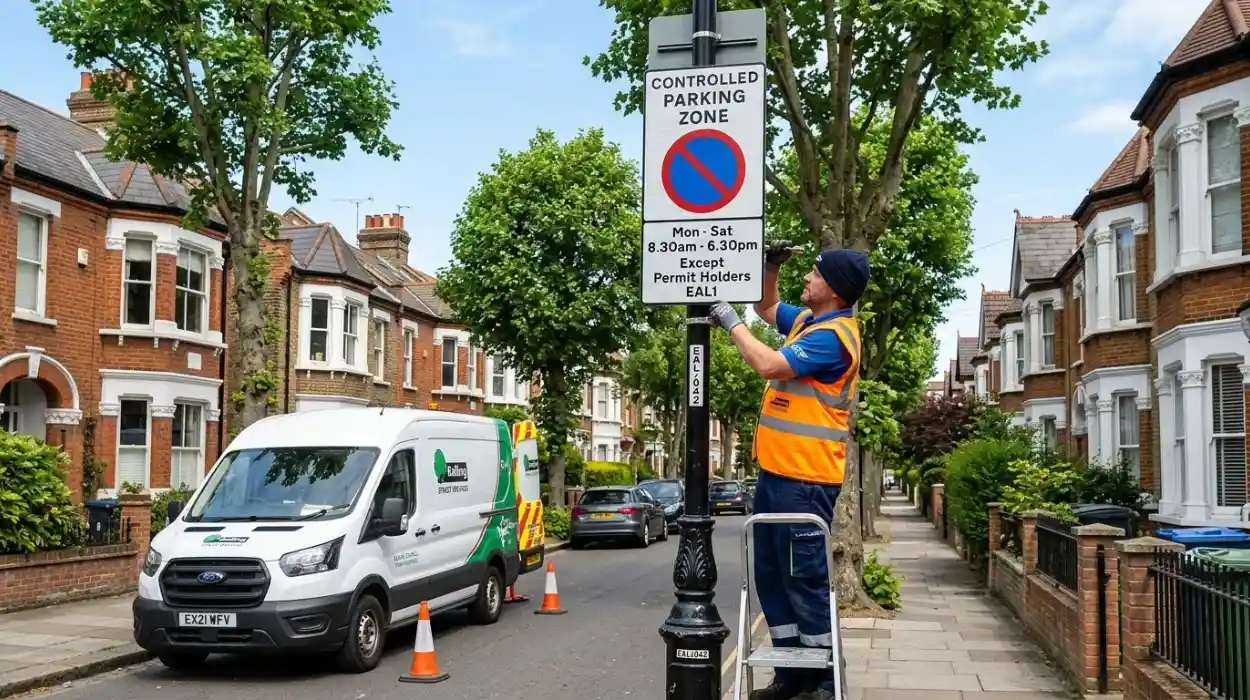
A Controlled Parking Zone is an area where on-street parking is regulated during specified operating hours. During those hours, drivers can need a resident, business, visitor or another type of valid parking permit, depending on the zone and the parking bay. Ealing Council currently lists a large number of CPZs covering locations including Ealing Broadway, Ealing Common, West Ealing, South Ealing, Acton, Perivale, Greenford, Southall and Northolt.
The controls are not identical across the borough. For example, Zone A in Central Ealing operates from 8.30am to 7.30pm from Monday to Thursday, 8.30am to 11pm on Friday and Saturday, and 10am to 4pm on Sunday. By comparison, Zones F and G around Ealing Common have shorter weekday control periods.
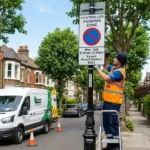
This variation matters for visitors who assume that a parking rule applies throughout Ealing. CPZ boundaries and operating hours need to be checked at street level, because the council states that its online CPZ boundaries are illustrative and roadside signs provide the exact information for individual locations.
Are new CPZs actually being introduced in Ealing?
New CPZ proposals have been considered in specific parts of Ealing, but not every consultation results in a new zone. One recent example involved proposed CPZs in Greenford South and Greenford Town Centre. The council consulted residents and businesses in late 2024 and subsequently published consultation findings and recommendations in 2025.
The Greenford consultation covered a substantial area, with information sent to 6,874 households and businesses. The council received 3,801 responses, including responses from residents, visitors and local organisations. The published report recorded opposition to the proposed Greenford South CPZ among respondents within the proposed consultation area.
This demonstrates why a proposed CPZ and an operating CPZ are not the same thing. A consultation represents a stage in the decision-making process, while a confirmed zone requires the relevant council procedures to be completed before restrictions become operational.
What happened with the proposed Greenford CPZs?
Greenford has been one of the more significant recent examples of proposed new parking controls in Ealing. The council considered proposals for CPZs in Greenford South and Greenford Town Centre after consulting affected households and businesses. The subsequent report assessed responses and considered whether the proposed parking controls were appropriate.
The consultation figures provide useful context for understanding how local CPZ proposals develop. Among respondents identified as residents in the Greenford South proposed area, the report recorded 8% support, 1% neutral responses, 70% opposition and 21% with no clear position.
For people searching for the latest information about new controlled parking zones in Ealing, this distinction is important. A proposal appearing in a consultation document does not automatically mean that residents will soon need permits. The council’s later decisions, statutory processes and implementation notices determine whether a proposed scheme actually becomes a parking restriction.
Are existing Ealing CPZs also changing?
Yes. Ealing has also examined changes to the operating hours of existing CPZs. In 2024, the council consulted on extending the operating times in ten existing zones, including areas covering Acton Town, Ealing Broadway, Ealing Common, Ealing Dean, East Acton, South Acton Estate, West Acton and West Ealing.
The proposal considered extending controls from short morning and afternoon periods to continuous control between 8am and 8pm. The council explained that short operating periods were difficult to enforce effectively and that parking-pressure surveys continued to identify pressure in some areas.
The council subsequently published a recommendations report dated 23 June 2025. It recorded 3,833 survey responses and 22 email submissions relating to the ten zones considered.
This means residents need to distinguish between new CPZs and changes to existing CPZs. A street can already sit within a controlled zone while its operating hours, restrictions or boundaries are reviewed separately.
Which Ealing areas already have controlled parking?
Ealing’s current CPZ network covers a wide geographical area. The council’s official list includes zones around Ealing Broadway, Ealing Common, West Ealing, South Ealing, West Acton, Northfields, Perivale, Southall, Greenford, Northolt, Park Royal and other neighbourhoods.
Some zones cover relatively compact areas, while others extend across a larger collection of residential streets. Zone HH, for example, covers streets around West Ealing, including parts of Castlebar Hill, Gordon Road, College Road, The Avenue and surrounding roads.
There are also more specific zones around individual neighbourhoods. Zone GS1 covers parts of George Street and Wilmot Place in Hanwell and operates daily from 9am to 9pm.
For visitors, the practical lesson is simple: knowing that Ealing has CPZs is not enough. You need the specific zone and its operating hours for the street where you intend to park.
How do CPZ proposals affect local residents?
A new CPZ can change how residents, visitors and businesses use on-street parking. During controlled periods, eligible residents can require permits, while visitors can need visitor permits or another approved parking arrangement. The exact system depends on the zone and the final traffic management arrangements.
Consultations give affected communities an opportunity to comment before a new scheme is implemented. Ealing’s previous CPZ consultation documents explain that parking proposals can be linked to concerns about parking pressure, obstructed driveways, junction visibility, accessibility and displacement of vehicles into nearby streets.
The concept of parking displacement is particularly relevant. When restrictions are introduced on one group of streets, drivers searching for unrestricted parking can move towards neighbouring roads. This is one reason why Ealing’s consultation process examines geographical boundaries rather than considering individual roads in isolation.
What do CPZ changes mean for tourists visiting Ealing?
Tourists visiting Ealing need to pay close attention to parking signs because CPZ rules can vary substantially between locations. Someone staying near Ealing Broadway, visiting Ealing Common or travelling towards Hanwell can encounter different controlled hours depending on the zone.
For a visitor, checking the exact location before leaving the vehicle is more reliable than relying on a general assumption about Ealing parking. The council’s CPZ system allows users to search by postcode, street or house name, while roadside signs provide the precise restrictions applying at the parking location.
Visitors can also consider alternatives such as public transport, particularly when travelling to central Ealing. Ealing Broadway has strong public transport connections, while Elizabeth line, London Underground and rail services provide alternatives to navigating residential parking restrictions.
Are there new parking controls for e-bikes and e-scooters?
Ealing is also changing how rental e-bike and e-scooter parking is managed, although this is separate from conventional car CPZs. In 2026, the council consulted on painting lines around rental e-bike and e-scooter parking bays so that their locations are visible on the street rather than only through operator apps.
The council stated that the work is being delivered in batches, with completion planned for summer 2027. The 2026 consultation covered 50 proposed locations, with sites across wards including Ealing Common, Hanger Hill, North Acton, Northfields, Pitshanger, South Acton, Southfield and Walpole.
This is relevant to the wider question of parking changes in Ealing because parking management is not limited to car permits. The borough is also using marked infrastructure to manage micromobility parking and make designated locations easier to identify.
How can you check whether your Ealing street is in a CPZ?
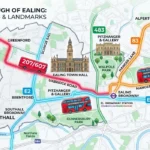
The most reliable method is to use Ealing Council’s official CPZ information and then check the signs on the street. The council provides an online map covering its controlled parking zones and allows users to search for a location using a postcode, street or house name.
When checking a street, look for:
- The CPZ zone covering the location.
- The operating days and hours shown for that zone.
- The permit requirements applying during controlled periods.
- Any yellow-line restrictions that operate separately.
- The exact roadside parking signs at the place where you intend to park.
This last point is particularly important because CPZ boundaries shown online are described by the council as illustrative. Individual signs provide the precise restrictions applying to the road.
What happens before a new CPZ becomes permanent?
A new CPZ normally passes through a consultation and formal decision-making process before implementation. Ealing’s Park Royal industrial-area consultation provides an example of the process: following consultation, the council stated that a 21-day statutory consultation would be required before implementation, with notices placed in the proposed area and published through the relevant council channels.
The statutory stage gives affected people another opportunity to submit objections or comments. The council then considers the representations before deciding whether the proposed scheme proceeds. The Park Royal information stated that an approved CPZ would usually be implemented within around six months, although the precise timetable depends on the individual scheme and its statutory process.
This means residents should not treat a consultation announcement as confirmation that parking restrictions have already started. The final Traffic Management Order and implementation information provide a more reliable indication of when enforceable restrictions begin.
What should Ealing residents and visitors watch next?
The main thing to watch is official Ealing Council information for individual schemes rather than assuming that every proposed parking change affects the whole borough. Recent activity has included consultations on new CPZs, reviews of existing operating hours and new marked parking infrastructure for rental e-bikes and e-scooters.
For residents, a proposed scheme is most relevant when their street appears inside the consultation boundary. For visitors, the practical issue is whether the destination street operates controlled parking and what its signs require. Businesses also need to consider how permits, customer access and parking displacement affect their location.
Ealing’s parking network is therefore best understood as a collection of individual zones and schemes rather than one borough-wide rule. Checking the specific street, zone and current council notice provides the most accurate information when parking arrangements are changing.
FAQs About New Controlled Parking Zones in Ealing
Is Ealing introducing more Controlled Parking Zones?
Ealing has considered new CPZs in specific areas, including Greenford, but a consultation does not automatically mean a new zone will be introduced. The council’s published consultation findings and subsequent decisions need to be checked for the current status of each proposal.
Which areas of Ealing already have CPZs?
Controlled parking zones currently cover areas including Ealing Broadway, Ealing Common, West Ealing, South Ealing, Acton, Perivale, Greenford, Southall and Northolt. Ealing Council provides a full CPZ list and map for checking individual streets.
How do I know if my street is inside an Ealing CPZ?
Use Ealing Council’s CPZ map and search by postcode, street or house name. Always check the roadside signs as well because the council states that online CPZ boundaries are illustrative.
Will a new CPZ mean residents need parking permits?
A CPZ can require resident, business or visitor permits during its controlled hours, but the exact arrangements depend on the individual scheme. The final parking restrictions and permit arrangements are confirmed through the relevant council process.
Are Ealing CPZ operating hours changing?
Ealing has reviewed operating hours in ten existing CPZs, including zones in Ealing Broadway, Ealing Common, West Ealing, West Acton, East Acton and South Acton Estate. The council’s published 2025 report records the consultation and recommendations concerning these proposed changes.
Can tourists park in Ealing CPZ areas?
Tourists can park where the applicable restrictions allow it, but they need to follow the specific zone’s rules and roadside signs. Controlled hours, permit requirements and other restrictions vary between locations, so checking the exact street before parking is essential.
Are e-bike and e-scooter parking controls also changing in Ealing?
Yes. Ealing Council consulted in February 2026 on marking rental e-bike and e-scooter parking bays on the road, with work planned in batches through summer 2027. These controls are separate from conventional car CPZs.