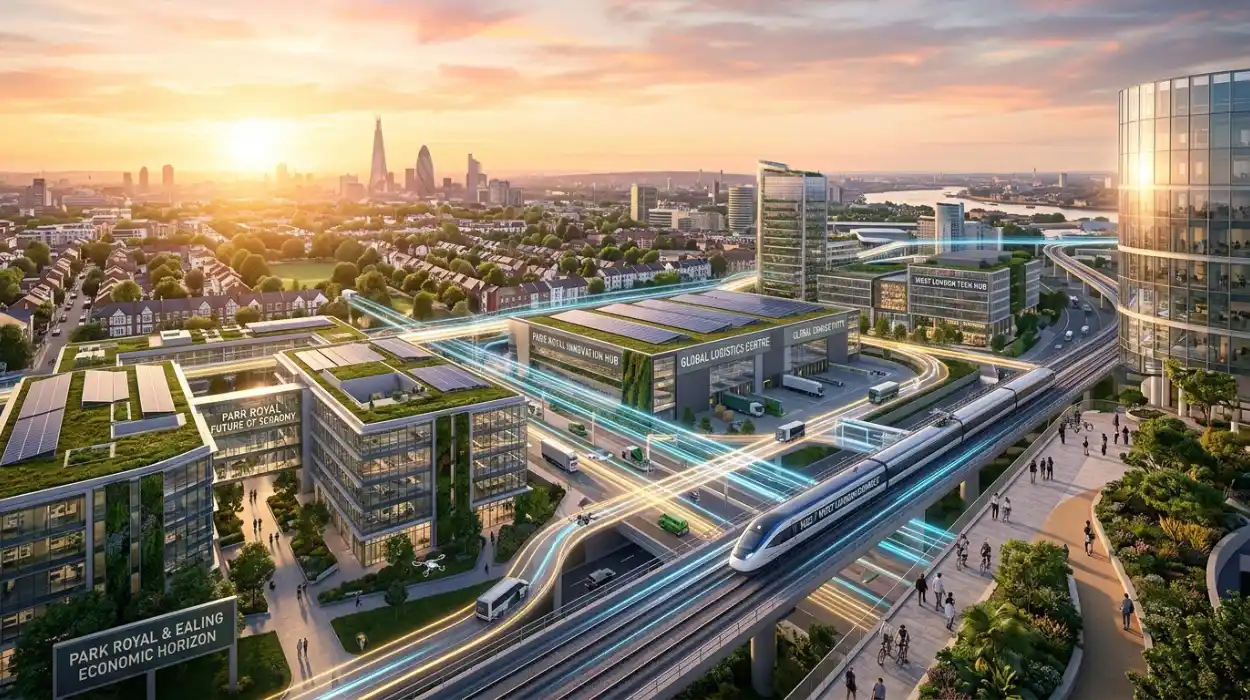
Park Royal and Ealing occupy an increasingly important position in the economic landscape of West London. Although they are distinct areas with different identities, their proximity, transport connections, employment centres and development opportunities make them closely linked within the wider regional economy. Together, they sit within a part of London that connects residential communities with industrial estates, creative businesses, logistics operations, retail centres and major transport routes.
For local residents, the future of this economy matters because business growth can influence employment, transport, housing, high streets and the availability of services. For visitors and investors, Park Royal and Ealing demonstrate how West London is evolving beyond traditional commercial centres. The area’s economic story is no longer based solely on offices and retail; it increasingly involves advanced manufacturing, food production, distribution, creative industries, technology, hospitality and sustainable development.
Understanding the relationship between Park Royal and Ealing therefore requires looking at more than individual developments. It means considering how businesses, infrastructure, skills, land use and communities interact to shape West London’s future.
Why Park Royal and Ealing Matter to West London
Park Royal is one of London’s most significant industrial and employment locations, while Ealing provides a much broader mixture of residential neighbourhoods, town centres, offices, services and cultural destinations. Their relationship creates an interesting economic ecosystem.
Park Royal has long been associated with industrial activity, manufacturing, food businesses and logistics. Its location provides access to major roads and rail connections, including the A40 and nearby transport links. Ealing, meanwhile, has several established town centres, including Ealing Broadway, Southall, Acton, Greenford, Hanwell and Northolt.
This diversity can make West London more economically resilient. A local economy that includes manufacturing, professional services, retail, hospitality, logistics and creative businesses is less dependent on one industry.
The proximity of employment areas to residential communities is also significant. When people can find jobs relatively close to where they live, businesses may benefit from a larger local workforce while residents can potentially reduce lengthy commutes.
Park Royal’s Role as an Economic Engine
Park Royal is particularly important because of the scale and diversity of its business community. The area contains thousands of businesses across manufacturing, food and drink, distribution, creative industries, construction and other sectors.
Its industrial character gives West London something that central commercial districts cannot easily provide: space for businesses that require warehouses, workshops, production facilities and larger premises.
This matters in an era when cities need both digital and physical economies. A technology company may operate from an office, but food manufacturers, engineering firms, logistics companies and construction businesses need physical infrastructure.
Park Royal’s future will therefore depend partly on maintaining suitable employment land while allowing businesses to modernise. The challenge is finding a balance between industrial activity, environmental improvements, transport infrastructure and pressure for other forms of development.
Ealing’s Expanding Economic Role
Ealing’s economy is much broader than its traditional image as a residential West London borough. The borough contains established commercial centres, growing businesses, creative enterprises and significant regeneration areas.
Ealing Broadway has developed as a major shopping, dining and leisure destination, while Southall has its own distinctive commercial identity. Acton provides another important employment and transport location, and Greenford has a strong industrial and business presence.
Southall is particularly significant because its Elizabeth line connection has strengthened its relationship with central London and other parts of the capital. Faster connections can influence where businesses locate, where people work and how visitors move through the borough.
The future of Ealing’s economy is therefore likely to involve several different centres rather than one dominant business district.
Transport Will Shape the Future
Transport infrastructure is one of the most important factors connecting Park Royal and Ealing to the wider economy. Businesses need reliable ways to move employees, customers, goods and services.
The Elizabeth line has already changed perceptions of several West London locations by improving connections between areas such as Southall and central London. Ealing Broadway also benefits from major rail and Underground connections.
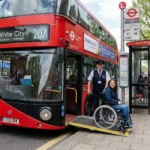
Road infrastructure remains crucial for Park Royal because many industrial and logistics businesses depend on commercial vehicles. This creates a practical challenge: economic activity requires freight movement, but communities also need safer streets, cleaner air and reliable public transport.
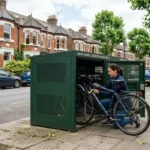
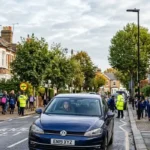
Future economic planning will therefore need to consider different transport users together. Workers need convenient public transport, businesses need reliable freight routes, cyclists need safe infrastructure and residents need streets that function as liveable neighbourhoods.
Industrial Land and Business Space
One of the biggest questions facing West London’s economy is how to protect suitable space for businesses while responding to demand for housing.
Industrial land can be easy to overlook when discussing economic development, yet warehouses, workshops, studios and production facilities support thousands of jobs and supply chains.
Park Royal’s industrial role makes this particularly important. If employment land is converted too extensively into other uses, businesses that need larger premises may struggle to find suitable locations.
At the same time, older industrial buildings may not meet modern requirements for energy efficiency, accessibility or business operations. Regeneration can therefore provide an opportunity to create better employment space rather than simply replacing industrial areas with unrelated uses.
The most sustainable approach is likely to involve modernising business premises while retaining a strong employment function.
The Growth of Logistics and Last-Mile Delivery
The growth of online shopping has increased demand for distribution and delivery infrastructure across London. West London’s location makes it strategically useful for businesses moving goods into and around the capital.
Park Royal is well positioned for this type of activity because of its road connections and established industrial infrastructure. However, last-mile logistics also raises questions about congestion, delivery vehicles, emissions and road safety.
Future logistics businesses may increasingly rely on electric vans, cargo bikes, route optimisation and strategically located delivery hubs. This could allow West London to support a growing delivery economy while reducing some of the environmental pressures associated with conventional logistics.
For local communities, the quality of this transition will matter as much as the number of jobs created.
Creative and Digital Industries
The future economy of West London will not be limited to traditional industry. Creative and digital businesses can also benefit from the area’s transport connections and comparatively varied commercial spaces.
Ealing has a strong cultural identity, while Park Royal has historically attracted businesses associated with film, television, production and creative activity. The wider area can therefore provide opportunities for businesses that need studios, production facilities, workshops and flexible workspaces.
The relationship between creative industries and physical business space is particularly interesting. Although much creative work is digital, film production, design, events, food production and media often require specialist physical locations.
This gives West London the potential to combine older industrial strengths with newer knowledge-based industries.
Food Manufacturing and Hospitality
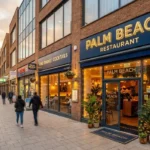
Food is another important connection between Park Royal and Ealing. Park Royal has a long-established food and manufacturing presence, while Ealing’s high streets and town centres support restaurants, cafés, markets and hospitality businesses.
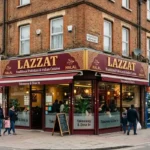
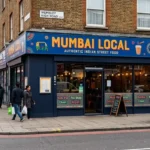
Southall is particularly well known for its South Asian food culture, with restaurants, sweet shops, food retailers and specialist businesses contributing to the local economy.
This creates opportunities across the supply chain. Food manufacturing and wholesale businesses can support restaurants and retailers, while successful hospitality destinations can create demand for suppliers, delivery services and skilled workers.
For tourists, the food scene also contributes to the area’s attractiveness. Economic development is not only about offices and employment statistics; cultural identity can itself become an economic asset.
Skills and Local Employment
Economic growth is most valuable to communities when local residents can participate in it. This makes skills development a central part of the future relationship between Park Royal and Ealing.
Industrial businesses may require engineers, technicians, drivers, warehouse specialists and production workers. Digital companies need different skills, while hospitality businesses require chefs, managers and customer-service staff.
Schools, colleges, training providers and employers therefore have an important role to play. Apprenticeships and vocational training can help young people access industries that may otherwise appear inaccessible.
A stronger connection between employers and local education could also help businesses address skills shortages while creating clearer career pathways for residents.
Regeneration and New Investment
Regeneration can create major economic opportunities, but successful regeneration needs to consider existing communities as well as new development.
Ealing has several areas undergoing or experiencing significant change, with new housing, commercial space, transport improvements and public-realm projects influencing local centres.
The challenge is ensuring that new investment creates genuine economic value. New buildings alone do not guarantee a stronger local economy. Businesses need customers, workers need accessible jobs, and communities need transport, schools, green spaces and other infrastructure.
Park Royal faces a similar question. Its future is not simply about adding more buildings but about creating an environment where modern businesses can operate successfully alongside established industries.
Housing and the Local Economy
Housing is closely connected to economic development. Businesses need employees who can afford to live within reasonable travelling distance, while residents need access to employment and services.
Ealing’s housing growth could support its economy by increasing the local customer base and providing homes for workers. However, affordability remains an important consideration.
If housing costs rise faster than wages, businesses may struggle to recruit locally. Workers could also face longer commutes, increasing pressure on transport infrastructure.
A successful West London economy therefore requires coordination between housing, employment and transport planning rather than treating them as separate issues.
Sustainability and the Future of West London
Environmental sustainability will increasingly influence economic decisions in Park Royal and Ealing. Businesses face growing pressure to reduce emissions, improve energy efficiency and manage waste responsibly.
For industrial areas, this could mean more efficient buildings, renewable energy, electric vehicles and cleaner production processes. For town centres, it could involve better public transport, greener streets, walking routes and improved cycling infrastructure.
Sustainability can also create economic opportunities. Businesses involved in clean technology, building efficiency, electric transport, recycling and environmental services may become increasingly important employers.
The future economy of West London is therefore likely to be both more technologically advanced and more environmentally conscious.
What Could the Future Mean for Local Businesses?
Small and medium-sized businesses could benefit significantly from the growth of the wider West London economy. Improved transport, new customers and better commercial infrastructure can make local areas more attractive for entrepreneurs.
However, growth can also create challenges. Commercial rents may increase, competition can become stronger and established independent businesses may face pressure during regeneration.
Local authorities, business organisations and developers therefore need to consider how smaller enterprises can participate in economic growth. Affordable workspace, business support, training and accessible procurement opportunities can all help.
For an entrepreneur considering West London, the combination of transport access, diverse communities and proximity to major markets can make Park Royal and Ealing attractive locations.
How Will the Future Economy Affect Residents?
Residents are likely to experience economic change through employment, transport, housing, shopping and the character of local neighbourhoods.
More businesses can mean more jobs and services, while better transport can make employment across London easier to access. New investment may also improve public spaces and town centres.
However, residents are also likely to care about congestion, affordability, noise, environmental quality and whether local people genuinely benefit from new development.
The strongest economic future will therefore be one that combines productivity with liveability. Economic growth should support communities rather than simply changing their physical appearance.
Park Royal and Ealing as a Connected Economic Corridor
The future relationship between Park Royal and Ealing is best understood as part of a wider West London economic network. Park Royal provides major industrial and employment capacity, while Ealing offers diverse town centres, residential communities, transport connections and consumer markets.
Their strengths can complement one another. Manufacturing and logistics businesses need services and workers, while town centres benefit from employment and spending. Creative businesses can connect industrial spaces with cultural destinations, and improved transport can connect residents with opportunities.
This interconnected approach could become increasingly important as London faces pressure to accommodate population growth, economic activity and housing while reducing environmental impact.
What Is the Future of Park Royal and Ealing?
The future of Park Royal and Ealing is likely to be shaped by several forces at once: transport investment, business growth, housing demand, industrial land, technology, sustainability and local skills.
Neither area needs to become a copy of central London to succeed. Their advantage lies partly in what makes them different. Park Royal can retain and modernise its industrial and employment role, while Ealing can continue developing as a network of diverse commercial, cultural and residential centres.
If investment is carefully planned, the two areas can contribute to a more balanced West London economy in which industrial businesses, creative enterprises, retailers, hospitality operators and professional services all have a place.
For residents and visitors, this could mean better-connected neighbourhoods, more employment opportunities, stronger town centres and a more diverse local economy. For businesses, it could mean access to markets, workers, infrastructure and increasingly modern commercial premises.
The future of West London’s economy will ultimately depend not on one landmark project but on how these different pieces work together. Park Royal and Ealing are well positioned to play an important role in that transformation.
FAQs About Park Royal and Ealing’s Economy
Why is Park Royal important to West London’s economy?
Park Royal is a major employment and industrial area with businesses across manufacturing, food, logistics, distribution and creative industries. Its industrial land provides space for businesses that cannot easily operate in central London.
Is Ealing becoming an important business area?
Yes. Ealing contains several established town centres and employment locations, including Ealing Broadway, Southall, Acton and Greenford. Transport investment and regeneration are strengthening its economic role.
How will the Elizabeth line affect Ealing’s economy?
Improved rail connectivity can make areas such as Southall and Ealing more accessible to workers, customers and businesses. Better connections can support employment, retail, hospitality and investment.
Will Park Royal remain an industrial area?
Industrial activity is expected to remain an important part of Park Royal’s identity. The key challenge is likely to be modernising employment space while protecting suitable industrial capacity.
What industries are important in Park Royal?
Park Royal has a diverse business base including manufacturing, food and drink, logistics, distribution, construction and creative industries. This diversity contributes to its role as an important employment location.
How could economic growth affect Ealing residents?
Economic growth can create jobs, improve services and encourage investment in transport and public spaces. However, residents may also face challenges involving housing affordability, congestion and changes to established neighbourhoods.
Could Park Royal and Ealing become a major economic hub in West London?
They already form important parts of West London’s economy, and stronger transport, investment, business growth and regeneration could increase their combined significance. Their different economic strengths could make the wider area more resilient and diverse.