
Many visitors arrive in West London expecting famous landmarks, bustling shopping streets and iconic attractions. While those experiences certainly have their place, they often reveal only one side of the city. Beyond the well-known destinations lies a different London one built around local communities, independent businesses, historic streets and peaceful green spaces. The London Borough of Ealing is one of the best places to experience this more authentic side of the capital.
Often called the “Queen of the Suburbs”, Ealing combines centuries of history with modern urban living. Its hidden neighbourhoods preserve village character, architectural heritage and community spirit while remaining well connected by the Elizabeth line, Central line, District line and Piccadilly line. Rather than rushing between tourist hotspots, visitors who take time to explore these lesser-known areas discover cafés filled with local residents, scenic walking routes, independent shops, riverside paths and parks that rarely appear on traditional sightseeing itineraries.
Whether you are visiting London for the first time or have lived in Ealing for years, exploring these hidden neighbourhoods provides a deeper understanding of West London’s culture, history and everyday life.
Why Should You Explore Hidden Neighbourhoods Across Ealing?
Most travel guides focus on attractions that receive thousands of visitors every day. While these landmarks deserve attention, they often overlook the smaller communities that give a borough its true personality.
Hidden neighbourhoods allow visitors to experience Ealing beyond shopping centres and transport hubs. Quiet residential streets, historic buildings, local businesses and community parks reveal how generations of residents have shaped the borough’s identity.
Instead of following crowded tourist routes, travellers can enjoy slower exploration, discover unique local stories and appreciate the balance between heritage and modern living that makes Ealing distinctive.
How Has Ealing Preserved Its Local Character?
Although Ealing has grown alongside Greater London, many of its neighbourhoods have successfully retained their original identity.
Former villages gradually became part of the expanding city without losing their individual character. Historic churches, traditional high streets, Victorian homes and green open spaces continue to define many local communities.
Careful planning, conservation areas and active community involvement have helped preserve these neighbourhoods while allowing modern cafés, restaurants and independent businesses to thrive.
This combination of historical preservation and contemporary life makes Ealing one of London’s most attractive boroughs to explore.
Discover Pitshanger: A Traditional Village Within Modern London
Pitshanger is often considered one of Ealing’s best-kept secrets. Despite being only a short distance from Ealing Broadway, it feels remarkably different from the busy town centre.
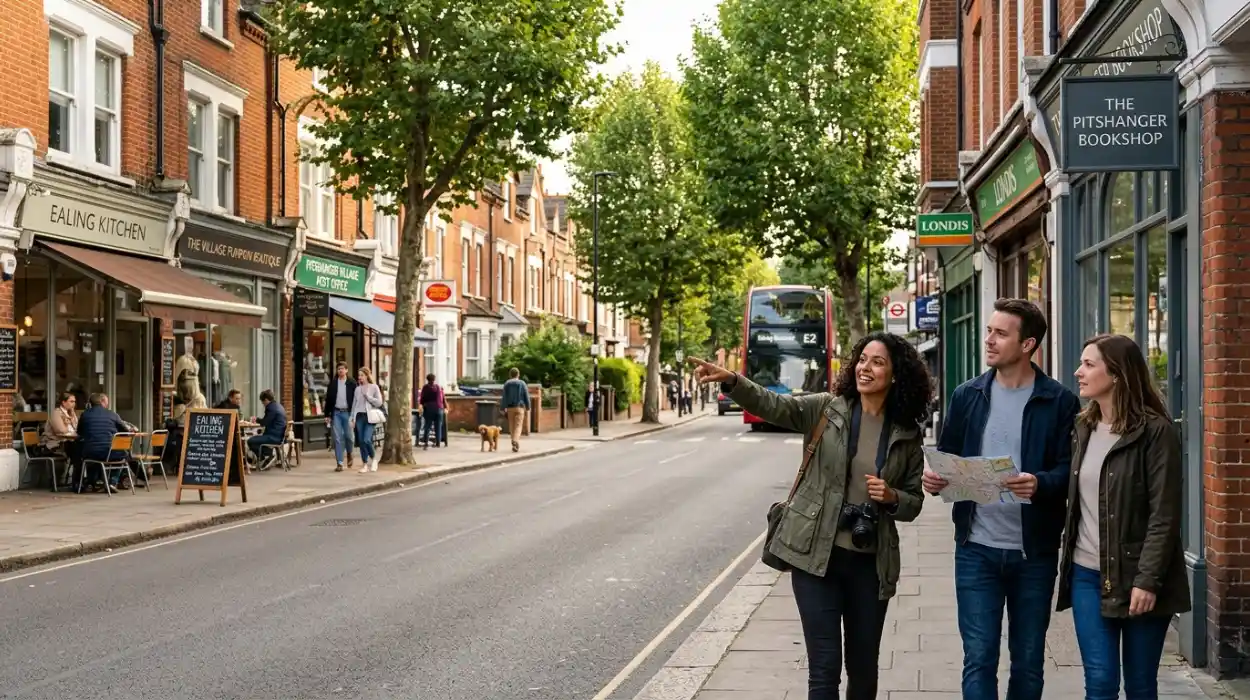
Its independent cafés, bakeries, bookshops and family-run businesses create the atmosphere of a traditional English village rather than a London suburb.
Tree-lined residential roads surround the high street, while nearby Pitshanger Park offers peaceful green space for walking, relaxing and family activities.
Visitors looking for authentic neighbourhood charm often find Pitshanger among the most memorable parts of their Ealing experience.
Explore Hanwell’s Rich Heritage and Canal Walks
Hanwell offers one of the borough’s strongest connections to London’s history.
Originally a rural settlement, it developed around important transport routes while preserving many of its historic buildings and residential streets.
The Grand Union Canal remains one of Hanwell’s defining features. Walking along the towpaths introduces visitors to narrowboats, waterside wildlife and tranquil scenery rarely associated with London.
Nearby, the Wharncliffe Viaduct designed by Isambard Kingdom Brunel stands as one of Britain’s most significant railway engineering achievements.
Together, these landmarks create an experience that blends industrial heritage with natural beauty.
Why Does Northfields Feel So Welcoming?
Northfields demonstrates how multicultural communities can enrich traditional neighbourhoods while maintaining their historical identity.
Independent cafés, international restaurants and local businesses reflect the area’s cultural diversity, while attractive Edwardian homes and quiet residential streets preserve its architectural heritage.
Lammas Park sits nearby, providing extensive green space where residents gather for sports, picnics and outdoor recreation throughout the year.
Visitors often appreciate Northfields because it feels lively without becoming overcrowded.
Experience South Ealing Beyond the Underground Station
For many travellers, South Ealing is simply another stop on the Piccadilly line.
However, stepping away from the station reveals a neighbourhood filled with attractive homes, welcoming cafés and peaceful residential streets.
Independent businesses, local restaurants and nearby parks create opportunities to experience everyday London life beyond traditional sightseeing.
Walking through South Ealing also provides convenient access to neighbouring districts including Brentford, Chiswick and Ealing Broadway.
How Does West Ealing Showcase Local Community Life?
West Ealing continues evolving while preserving its long-standing community atmosphere.
Its shopping streets combine established independent retailers with international food stores, cafés and neighbourhood services that reflect the borough’s diverse population.
Unlike major retail centres dominated by national chains, West Ealing encourages visitors to discover locally owned businesses and experience everyday community life.
Markets, specialist grocers and multicultural dining options further enhance the area’s appeal.
Discover Walpole and Surrounding Heritage Areas
The neighbourhood surrounding Walpole Park offers an excellent combination of history, architecture and green space.
Walpole Park itself provides landscaped gardens, mature trees and attractive walking paths, while nearby Pitzhanger Manor reflects Ealing’s rich cultural heritage.
The surrounding residential streets feature elegant Victorian and Edwardian homes that illustrate the borough’s architectural development during London’s suburban expansion.
Visitors interested in photography, heritage and landscape design will find plenty to admire throughout this part of Ealing.
What Makes These Hidden Neighbourhoods Different From Tourist Hotspots?
Traditional tourist attractions often focus on famous landmarks, museums and entertainment venues.
Ealing’s hidden neighbourhoods instead highlight everyday experiences that reflect genuine local life.
Visitors enjoy conversations in independent cafés rather than crowded chain restaurants.
They discover family-owned businesses instead of large shopping centres.
They explore residential streets, canals, parks and village high streets where local traditions continue shaping community identity.
These experiences often leave a stronger and more personal impression than conventional sightseeing.
Enjoy Green Spaces Connecting Local Communities
One reason Ealing’s neighbourhoods remain so attractive is their abundance of green space.
Lammas Park, Walpole Park, Brent Lodge Park, Cleveland Park and Pitshanger Park all provide opportunities for walking, relaxation and outdoor recreation.
Many residential streets also feature mature trees that create attractive avenues throughout every season.
These parks encourage healthier lifestyles while strengthening connections between neighbouring communities.
Visitors exploring multiple neighbourhoods frequently discover that green spaces naturally link different parts of the borough together.
Support Independent Businesses Throughout Ealing
Independent businesses contribute significantly to the identity of Ealing’s hidden neighbourhoods.
Family-owned bakeries prepare fresh bread each morning.
Neighbourhood cafés provide welcoming meeting places for residents.
Bookshops, florists and delicatessens offer personalised service rarely found in larger retail environments.
Supporting these businesses not only benefits the local economy but also helps preserve the unique character that distinguishes Ealing from other parts of London.
Plan a Self-Guided Journey Across Ealing’s Hidden Neighbourhoods
Visitors can comfortably explore several neighbourhoods within a single day.
Begin in Ealing Broadway before walking through Walpole Park and nearby residential streets.
Continue towards Pitshanger Village to enjoy independent cafés and village-style shopping.
Travel onwards to Hanwell for canal walks and historical landmarks.
Finish your day in Northfields or South Ealing with dinner at one of the area’s independent restaurants.
Excellent Underground, rail and bus connections make travelling between neighbourhoods straightforward without relying entirely on private transport.
Practical Tips for Exploring Hidden Neighbourhoods
Wear comfortable walking shoes because many attractions are best experienced on foot.
Allow time to stop at cafés, parks and independent shops rather than rushing between destinations.
Visit during spring or autumn to enjoy particularly attractive scenery across parks and residential streets.
Remember that these are active residential communities, so respect private property and keep noise levels considerate.
Bringing a camera is worthwhile, as Ealing’s architecture, gardens and seasonal landscapes provide countless photographic opportunities.
Why Do Hidden Neighbourhoods Reveal the Best of Ealing?
Ealing’s hidden neighbourhoods demonstrate that London’s most rewarding experiences are often found away from famous landmarks.
Historic villages, tree-lined avenues, canals, independent businesses and welcoming communities reveal a borough that values heritage while embracing modern diversity.
For international visitors, these neighbourhoods provide an authentic perspective on everyday London life. For local residents, they offer opportunities to rediscover familiar places through fresh eyes.
Exploring beyond traditional tourist attractions transforms an ordinary day trip into a richer cultural experience, showing why Ealing continues attracting people who appreciate history, architecture, community spirit and the quieter side of West London.
Frequently Asked Questions
Which hidden neighbourhoods should I visit in Ealing?
Pitshanger, Hanwell, Northfields, South Ealing, West Ealing and the Walpole area are among the borough’s most rewarding neighbourhoods for authentic local experiences.
Are Ealing’s hidden neighbourhoods suitable for walking?
Yes. Most neighbourhoods feature walkable streets, parks, canals and local high streets that are best explored on foot.
What makes Ealing different from Central London?
Ealing offers quieter communities, historic villages, green spaces, independent businesses and a more authentic everyday London atmosphere.
Can I explore several Ealing neighbourhoods in one day?
Yes. Excellent Underground, rail and bus services make it easy to visit multiple neighbourhoods within a full-day itinerary.
Are there family-friendly activities in Ealing’s neighbourhoods?
Absolutely. Parks, playgrounds, cafés, canals and community events provide enjoyable experiences for visitors of all ages.
When is the best time to discover Ealing’s hidden neighbourhoods?
Spring and autumn are particularly scenic, although the borough offers enjoyable walking routes and community experiences throughout the year.
Why should tourists explore beyond Ealing Broadway?
Exploring beyond Ealing Broadway introduces visitors to historic villages, peaceful parks, independent cafés, heritage streets and authentic local communities that many traditional tourist itineraries overlook.