
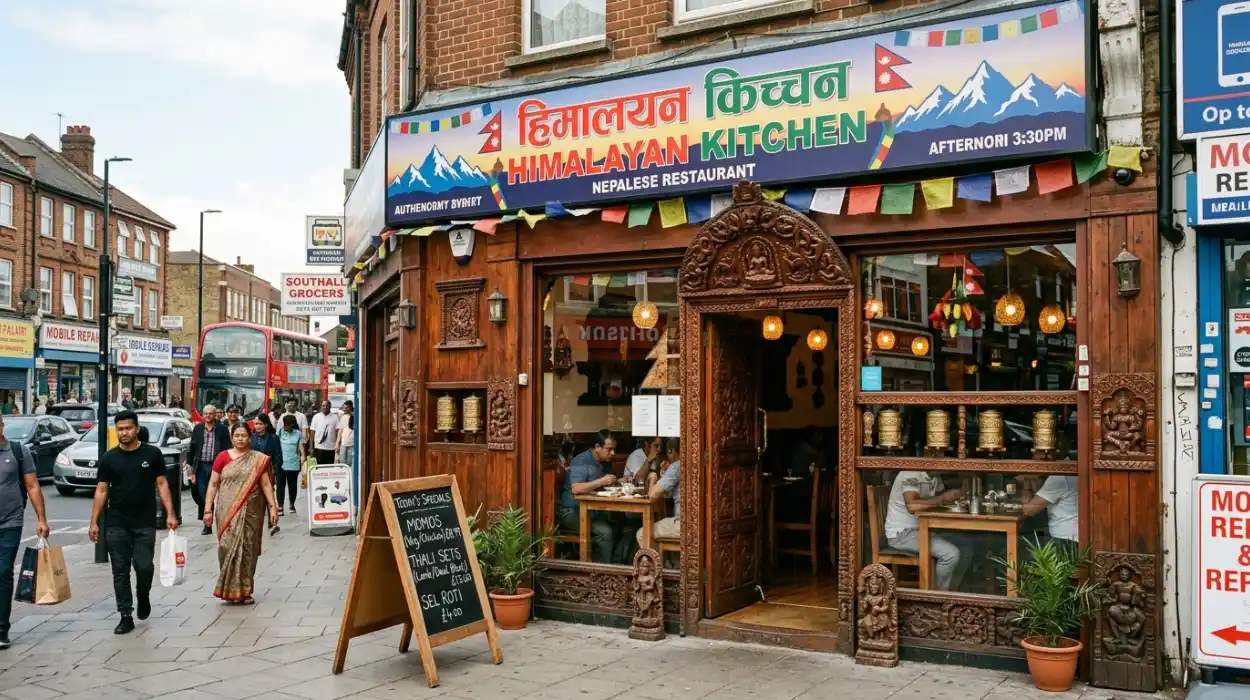
Searching for a Nepalese restaurant Southall is an opportunity to discover one of the most distinctive Himalayan food traditions in west London. Southall is widely recognised for its multicultural character and South Asian food scene, but its culinary identity extends far beyond Indian and Punjabi cuisine. Nepalese restaurants add another layer, bringing dishes shaped by Himalayan geography, Newari traditions, Tibetan influences and everyday Nepali cooking.
For local residents of Ealing, Nepalese food can be an appealing choice when you want something different from the usual restaurant options. For tourists, it provides a chance to explore a less familiar cuisine without travelling far from central London. The menu may include steamed or fried momos, dal bhat, chow mein, curries, grilled meats, Newari specialities and comforting rice dishes.
Choosing a Nepalese restaurant is not only about finding a particular dish. Diners may want to know what Nepalese food tastes like, whether restaurants are suitable for families, what vegetarian choices are available, whether halal food can be found, what to order for a first visit and how Nepalese cuisine differs from Indian or Tibetan food. This guide explores these questions while looking at Nepalese dining in Southall and the wider Ealing area.
Why Try Nepalese Food in Southall?
Southall is an excellent setting for exploring international cuisine because its food culture reflects the many communities that have made west London their home. The area is especially famous for South Asian restaurants, bakeries, sweet shops and specialist food stores, creating an environment where diners can experience several culinary traditions within a relatively small area.
Nepalese cuisine fits naturally into this multicultural landscape. It offers familiar ingredients such as rice, lentils, vegetables, chilli, ginger and spices, while using them in combinations that have their own identity.
For someone who already enjoys Indian food, Nepalese cuisine can feel both familiar and new. However, it should not simply be treated as another version of Indian cooking. Nepal has its own regional traditions, ingredients, cooking techniques and food culture.
For tourists, trying Nepalese food in Southall can therefore be part of a wider west London food experience. A meal can be combined with shopping, exploring local streets or visiting nearby Ealing neighbourhoods.
What Is Nepalese Cuisine Like?
Nepalese cuisine is influenced by the country’s geography and diverse ethnic communities. Nepal stretches from the lowland Terai region to the Himalayan mountains, so food traditions differ significantly between regions.
Rice and lentils are fundamental to everyday eating, particularly through dal bhat, a combination of lentil soup, rice and accompanying vegetables, pickles or curries. Other dishes demonstrate influences from Tibet and neighbouring regions, while Newari cuisine from the Kathmandu Valley has its own distinctive identity.
Flavours can range from mild and comforting to spicy and aromatic. Ginger, garlic, cumin, coriander, chilli and turmeric may appear in different dishes, but Nepalese cooking is not defined solely by heat.
Freshness and balance are important. A meal might combine rice with curry, vegetables, pickles and a protein, creating several textures and flavours on one plate.
Momos: The Dish Many Diners Want to Try
For many people searching for a Nepalese restaurant Southall, momos are likely to be near the top of the list. These dumplings are one of Nepal’s best-known foods and have become increasingly popular internationally.
Momos can be steamed, fried or prepared using other cooking methods depending on the restaurant. Fillings may include vegetables, chicken, lamb or other ingredients. They are commonly served with a spicy or tangy dipping sauce.
The appeal of momos comes partly from their versatility. They can work as a starter, snack or part of a larger meal. A group can order different varieties and share them, making them particularly suitable for social dining.
If you are visiting a Nepalese restaurant for the first time, momos are an approachable introduction to the cuisine. Their dumpling format is familiar to many international diners, while the filling and accompanying chutney introduce distinctly Himalayan flavours.
Dal Bhat and Traditional Nepalese Meals
For a deeper introduction to Nepalese food, dal bhat is worth considering. It is a staple meal in Nepal and demonstrates the importance of rice, lentils and accompanying dishes in everyday cooking.
A typical plate may combine rice and dal with vegetables, curry, pickles and other sides. The exact combination varies between households, regions and restaurants.
Unlike a single dish designed around one dominant flavour, dal bhat can provide several components that are eaten together. The lentils offer a comforting base, while pickles and spiced vegetables add contrast.
For diners who want to understand Nepalese food beyond popular street-food-style dishes, dal bhat can provide a more traditional perspective.
Exploring Newari Food
Newari cuisine is another area worth exploring when visiting a Nepalese restaurant. The Newar community of the Kathmandu Valley has developed a rich culinary tradition featuring a wide variety of snacks, curries, meats, vegetables and fermented foods.
Newari dishes can differ considerably from the Nepalese dishes that international diners may already know. Depending on the restaurant, you may find a selection of small plates or traditional combinations designed for sharing.
This style of eating can be particularly interesting for food enthusiasts who want to explore regional cuisine rather than ordering only familiar dishes.
If a menu includes Newari specialities, ask staff about the ingredients and recommended combinations. Restaurant staff can often explain which dishes are mild, spicy, vegetarian or particularly traditional.
Nepalese Curries and Comfort Food
Curries form an important part of Nepalese dining, although their flavour profiles can differ from those associated with popular Indian restaurant dishes.
Nepalese curries may include chicken, lamb, vegetables or other proteins, often accompanied by rice or bread. Spices are used to create depth rather than simply adding heat.
For diners who enjoy warming, aromatic meals, a Nepalese curry can be an excellent main course. Combining it with rice, vegetables and pickles can provide a more complete experience than ordering a curry alone.
If you are uncertain about spice levels, ask before ordering. A dish described as spicy may be considerably hotter than you expect, particularly if you are not accustomed to chilli-based cuisine.
Vegetarian Nepalese Food
Vegetarian diners can find plenty to explore in Nepalese cuisine. Lentils, beans, potatoes, seasonal vegetables, rice and pickles feature in many traditional meals.
Momos can also be prepared with vegetable fillings, while vegetable curries and dal offer substantial meat-free choices.
For vegans, it is important to check individual ingredients rather than assuming that a vegetarian dish is automatically vegan. Dairy products such as yoghurt, butter or ghee may be used in certain preparations.
People with food allergies should also discuss ingredients with restaurant staff. Sauces, marinades and spice mixtures can contain ingredients that are not immediately obvious from a dish’s name.
Halal Food at Nepalese Restaurants
Halal availability can be an important consideration for Muslim diners searching for Nepalese food in Southall. Some restaurants may offer halal meat, while others may have a mixed menu.
If halal food is essential, ask the restaurant whether its meat is halal and whether the entire menu follows halal requirements. It is also worth asking about preparation methods if you have specific preferences concerning cross-contamination.
Do not assume that chicken or lamb is halal simply because it is commonly eaten in Nepalese cuisine. Restaurant policies differ and can change, so direct confirmation is the most reliable approach.
This is particularly useful when planning a meal for a larger group where several diners may have different dietary requirements.
Nepalese Dining for Families
A Nepalese restaurant can work well for families because the cuisine offers a mixture of familiar and adventurous choices. Children may enjoy momos, noodles, rice or mild chicken dishes, while adults can explore more traditional curries and regional specialities.
Sharing food can also make a family meal more interactive. Instead of ordering one large dish for each person, families can select several plates and allow everyone to try different flavours.
Parents should consider spice levels when ordering for children. Asking staff for mild options can make the experience more enjoyable for younger diners.
For larger family gatherings, check whether the restaurant accepts reservations and whether it has suitable tables. Southall can become particularly busy during evenings and weekends, so planning ahead can be useful.
Nepalese Food for Tourists Visiting Southall
For international visitors, Southall offers an opportunity to explore a different side of London’s food culture. A Nepalese meal can be combined with a broader visit to the area, allowing tourists to experience shops, markets, restaurants and local communities.
Visitors who have never eaten Nepalese food may initially recognise dishes such as dumplings, noodles and curries. This makes the cuisine approachable while still offering plenty of opportunities to discover something unfamiliar.
If you are visiting with friends from different backgrounds, sharing several dishes can be a good way to introduce everyone to Nepalese flavours.
Tourists should also consider transport when planning an evening meal. Check the restaurant’s location and opening hours before travelling, especially if you are unfamiliar with west London.
How Nepalese Food Differs from Indian Food
Because Nepal and India share a border and have centuries of cultural interaction, there are similarities between their cuisines. Rice, lentils, vegetables, spices and curries are common across both food traditions.
However, Nepalese cuisine has its own regional dishes and cooking practices. Momos are a particularly obvious example, while dal bhat and Newari food provide further insight into Nepal’s culinary identity.
The difference is not always about individual ingredients. Preparation, combinations, regional history and eating habits all contribute to the character of a cuisine.
For diners already familiar with Indian food, trying Nepalese dishes can therefore be an interesting comparison rather than simply choosing another curry.
How to Choose a Nepalese Restaurant in Southall
The best restaurant depends on what you want from your meal. Start by checking the menu to see whether it includes the dishes you are interested in, particularly momos, dal bhat or regional specialities.
Recent reviews can provide useful information about food quality, portion sizes, service, atmosphere and value. Look for repeated comments rather than relying on a single review.
Dietary requirements should also influence your choice. Check vegetarian, vegan and halal options before visiting if these are important to your group.
Consider the type of occasion too. A casual restaurant may be ideal for a quick meal, while a larger venue with comfortable seating may work better for families and celebrations.
Finally, check current opening hours and reservation policies. Busy periods can affect availability, particularly at weekends.
What Should You Order on Your First Visit?
If this is your first Nepalese dining experience, momos are an easy place to begin. You can choose a meat or vegetable filling and pair them with a dipping chutney.
For a more substantial meal, try dal bhat if it is available. This can provide a useful introduction to the traditional combination of rice, lentils, vegetables and accompaniments.
A Nepalese curry with rice is another approachable option, especially if you already enjoy South Asian food.
If you are dining with a group, ordering several dishes to share is arguably the best way to explore the menu. This allows you to compare textures, spice levels and regional influences without committing to one unfamiliar dish.
Exploring Southall and Nearby Ealing
A Nepalese meal can form part of a larger day exploring west London. Southall’s distinctive food culture makes it particularly interesting for visitors who enjoy culinary tourism.
After eating, you can explore nearby shops and neighbourhood streets before travelling towards areas such as Hanwell, Ealing Broadway, Greenford or Perivale.
Ealing’s wider restaurant scene includes cuisines from across the world, so a food-focused trip can easily extend beyond one restaurant.
For tourists, this variety provides an opportunity to experience how different communities have shaped London’s neighbourhoods. For local residents, it means there are always new cuisines and dishes to discover close to home.
Searching for a Nepalese restaurant Southall can open the door to a cuisine that combines Himalayan traditions, regional diversity and comforting everyday food. From steamed momos and spicy chutneys to dal bhat, curries and Newari specialities, there is much more to explore than a single popular dish.
The right restaurant will depend on your preferred cuisine, dietary requirements, budget, occasion and desired atmosphere. Checking the current menu, recent reviews, opening hours and halal or vegetarian policies can make the decision easier.
For tourists, Nepalese dining offers another reason to explore Southall and the wider Ealing area. For local residents, it provides an opportunity to enjoy a distinctive cuisine within west London.
Whether you begin with momos or choose a traditional rice and lentil meal, approaching the menu with curiosity can turn a simple restaurant visit into a memorable food experience.
Frequently Asked Questions
What food is popular at a Nepalese restaurant in Southall?
Momos are among the most popular Nepalese dishes, while dal bhat, curries, chow mein and regional specialities may also appear on menus. Newari dishes can provide a more traditional regional experience.
Are Nepalese restaurants suitable for families?
Yes, many Nepalese restaurants can accommodate families. Momos, rice, noodles and milder curries can be suitable for children, while adults can explore more strongly flavoured dishes.
Is Nepalese food very spicy?
Nepalese food can range from mild to spicy. Chilli and spices are used in many dishes, but not every meal is hot. Ask restaurant staff about spice levels if you prefer milder food.
Are there vegetarian options at Nepalese restaurants?
Yes. Lentils, vegetable curries, rice dishes, vegetable momos and other meat-free options are commonly found in Nepalese cuisine. Check ingredients if you follow a vegan diet or have allergies.
Can I find halal Nepalese food in Southall?
Some Nepalese restaurants may offer halal meat, but this varies between establishments. If halal status is important, ask the restaurant directly about its meat sources and preparation methods.
What should I try at a Nepalese restaurant for the first time?
Momos are an approachable starting point, while dal bhat offers a more traditional Nepalese meal. If dining with a group, sharing several dishes allows you to explore more of the menu.
How is Nepalese food different from Indian food?
There are similarities because of geographical and historical connections, particularly with rice, lentils, vegetables and spices. However, Nepalese cuisine has distinctive dishes such as momos, dal bhat and Newari specialities, along with its own regional traditions.