
Ealing is one of West London’s best-known suburban areas, recognised for its leafy streets, historic buildings, green spaces and lively town centre. Today, it combines the convenience of a modern London district with reminders of its rural past. However, Ealing was not always a busy urban neighbourhood. Its transformation from a small settlement surrounded by farmland into a desirable residential area took place over many centuries.
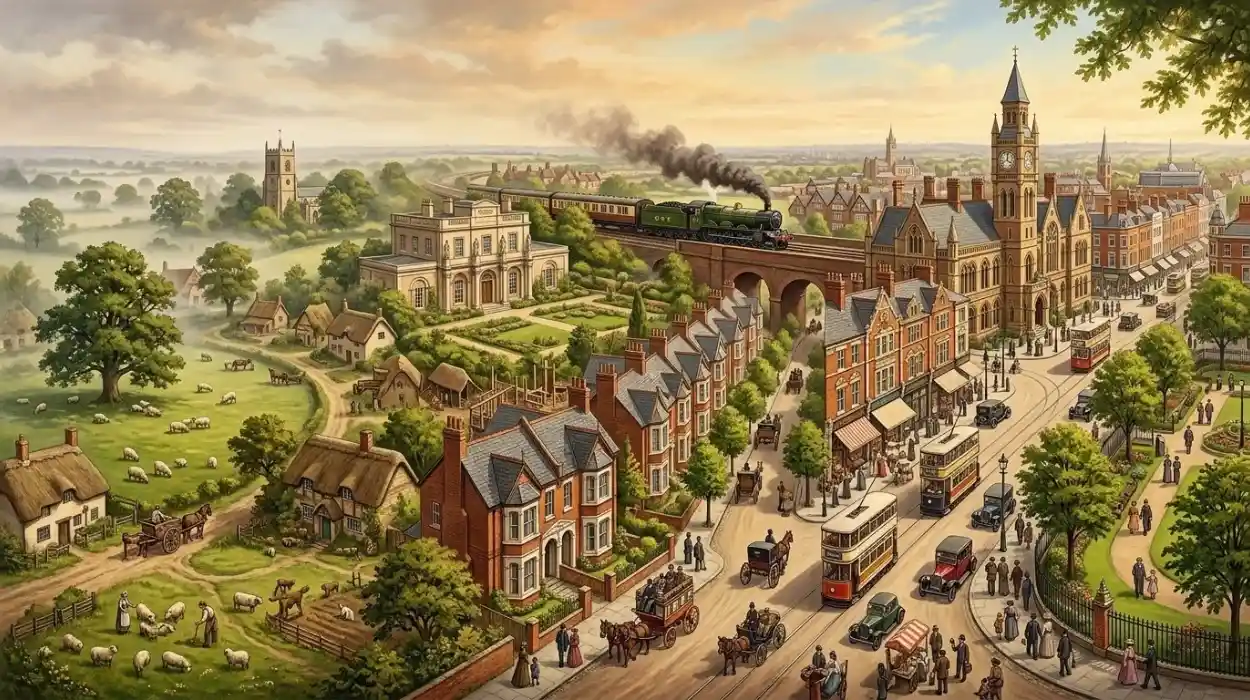
The story of Ealing reflects wider changes in British history, including medieval farming, the growth of London, the arrival of the railway, Victorian housing development and the expansion of public transport. These developments gradually changed how people lived, worked and travelled in the area.
Ealing’s nickname, the “Queen of the Suburbs”, reflects its reputation for attractive residential streets, gardens and green surroundings. Although modern Ealing is part of Greater London, its historic identity remains visible in places such as Ealing Green, St Mary’s Church, Walpole Park and the buildings around its town centre.
Understanding the short history of Ealing helps residents and visitors appreciate how the area developed and why its character remains distinctive today.
The Early Origins of Ealing
Ealing’s history stretches back long before the arrival of modern roads, railway stations and shopping centres. Its name is generally associated with an early settlement whose inhabitants lived and worked in the surrounding countryside.
The name Ealing is thought to derive from an Old English personal name, often interpreted as the settlement of a group associated with a person called Gilla or a similar early name. Like many English place names, its precise linguistic development reflects centuries of changing pronunciation and spelling.
For much of its early history, Ealing was a rural community. The landscape consisted of agricultural land, fields, woodland and scattered homes, with residents depending heavily on farming and local trade. Its position west of London connected it to the wider countryside while allowing links with the growing capital.
The settlement developed around a parish community, with the local church playing an important role in religious and social life. St Mary’s Church in Ealing is a key historic landmark associated with the area’s long-established parish history.
Life in early Ealing would have been very different from the modern experience. Most journeys were made on foot, by horse or using carts, while farming shaped the rhythm of the year. Seasonal work, local markets and church gatherings helped structure everyday life.
Medieval Ealing and the Growth of the Parish
During the medieval period, Ealing remained predominantly agricultural. Land ownership, farming and the local parish were central to the organisation of the settlement. Fields supported crops and livestock, while rural tracks connected homes and farms with neighbouring communities.
The parish system was particularly important in medieval England. Churches provided places of worship and helped organise aspects of community life. Parish boundaries also became useful geographical markers, many of which continued to influence local administration in later centuries.
Ealing’s proximity to London was significant even when the area was still rural. The capital created demand for agricultural produce, livestock and other supplies. Farmers in settlements around London could serve urban markets without living inside the crowded city itself.
However, travel was slower and less convenient than it is today. Roads could become muddy or difficult during wet weather, and journeys depended on the condition of horses, carts and pathways. The contrast between Ealing’s countryside and London’s growing population would eventually become a major factor in the area’s development.
Over time, the expansion of trade and improvements in transport helped connect rural communities more closely with London. Ealing’s position along routes leading towards the capital became increasingly valuable, setting the scene for its later transformation.
Ealing’s Transformation During the Nineteenth Century
The nineteenth century was the turning point in Ealing’s development. Before this period, much of the area consisted of fields, farms, small settlements and roadside inns. The arrival of the railway made it easier for people to travel between Ealing and London, changing the area’s appeal to residents and property developers.
The Great Western Railway reached Ealing Broadway in 1838. The station was initially known simply as Ealing and became known as Ealing Broadway in 1875. This new connection allowed people to live further from central London while travelling into the capital for work and business.
As rail travel became more convenient, residential development accelerated. Land that had previously been used for agriculture was gradually developed for housing, roads and commercial buildings. Semi-detached houses became a familiar feature of the growing suburb, appealing to households looking for more space than densely built central London could offer.
Ealing also needed improved infrastructure to support its growing population. Roads, drainage, schools and public buildings became increasingly important as the community changed from a rural parish into a developing town.
One important figure in this transformation was Charles Jones, who served as Ealing’s borough surveyor from 1863 to 1913. He helped shape the area’s public development and designed important civic buildings, including Ealing Town Hall. His work contributed to the planned appearance and civic identity that became associated with Ealing.
For visitors interested in architectural history, the contrast between older parish buildings and Victorian residential streets provides a useful way to understand how quickly Ealing changed during this period.
Why Is Ealing Known as the Queen of the Suburbs?
Ealing’s nickname, the “Queen of the Suburbs”, reflects its early twentieth-century reputation as an attractive place to live outside central London. The phrase is associated with Charles Jones and the period when Ealing was developing into a prosperous, well-connected residential area.
The appeal came from a combination of factors. Railway links provided access to London, while spacious houses, tree-lined roads and public parks offered a different lifestyle from the crowded streets of the capital.
In 1901, Ealing received its municipal borough charter. The year also saw the opening of Walpole Park and the introduction of electric trams along the Uxbridge Road, strengthening the area’s identity as a growing suburban town.
The nickname was therefore more than a reference to attractive houses. It represented a particular vision of suburban life: a balance between urban convenience and a greener, more spacious environment.
That reputation remains part of Ealing’s identity today. Areas with Victorian and Edwardian architecture, established gardens and mature trees still contribute to its character. The Mount Park Conservation Area is one example of a neighbourhood where historic residential development remains visible.
However, modern Ealing is much more varied than its traditional nickname might suggest. It includes busy shopping areas, diverse communities, modern developments and neighbourhoods with distinct local identities.
Walpole Park, Ealing Green and Other Historic Places
Ealing’s history can be explored through its parks, churches and surviving buildings. These places provide physical evidence of the area’s transformation and offer visitors a more engaging experience than reading dates alone.
Walpole Park
Walpole Park is one of Ealing’s best-known green spaces. Its history is closely connected with the development of the surrounding residential area and the preservation of open space as the town expanded.
The park opened to the public in 1901 and remains an important place for recreation, walks and community activities. It also helps visitors understand why green spaces were central to Ealing’s reputation as the Queen of the Suburbs.
Ealing Green
Ealing Green is an important historic setting near St Mary’s Church and Ealing Studios. Its surroundings bring together religious history, older buildings and the area’s later connection with film production.
Visitors can explore the area on foot, taking time to notice how historic structures sit alongside modern streets and businesses. It is a useful starting point for anyone interested in Ealing’s architectural and cultural heritage.
St Mary’s Church
St Mary’s Church is associated with Ealing’s long-established parish community and dates back to at least the early twelfth century. Its history reaches back to a time when the settlement was largely agricultural and religious institutions played a central role in community life.
The church helps connect modern Ealing with its medieval past. Even as housing and transport changed the landscape, the historic parish remained an important part of the area’s identity.
Pitzhanger Manor
Pitzhanger Manor is another significant historic landmark. Associated with the architect Sir John Soane, the property reflects the architectural interests and changing lifestyles of people who lived in or visited the Ealing area.
Historic buildings such as Pitzhanger Manor offer a different perspective on Ealing’s past, showing that its history includes architecture, design and cultural life as well as transport and housing.
Ealing’s Film Heritage and the Rise of Ealing Studios
Ealing’s identity is not limited to suburban architecture and green spaces. It also has a distinctive place in British cinema through Ealing Studios, one of the area’s most famous cultural institutions.
The site was acquired for filmmaking in 1902 by Will Barker. The studios developed further under Associated Talking Pictures, with sound stages opening in 1931. In 1938, producer Michael Balcon took over, helping establish the studio’s celebrated film identity.
The studio became especially famous for the Ealing comedies of the 1940s and 1950s. Films such as Kind Hearts and Coronets, The Lavender Hill Mob and The Ladykillers became important works of British cinema. Their humour often explored social class, authority, ambition and ordinary people challenging powerful institutions.
The studio also contributed to wartime filmmaking and later television production. After the BBC acquired the site in 1955, it became a base for numerous television productions before returning to feature-film production in the early twenty-first century.
For tourists, Ealing Studios adds a creative dimension to the area’s history. For residents, it is a reminder that Ealing has played a role in British cultural life beyond its function as a residential suburb.
How Ealing Became Part of Greater London
The expansion of transport and housing continued through the twentieth century. More people moved to West London, and settlements that had once been separated by open land became increasingly connected through roads, public transport and urban development.
The introduction of Underground services helped strengthen Ealing’s links with the wider city. District line services reached Ealing Broadway in 1879, while Central line services began in 1920. These connections made commuting more practical and supported further residential and commercial growth.
In 1965, the modern London Borough of Ealing was formed by bringing together the former municipal boroughs of Ealing, Acton and Southall, along with other areas. This created a larger administrative borough containing neighbourhoods with different histories and cultural identities.
The borough today includes places such as Greenford, Northolt, Perivale, Hanwell and Southall. Each has its own local character, from historic village centres and residential streets to busy shopping districts and industrial areas.
Modern transport has continued to influence Ealing’s development. Ealing Broadway now provides connections through National Rail, the District line, the Central line and the Elizabeth line. These services make the area accessible to commuters and visitors while continuing the long relationship between Ealing and London’s transport network.
Ealing Today: A Historic Suburb with a Modern Identity
Contemporary Ealing combines its historic features with the needs of a growing urban population. Ealing Broadway is a major shopping and transport centre, while neighbourhood high streets support independent shops, restaurants, cafés and local services.
The area’s diversity is another important part of its identity. Different communities have contributed to Ealing’s food, culture, businesses and everyday life, making the borough more varied than the traditional image of a leafy Victorian suburb.
Historic conservation remains important too. Ealing Council identifies nearly 600 listed buildings and 30 conservation areas across the borough, alongside parks, woodlands, canals and ancient monuments. These heritage assets help preserve the physical evidence of the area’s development.
For residents, this history provides context for local planning decisions and the protection of familiar buildings and open spaces. For tourists, it creates opportunities to combine a visit to a park, a historic church, a cultural venue and the modern town centre.
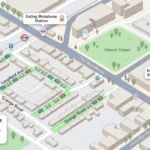
A simple walking visit could begin at Ealing Broadway, continue towards Haven Green and Ealing Green, and finish with time in Walpole Park. This route offers a glimpse of how transport, public spaces, architecture and culture have shaped the area over time.
The short history of Ealing is a story of gradual but significant transformation. From its early Saxon settlement and medieval agricultural landscape to the arrival of the railway, Victorian housing development and the rise of Ealing Studios, each period has contributed to the area’s identity.
Its nickname, the Queen of the Suburbs, captures the appeal that helped make Ealing a desirable residential destination in the late nineteenth and early twentieth centuries. Today, historic churches, parks, conservation areas and film heritage sit alongside modern transport links, shops and diverse communities.
Whether you are a long-term resident or a first-time visitor, exploring Ealing’s history reveals how a rural settlement became one of West London’s distinctive urban communities.
Frequently Asked Questions About the Short History of Ealing
How old is Ealing?
Ealing has roots stretching back to Saxon times, with its early settlement recorded under the name Gillingas. The parish church of St Mary’s dates back to at least the early twelfth century, demonstrating the area’s long history.
Why is Ealing called the Queen of the Suburbs?
Ealing earned the nickname because of its attractive residential streets, green spaces and convenient railway connections to London. The phrase is associated with Charles Jones and the area’s development around the beginning of the twentieth century.
When did Ealing become part of London?
The modern London Borough of Ealing was established in 1965, bringing together several former municipal boroughs, including Ealing, Acton and Southall.
When did the railway arrive in Ealing?
The Great Western Railway reached Ealing Broadway in 1838. The improved connection with London encouraged housing development and helped turn Ealing from a rural settlement into a growing suburb.
What is Ealing most famous for historically?
Ealing is known for its Queen of the Suburbs nickname, Victorian and Edwardian architecture, historic parks and Ealing Studios. The studios became particularly famous for classic British comedies produced during the 1940s and 1950s.
What are the best places to explore Ealing’s history?
Visitors can explore St Mary’s Church, Ealing Green, Walpole Park, Pitzhanger Manor and the historic surroundings of Ealing Studios. These places reveal different aspects of Ealing’s religious, architectural, social and cultural heritage.
Was Ealing always a residential suburb?
No. Ealing was predominantly rural for much of its early history, with farming and scattered settlements shaping the landscape. Railway development during the nineteenth century encouraged housing growth and helped establish its reputation as a residential suburb.