
Winter walking in Ealing can become difficult when temperatures fall below freezing and roads, pavements and walking routes develop frost or ice. For residents travelling to work, parents walking children to school and visitors exploring the borough, a common question is how often pavements are actually gritted during cold weather.
The answer is that not every pavement or walking route in Ealing is gritted every day. Ealing Council operates a priority-based winter gritting service, focusing resources on the roads, routes and pedestrian areas considered most important during periods of frost, ice and snow. Primary roads are treated when freezing conditions or snow are expected, while primary pavement areas are generally treated when snow conditions occur.
Understanding this system helps people plan safer journeys rather than assuming that a pavement will automatically have been treated simply because temperatures have dropped.
How Ealing’s Winter Gritting Service Works
Ealing Council operates a winter service designed to help keep roads and pavements safe during snowy and icy conditions. The council and its contractor prepare grit supplies before the winter season, but available resources mean that every road and pavement cannot be treated.
Instead, the council uses a hierarchy of routes and locations. Primary routes receive priority when freezing conditions, frost, ice or snow are forecast. Secondary routes receive additional treatment when snow conditions occur, while selected primary pavement areas are also treated during snow.
This means the frequency of gritting depends primarily on weather conditions and route priority, rather than following a simple timetable such as every morning or every evening.
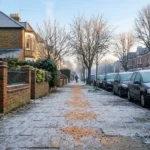
For someone walking through Ealing on an ordinary frosty morning, therefore, the pavement outside their home may not have been treated even though major roads nearby have received grit.
Are Pavements Gritted Every Time It Freezes?
No. This is one of the most important points for anyone wondering how often pavements and walking routes in Ealing are gritted during winter.
The council states that primary roads are gritted when frost, ice or snow is expected. However, secondary routes and primary pavement areas are only gritted when there are snow conditions.
Consequently, a cold morning with a light frost does not necessarily mean that every important pedestrian route will have been gritted.
The approach reflects the fact that pavements cover a large area and winter maintenance resources need to be concentrated where the risk and importance are greatest.
Pedestrians should therefore continue to take care even when a major road appears to have been treated.
Which Pavements Receive Priority?
Ealing Council identifies specific categories of pedestrian locations as primary pavement areas. These areas are treated when snow conditions occur.
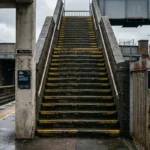
They include town centres and local shopping parades, council-run, supplementary and special schools, Tube and railway stations, steps and ramps leading to footbridges and subways, sheltered accommodation, NHS hospitals and healthcare centres, day centres and residential homes.
This priority system is particularly relevant to everyday journeys.
For example, someone walking towards Ealing Broadway station during a snowfall may find that important pedestrian approaches receive attention, while a quieter residential pavement several streets away remains untreated.
Likewise, a parent walking towards a school or someone visiting a healthcare facility may benefit from the council’s prioritisation of these locations.
What About Walking Routes Around Ealing’s Parks?
Walking routes around parks should not automatically be assumed to have been gritted.
Ealing has many green spaces and walking destinations, and the council encourages residents to use parks and green spaces for walking, leisure and everyday journeys. It also provides walking information and routes across the borough.
However, winter gritting is focused on priority highways and specified pavement areas. A path through a park may therefore remain icy or snowy even when nearby roads have been treated.
This distinction matters around places such as Walpole Park, Gunnersbury Park and other local green spaces. A pedestrian should check the conditions rather than assuming that a popular walking route has received the same treatment as a main road.
During freezing weather, footwear with good grip and a slower walking pace can be more useful than relying on grit having been spread across every section of a route.
How Often Are Main Walking Routes Treated?
There is no fixed number of gritting treatments per week because the council’s winter service responds to weather forecasts and conditions.
Primary routes are treated when freezing conditions or snow are expected. Secondary routes and primary pavement areas are brought into the winter operation when snow conditions occur.
In practical terms, this means a main route could be treated before a forecast frost or snow event, with further action depending on how the weather develops.
Grit can also become less effective over time. Heavy snowfall, continued freezing temperatures, rain or repeated pedestrian and vehicle movement can reduce the effectiveness of an earlier treatment.
For this reason, seeing grit on a route does not necessarily mean the surface will remain completely ice-free throughout the day.
Why Doesn’t Ealing Grit Every Pavement?
The council says it does not have the resources to grit every road across the borough and therefore prioritises the most important areas.
The same principle explains why residents may see a difference between major routes and quieter streets.
Ealing’s highway network covers a substantial area. The council’s highways transparency information says its winter service covers five predetermined primary routes and a further 12 secondary routes, together accounting for about 60% of the borough’s highway network.
A priority system allows winter resources to focus on roads and pedestrian locations where maintaining access is particularly important.
This can include transport links, emergency-service facilities, major shopping areas and important commuter routes.
What Are Primary Gritting Routes?
Primary routes are the highest-priority roads in the council’s winter service.
Ealing Council says these include major roads, main bus routes, roads with width restrictions and steep inclines. They are treated when freezing conditions or snow are expected.
These routes matter to pedestrians as well as motorists because they often connect residential areas with public transport, shops, schools and other services.
Someone walking along a main bus corridor may therefore benefit indirectly from the priority given to that route, although this does not mean every pavement alongside it is automatically treated at the same time.
What Are Secondary Gritting Routes?
Secondary routes receive additional treatment when snow conditions occur.
The council describes these as locations important to residents and local businesses, including local shopping parades, bus garages, ambulance stations, fire stations, major shopping centres and additional commuter routes.
These routes help maintain access when heavier winter weather affects the borough.
For residents in areas such as Acton, Greenford, Hanwell, Northolt, Perivale or Southall, the presence of a secondary route can make a difference to local accessibility during a snow event.
However, pedestrians should still check individual conditions because a treated carriageway does not guarantee that every adjoining footway is clear.
Are Ealing’s Train And Tube Station Routes Gritted?
Station areas are among the priority pavement locations identified by Ealing Council.
The council specifically includes Tube and railway stations within its primary pavement areas, which are gritted when snow conditions occur.
This is particularly important because stations generate substantial pedestrian movement. Ealing Broadway, West Ealing, Hanwell, Southall, Acton and other stations can act as important starting points for commuters and visitors.
Even where the immediate station area receives winter treatment, people may still encounter untreated sections further along a residential road or quieter walking route.
A sensible approach is therefore to treat the station as a likely priority area without assuming the entire journey to or from it will be ice-free.
What Should Pedestrians Do If Their Pavement Has Not Been Gritted?
People should take additional care rather than assuming that untreated pavement means the council has failed to provide winter maintenance.
The council explicitly advises people never to assume that all roads and pavements have been gritted and to take care when walking or driving during winter conditions.
Pedestrians can reduce risk by slowing down, avoiding sudden changes in direction and choosing footwear with good grip. Older people and anyone with mobility difficulties may wish to plan journeys for later in the day if conditions improve.
Where possible, choosing a well-used main route may also be preferable to taking a quieter shortcut that has not been treated.
How Can You Check Whether A Route Is On The Gritting Network?
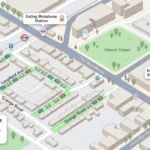
Ealing Council publishes information about its winter gritting routes, including primary and secondary route maps. The published route information identifies the roads included in the winter service network.
However, being shown on a gritting map does not mean a road or pavement is treated continuously throughout winter.
The council’s published guidance remains the better reference for understanding when each category of route is treated. Weather conditions determine when winter operations are activated.
Residents planning a journey during severe weather should therefore combine route information with the current weather situation rather than relying solely on a static map.
What About Pavement Problems And Ice?
Gritting and pavement maintenance are related but different issues.
If a pavement is broken, uneven or damaged, spreading grit will not resolve the underlying problem. Ealing Council provides a separate reporting service for issues involving pavements, kerbs, potholes, flooding and gritting.
The council’s highways service standards state that broken, uneven or dislodged paving and kerbstones are inspected within one week, while potholes on roads and footways are also subject to inspection within one week.
This distinction is useful after winter because repeated freezing and thawing can expose or worsen existing surface problems.
How Does Snow Change The Gritting Priority?
Snow is particularly important because it triggers a broader part of Ealing’s winter service.
Primary roads continue to receive priority, while secondary routes and primary pavement areas are also included when snow conditions occur.
This means a significant snowfall can result in treatment of pedestrian locations that would not normally receive gritting during an ordinary frosty morning.
For residents, this explains why the appearance of grit can change dramatically between a light overnight frost and a substantial snow event.
It is also why people should not use the previous day’s conditions as a reliable indication of what they will find on the pavement the next morning.
How Should Tourists Plan Winter Walking In Ealing?
Visitors may be unfamiliar with the way London’s winter maintenance system works.
Someone staying near Ealing Broadway and planning to walk to a café, shopping area or park should not assume that all pavements have been cleared or treated following frost or snow.
Checking the weather forecast before setting out is useful, particularly when temperatures are expected to remain below freezing.
Visitors should also allow additional journey time. Walking slowly on icy surfaces may be necessary, and a route that is normally easy can become more difficult in winter.
Public transport can also provide an alternative when conditions are particularly poor, especially for longer journeys across the borough.
What Should Older Residents And People With Mobility Needs Consider?
Winter conditions can be particularly challenging for people who have difficulty balancing or walking on uneven surfaces.
Although important locations such as sheltered accommodation, healthcare centres, residential homes and stations are included among Ealing’s primary pavement areas, not every connecting pavement is treated.
People who are particularly vulnerable to falls may therefore benefit from checking conditions before leaving home and choosing the safest available route.
Family members and carers can also help by checking whether essential journeys can be delayed until conditions improve.
For regular journeys, identifying alternative routes with fewer steep sections, better lighting and more pedestrian activity can provide an additional safety advantage.
What Can Residents Expect During A Typical Winter?
There is no universal schedule stating that every pavement in Ealing will be gritted at a particular time each day.
Instead, residents can expect a priority-based response to forecast and actual winter conditions. Primary roads are treated when freezing conditions or snow are expected. Secondary roads and primary pavement areas receive treatment when snow conditions occur.
This approach means that winter maintenance can vary significantly from one weather event to another.
A brief cold spell may result in treatment of primary roads without widespread pavement gritting, whereas significant snowfall can activate treatment across additional routes and priority pedestrian locations.
Planning A Safer Winter Walking Route In Ealing
The safest assumption during winter is that some pavements may remain untreated.
Ealing Council’s own guidance warns people not to assume that all roads and pavements have been gritted.
For residents, this means checking conditions, choosing practical routes and allowing extra time during frost and snow. For tourists, it means understanding that a popular walking route or station connection may contain untreated sections.
Major roads, public transport connections, town centres, schools, healthcare facilities and other priority locations receive attention under the winter service, but coverage depends on weather conditions and the council’s route hierarchy.
Ultimately, how often pavements and walking routes in Ealing are gritted during winter depends on the severity and type of weather rather than a fixed weekly schedule. Knowing which locations receive priority helps residents and visitors make better decisions when ice and snow affect the borough.
Frequently Asked Questions About Winter Gritting In Ealing
Does Ealing Council grit all pavements during winter?
No. Ealing Council does not have the resources to grit every road and pavement. It prioritises important routes and selected pavement areas according to its winter service plan.
How often are pavements in Ealing gritted?
There is no fixed daily or weekly schedule. Primary pavement areas are gritted when snow conditions occur, while primary roads are treated when frost, ice or snow is expected.
Are Ealing town centres and shopping areas gritted?
Town centres and local shopping parades are included among the primary pavement areas that receive gritting when snow conditions occur.
Are pavements near Ealing train stations gritted?
Tube and railway stations are included in Ealing Council’s primary pavement areas, which are gritted during snow conditions. However, nearby residential pavements may not receive the same treatment.
Are Ealing’s park walking routes gritted?
Not necessarily. The council’s priority pavement list focuses on specific locations such as town centres, schools, stations and healthcare facilities. Park paths should therefore be treated as potentially icy during severe winter weather.
What should I do if my local pavement has not been gritted?
Take extra care, particularly on icy or snowy surfaces. Ealing Council advises residents not to assume that every road or pavement has been gritted. A gritting issue can also be reported through the council’s highway reporting service.
Where can I find Ealing’s winter gritting routes?
Ealing Council publishes maps showing its primary and secondary winter gritting routes. These maps can help residents understand which roads form part of the winter service network, although treatment still depends on weather conditions.