

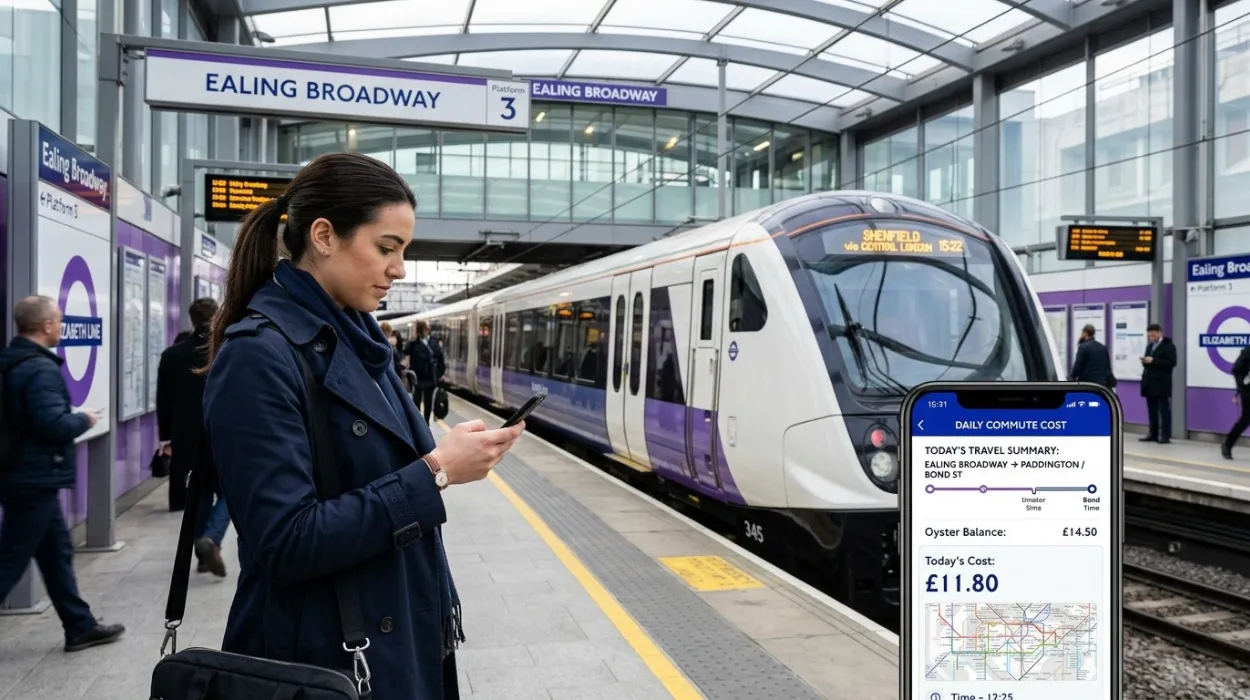
For many people living in Ealing, travelling into Central London is part of everyday life. Residents commute from Ealing Broadway, West Ealing, South Ealing, Ealing Common, Acton, Hanwell and nearby neighbourhoods to offices, universities, shops, attractions and other destinations across central London.
The cost of this journey depends on the route, time of travel, transport mode and payment method. In 2026, an adult travelling from an Ealing location in Zone 3 into Zone 1 can generally use contactless or Oyster pay as you go, with TfL’s Zone 1–3 fare structure and daily and weekly caps helping regular commuters control their spending. TfL states that contactless and Oyster pay as you go can be used across the Tube, Elizabeth line, London Overground, buses, trams and eligible National Rail services within London.
For someone planning a regular commute, understanding the difference between a single fare, daily cap, weekly cap and Travelcard is therefore more useful than looking at only one journey price.
What Is The Public Transport Cost From Ealing To Central London?
Ealing is primarily within Zone 3, while much of Central London is in Zone 1. As a result, a journey between an Ealing Zone 3 station and a Central London Zone 1 destination will generally fall within the Zone 1–3 fare structure.
From 1 March 2026, TfL’s adult pay as you go fare for a Zone 1–3 rail journey is £3.90 at peak times and £3.30 off-peak. The relevant fare can vary depending on the precise stations, route and time, so commuters should use TfL’s Single Fare Finder for their particular journey.
For a commuter making a peak-time journey into central London and another journey home, two £3.90 journeys would cost approximately £7.80 for the day if the daily cap has not already been reached through other travel.
However, the daily cap is particularly important. The 2026 Zone 1–3 adult pay as you go daily cap is £10.50, while the Monday-to-Sunday weekly cap is £52.50.
This means a person making several eligible journeys around London on the same day may stop paying once the relevant cap is reached.
Which Transport Options Can Ealing Commuters Use?
Ealing has several transport connections into Central London, giving commuters a choice between the Central line, Elizabeth line, National Rail and bus services.
The most obvious starting point for many residents is Ealing Broadway, which is served by the Central line and Elizabeth line as well as National Rail services. Other Ealing stations can provide alternative routes depending on where someone lives and where they work.
The Central line is particularly useful for destinations along the western and central parts of its route. From Ealing Broadway, it travels through West Acton, North Acton, East Acton, Shepherd’s Bush, Notting Hill Gate, Marble Arch and Bond Street before reaching other central destinations. TfL’s timetable shows Ealing Broadway and Tottenham Court Road directly on the Central line route.
The Elizabeth line provides another option from Ealing Broadway, with direct services towards central stations including Bond Street and Tottenham Court Road.
The best route therefore depends heavily on the final destination rather than simply on the distance from Ealing.
Ealing Broadway To Central London By Tube
The Central line is one of the most familiar commuting choices for Ealing residents.
A commuter travelling from Ealing Broadway towards the centre can remain on the same train for destinations such as Notting Hill Gate, Marble Arch, Bond Street and Tottenham Court Road. This can make the route convenient for people working around Oxford Street, Soho, Mayfair or nearby areas.
For example, someone working close to Tottenham Court Road could travel directly from Ealing Broadway without changing trains. TfL’s timetable places several Central line stops between Ealing Broadway and Tottenham Court Road, including Shepherd’s Bush, Notting Hill Gate, Marble Arch and Bond Street.
The journey price is more important for commuters than buying individual paper tickets. TfL states that contactless or Oyster pay as you go is generally cheaper than buying paper single or return tickets.
Is The Elizabeth Line Cheaper From Ealing?
The Elizabeth line is not necessarily cheaper simply because it is faster or newer. The fare depends on the zones and journey being made.
For an Ealing commuter travelling into Zone 1, the important consideration is the applicable Zone 1–3 fare and whether the journey contributes towards the daily or weekly cap.
The Elizabeth line can nevertheless be valuable because it provides direct access to central stations such as Bond Street and Tottenham Court Road. This can reduce the need to change trains for commuters working in parts of the West End, Oxford Street area and central business districts.
A person working near Bond Street, for example, may find the Elizabeth line particularly convenient from Ealing Broadway, while someone whose workplace is better served by Central line stations may prefer the Tube.
TfL publishes current timetables and recommends using its journey-planning tools to check individual services.
How Much Does A Daily Commute Cost?
A typical commuter making one journey into Central London and one journey back to Ealing will pay according to the applicable peak or off-peak fares.
Using the 2026 Zone 1–3 adult fares as a simple illustration, two peak journeys at £3.90 each would total £7.80. Two off-peak journeys at £3.30 each would total £6.60.
However, this is not necessarily the maximum amount a commuter will pay during the day. The Zone 1–3 pay as you go daily cap is £10.50. If additional eligible journeys are made around London, the cap can become relevant.
For someone who simply travels from Ealing to work and returns home, the two individual fares may be below the daily cap. Someone who travels to several locations around London during the same day may reach the cap.
What Does A Five-Day Working Week Cost?
For a commuter travelling five weekdays and making two Zone 1–3 journeys each working day, the simple calculation depends on whether the journeys are peak or off-peak and whether any additional travel is involved.
At two peak fares of £3.90 per day, five days would be £39 before considering any other journeys.
At two off-peak fares of £3.30 per day, five days would be £33.
These are illustrations rather than guaranteed weekly bills because the exact fare depends on the journey and travel time. The important point for regular commuters is that TfL’s Monday-to-Sunday Zone 1–3 weekly cap is £52.50.
This cap can be useful for people who commute most days and also make additional Tube, Elizabeth line, Overground or National Rail journeys within the relevant zones.
Is A Weekly Travelcard Worth Considering?
A Travelcard is another option, although commuters should compare it with pay as you go rather than automatically assuming it is cheaper.
For 2026, the adult 7 Day Travelcard covering Zones 1–3 costs £52.50, matching the Monday-to-Sunday Zone 1–3 pay as you go cap. The monthly Zone 1–3 Travelcard price is £201.60, while the annual price is £2,100.
Contactless pay as you go also has Monday-to-Sunday capping. TfL explains that this can provide seven days of travel for the price of five in relevant circumstances.
For someone commuting five days a week, pay as you go can therefore be a straightforward option because the system automatically applies the relevant cap. Someone with particular ticketing needs, discounts or travel requirements may still want to compare Travelcard options.
Can You Commute From Ealing By Bus?
Buses provide another way to travel, particularly for residents who are not close to a Tube or Elizabeth line station.
TfL’s adult bus and tram pay as you go fare is £1.75, and the Hopper fare allows unlimited bus and tram journeys made within one hour of the first touch in for that £1.75 fare, subject to the applicable rules. The adult daily bus and tram cap is £5.25, while the Monday-to-Sunday weekly cap is £24.70.
For a journey all the way from Ealing towards Central London, buses can take considerably longer than rail-based options depending on traffic and the destination. They can nevertheless be useful for the first or last part of a commute.
For example, someone living further from Ealing Broadway could use a local bus to reach a station, or choose a bus route where the final destination is easier to reach by road than rail.
How Can Ealing Commuters Keep Transport Costs Down?
The first step is choosing the payment method that matches the journey pattern. TfL recommends contactless or Oyster pay as you go for many London journeys, and the system applies daily and weekly caps where applicable.
Travelling outside peak periods can also change the fare for journeys where peak and off-peak pricing applies. However, people commuting to conventional office hours may have limited flexibility.
Another practical consideration is avoiding unnecessary Zone 1 travel when an alternative route is available. TfL provides pink card readers at certain interchange stations, including Ealing Broadway. These readers can help TfL identify journeys that avoid Zone 1 and therefore apply the appropriate fare.
For most commuters, however, the biggest saving comes from understanding the fare system rather than repeatedly buying individual paper tickets.
What About Commuting From Acton, South Ealing And West Ealing?
The cost is not identical for every Ealing resident because different neighbourhoods have different stations and routes.
Someone living near Ealing Broadway may have direct access to both the Central and Elizabeth lines. A resident around West Ealing can use Elizabeth line services, while people around South Ealing may use the Piccadilly line depending on their destination.
Residents of Acton have several options, including stations connected to the Central and Elizabeth lines, London Overground and other services. The most economical route depends on where the journey begins and ends.
This is why a commuter should enter the exact starting and ending stations into TfL’s Single Fare Finder rather than relying solely on a general “Ealing to London” fare estimate. TfL notes that fares between two stations can vary according to the route, direction, time and day.
What Should A Regular Ealing Commuter Budget?
For a typical adult travelling between Ealing’s Zone 3 area and Central London’s Zone 1, a useful 2026 starting point is to budget around £6.60 to £7.80 for two rail journeys on a day, depending on whether the applicable journeys are off-peak or peak.
A commuter making additional London journeys should also consider the £10.50 Zone 1–3 daily cap. For regular Monday-to-Friday travel, the £52.50 weekly cap provides another useful budgeting benchmark.
These figures should be treated as planning guides rather than a fixed monthly transport bill. The exact cost can change with the route, travel time, stations used and whether journeys extend beyond the relevant zones.
For someone moving to Ealing, the location of the home can therefore have a meaningful effect on commuting convenience. Living near Ealing Broadway, West Ealing or another well-connected station can provide several options for reaching Central London, while residents farther from rail stations may need to factor in a local bus journey as part of their daily travel.
Frequently Asked Questions
How much does public transport cost commuting from Ealing to Central London?
In 2026, an adult Zone 1–3 rail journey can cost £3.90 at peak times or £3.30 off-peak under the applicable TfL fare structure. The Zone 1–3 daily pay as you go cap is £10.50.
Is Ealing in Zone 3?
Most of Ealing’s main transport area is in or around Zone 3, although the exact zone depends on the station. Commuters should check the zones of their particular starting and ending stations before calculating costs.
Is the Elizabeth line cheaper than the Central line from Ealing?
Not necessarily. The fare is determined by the applicable TfL fare structure, zones, route and travel time rather than simply by the name of the line. Both services can provide convenient journeys from Ealing Broadway into Central London.
Is it cheaper to use contactless or Oyster from Ealing?
Contactless and Oyster pay as you go provide the same basic pay-as-you-go fare structure where accepted, with caps helping regular travellers limit their spending. TfL states that pay as you go is generally cheaper than buying paper single or return tickets.
How much is a weekly commute from Ealing to Central London?
The 2026 Monday-to-Sunday Zone 1–3 pay as you go weekly cap is £52.50. A commuter who makes only two journeys per weekday may spend less than this, depending on the applicable fares and travel pattern.
Can I travel from Ealing to Central London by bus for £1.75?
The adult TfL bus and tram pay as you go fare is £1.75, with the Hopper fare allowing eligible unlimited bus and tram journeys within one hour. However, travelling entirely by bus from Ealing to Central London can take longer and depends on the route and traffic.
What is the cheapest way to commute from Ealing to Central London?
The cost depends on the exact starting point, destination, travel time and number of journeys. Contactless or Oyster pay as you go allows TfL’s applicable daily and weekly caps to be used, while buses have separate lower fares and caps. Checking the exact journey through TfL’s Single Fare Finder is the most reliable way to compare current fares.