
Ealing is often celebrated for its green parks, elegant suburbs and rich cultural heritage, but one of its greatest treasures lies in its historic streets. Beyond the busy shopping districts and transport hubs, charming roads lined with Victorian villas, Edwardian terraces, historic churches and independent businesses tell the story of how Ealing evolved from a rural village into one of West London’s most desirable boroughs.
Walking through these historic streets is more than simply admiring attractive buildings. Each road reflects a different chapter of Ealing’s development, showcasing architectural styles, local history and the communities that have shaped the borough over centuries. Whether you are a visitor looking to experience authentic London, a photographer searching for picturesque locations or a local eager to rediscover familiar surroundings, Ealing’s historic streets offer memorable experiences throughout the year.
This guide explores the borough’s most beautiful historic streets, explaining their significance, unique character and why they deserve a place on every visitor’s itinerary.
Why Ealing’s Historic Streets Are Worth Exploring
Unlike many central London destinations dominated by commercial development, Ealing has preserved much of its historic residential character. Wide tree-lined avenues, carefully restored period homes, independent shops and beautifully maintained public spaces create an atmosphere that feels both timeless and welcoming.
Many of these streets developed during the Victorian and Edwardian eras when improved railway connections transformed Ealing into a fashionable suburban retreat. Architects designed elegant homes with decorative brickwork, bay windows, ornate entrances and spacious gardens that continue to define the borough’s visual identity today.
Walking these streets also reveals how history, architecture and community life coexist, making Ealing one of the best places in West London for heritage walks.
The Mall – Ealing’s Grand Historic Avenue
Among Ealing’s finest historic streets, The Mall stands out for its impressive architecture and distinguished atmosphere. Stretching close to Ealing Broadway and Walpole Park, this elegant avenue is lined with magnificent Victorian and Edwardian houses that showcase decorative brick façades, intricate stone detailing and beautifully preserved period features.
Originally developed during the nineteenth century, The Mall became one of Ealing’s most prestigious residential addresses. Today, many of its historic properties remain carefully maintained, reflecting the borough’s commitment to preserving its architectural heritage.
Walking along The Mall provides excellent opportunities to appreciate classic British suburban design while enjoying peaceful surroundings just minutes from the town centre. During autumn, colourful trees create particularly striking scenery, making this street a favourite among photographers and local residents alike.
Mattock Lane – History Beside Walpole Park
Running alongside Walpole Park, Mattock Lane combines architectural elegance with cultural significance. This attractive road connects visitors to some of Ealing’s most important landmarks, including Pitzhanger Manor & Gallery, one of West London’s finest historic houses.
The street features attractive period homes, mature trees and quiet residential surroundings that perfectly complement the neighbouring parkland. Walking along Mattock Lane allows visitors to appreciate the relationship between Ealing’s historic architecture and its carefully preserved green spaces.
Many buildings here reflect late Victorian and Edwardian design, with decorative brickwork, bay windows and attractive front gardens creating a welcoming streetscape throughout every season.
Pitshanger Lane – A Village High Street Full of Character
Although widely recognised for its independent businesses, Pitshanger Lane also deserves recognition as one of Ealing’s most charming historic streets.
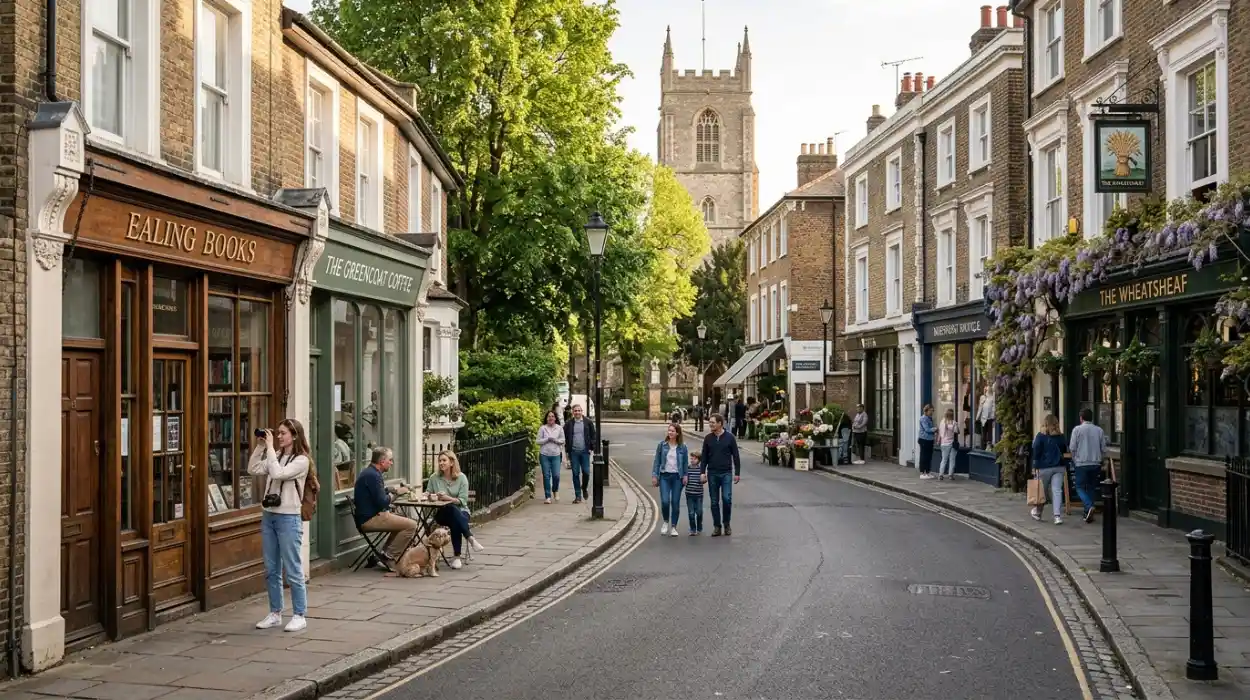
Unlike modern shopping centres, the lane has retained much of its traditional village atmosphere. Independent cafés, artisan bakeries, family-run shops, delicatessens and boutiques occupy buildings that reflect the area’s long-established commercial heritage.
Visitors can browse local businesses while admiring attractive shopfronts that contribute to the street’s distinctive identity. Seasonal markets, festive decorations and community events further enhance its welcoming character throughout the year.
For travellers seeking authentic local experiences, Pitshanger Lane offers a refreshing alternative to London’s larger retail districts while preserving the charm of a traditional British high street.
St Mary’s Road – Linking Past and Present
Named after the historic St Mary’s Church, St Mary’s Road reflects centuries of Ealing’s development. The road connects important heritage sites while showcasing an attractive mixture of historic homes, mature trees and carefully maintained public spaces.
Nearby St Mary’s Church, with origins dating back to medieval times, provides historical context for the surrounding neighbourhood. Visitors walking this area can appreciate how modern Ealing has grown around one of its oldest landmarks while retaining much of its original character.
The peaceful atmosphere makes St Mary’s Road particularly enjoyable for leisurely walks, especially during spring when flowering trees add colour to the historic surroundings.
Castlebar Road – Elegant Victorian Architecture
Castlebar Road is widely admired for its impressive collection of Victorian and Edwardian homes. Large detached houses, decorative terraces and tree-lined pavements reflect the prosperity that accompanied Ealing’s suburban expansion during the nineteenth century.
Architectural enthusiasts often visit Castlebar Road to admire its preserved period properties, many of which feature original brickwork, stained-glass windows, ornamental gables and beautifully landscaped gardens.
Despite its proximity to Central London, the road maintains a calm residential atmosphere that illustrates why Ealing earned its reputation as the “Queen of the Suburbs”.
Walking along Castlebar Road provides an opportunity to experience classic suburban architecture that remains remarkably well preserved more than a century after its construction.
The Grove – One of Ealing’s Most Picturesque Historic Streets
The Grove is one of Ealing’s finest examples of historic residential architecture. Situated close to Ealing Broadway, this attractive street is known for its elegant Victorian and Edwardian homes, mature trees and peaceful atmosphere. The combination of period properties and well-maintained gardens creates a timeless streetscape that attracts walkers, photographers and architecture enthusiasts throughout the year.
Many houses retain original features such as decorative brickwork, bay windows, ornate entrances and traditional sash windows. These carefully preserved details reflect the craftsmanship of the late nineteenth and early twentieth centuries while highlighting Ealing’s long-standing commitment to protecting its architectural heritage.
The Grove is particularly beautiful during spring and autumn, when seasonal colours enhance the street’s historic character and make it one of the borough’s most photogenic locations.
Ealing’s Conservation Areas Protect Its Historic Character
One reason Ealing’s historic streets remain so attractive is the borough’s commitment to conservation. Several neighbourhoods are designated conservation areas, helping to protect buildings, streetscapes and landscapes of special architectural or historical importance.
Planning regulations encourage the preservation of original building features, traditional materials and mature trees, ensuring that future generations can continue to enjoy these distinctive streets.
For visitors, this means many parts of Ealing still retain the charm and appearance that made them desirable during the Victorian and Edwardian periods. Walking through these conservation areas provides a rare opportunity to experience historic suburban London largely unchanged.
A Self-Guided Historic Walking Route
A rewarding way to experience Ealing’s historic streets is by following a self-guided walking route. Begin at Haven Green, where the historic surroundings provide an excellent introduction to the borough.
Continue along The Mall towards Walpole Park and Pitzhanger Manor & Gallery before following Mattock Lane to admire its period homes and leafy setting. From there, head towards Castlebar Road to appreciate its impressive Victorian architecture before making your way to Pitshanger Lane for lunch or coffee in one of its independent cafés.
If time allows, continue to Northfields or the streets surrounding Grange Park to experience even more of Ealing’s architectural heritage. This leisurely route combines history, culture, green spaces and local businesses while showcasing many of the borough’s most attractive streets.
Tips for Photographing Ealing’s Historic Streets
Photographers will find countless opportunities throughout Ealing’s historic neighbourhoods. Early morning offers soft natural light and quieter streets, while late afternoon provides warm tones that highlight the architectural details of Victorian and Edwardian buildings.
Spring brings colourful blossoms, summer showcases lush greenery, autumn creates vibrant displays of red and gold, and winter highlights festive decorations around local high streets. Respecting residents’ privacy and remaining on public footpaths ensures a pleasant experience for everyone while exploring these beautiful locations.
Ealing’s historic streets reveal a side of London that many visitors overlook. Their elegant Victorian and Edwardian architecture, tree-lined avenues, conservation areas and welcoming village atmosphere reflect centuries of thoughtful development and community pride. Rather than rushing between famous tourist attractions, exploring these streets allows visitors to appreciate the borough’s authentic identity at a slower pace.
Whether you are interested in architecture, local history, photography or simply enjoying a peaceful walk, Ealing offers an impressive collection of historic streets that deserve to be explored. From the grandeur of The Mall and the charm of Pitshanger Lane to the tranquillity of The Grove and Northfields, each location tells its own story while contributing to Ealing’s reputation as one of West London’s most attractive destinations.
Frequently Asked Questions
What is the most beautiful historic street in Ealing?
The Mall is widely regarded as one of Ealing’s most beautiful historic streets thanks to its elegant Victorian and Edwardian architecture, mature trees and close proximity to Walpole Park.
Are Ealing’s historic streets free to explore?
Yes. Visitors can walk through Ealing’s historic streets free of charge, making them an excellent option for budget-friendly sightseeing.
Which area has the best Victorian houses in Ealing?
Castlebar Road, The Grove and The Mall feature some of Ealing’s finest collections of Victorian and Edwardian homes with many original architectural features still preserved.
Can I explore Ealing’s historic streets on foot?
Absolutely. Most of Ealing’s historic streets are within walking distance of one another, allowing visitors to enjoy a self-guided heritage walk.
Why is Ealing known as the Queen of the Suburbs?
Ealing earned this nickname because of its spacious tree-lined streets, elegant period homes, abundant green spaces and high quality of suburban planning during the Victorian and Edwardian eras.
When is the best time to visit Ealing’s historic streets?
Spring and autumn are particularly popular due to blossom, colourful foliage and comfortable weather, although the streets remain attractive throughout the year.
Are there cafés and restaurants near Ealing’s historic streets?
Yes. Areas such as Pitshanger Lane, Ealing Broadway and Northfields offer a wide selection of independent cafés, traditional pubs and restaurants, making it easy to combine sightseeing with food and refreshments.