

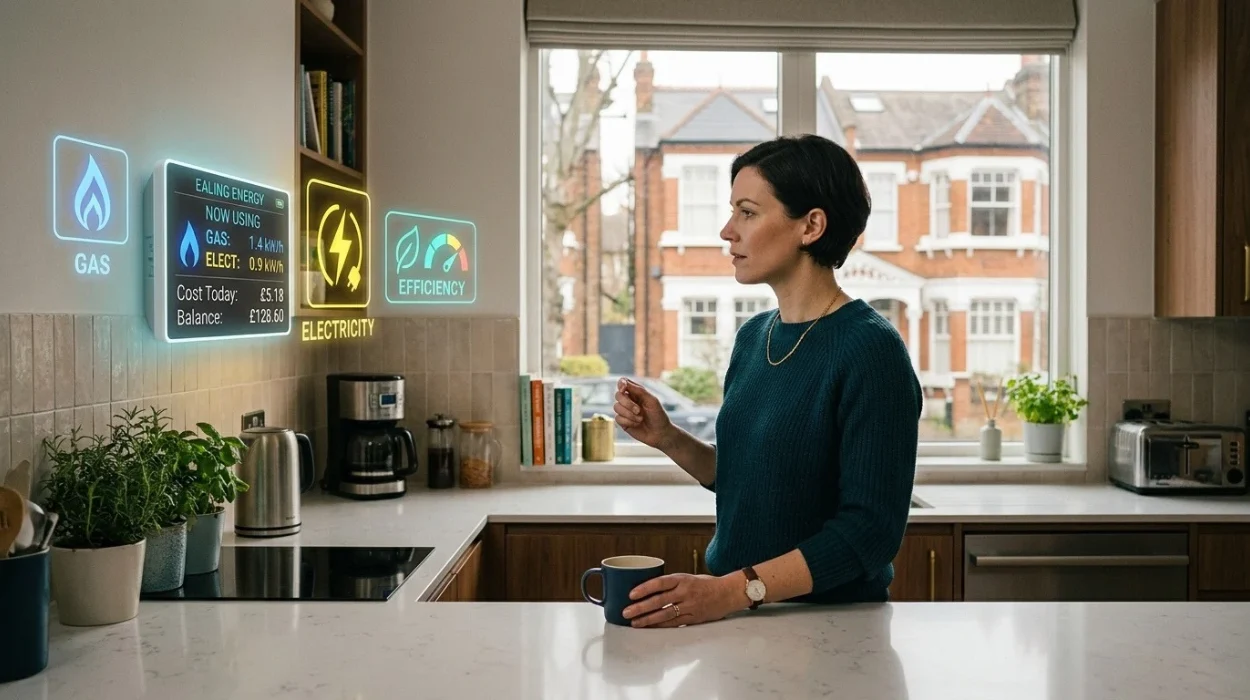
Understanding household energy costs is important for anyone living in Ealing, whether you are renting a flat in Ealing Broadway, sharing a house in North Acton, living with family in Southall, or moving into a home around Northfields, Hanwell, Perivale or Greenford. Gas and electricity bills can make up a significant part of monthly household spending, but the amount a home actually pays depends on several factors.
The size and age of the property, number of residents, heating system, insulation, energy tariff, meter type and daily habits can all affect energy consumption. A small one-bedroom flat with one occupant may use considerably less energy than a larger Victorian terrace occupied by a family.
For households using standard variable tariffs, Ofgem’s energy price cap provides an important reference point. From 1 October to 31 December 2026, the cap level for a typical household paying by Direct Debit is £1,723 a year for gas and electricity combined. This is an illustrative figure based on typical consumption rather than a maximum amount that every household will pay.
What Is The Typical Energy Bill In Ealing?
There is no single electricity and gas bill that applies to every Ealing home. Ofgem’s typical household figure is useful for understanding the general scale of costs, but actual bills depend on energy consumption.
For the October to December 2026 price-cap period, the average Direct Debit rates across England, Scotland and Wales are 26.32 pence per kWh for electricity and 7.97 pence per kWh for gas. The corresponding daily standing charges are 54.83 pence for electricity and 29.68 pence for gas.
These figures help explain why two neighbouring homes can receive very different bills. A household that uses more gas for central heating during colder months will generally spend more than a household in a well-insulated flat that uses less heating.
The price cap does not put a fixed ceiling on the total amount a household can spend. It limits the unit rates and standing charges suppliers can apply to default tariffs. If a household consumes more energy, its bill can still be higher.
How Much Could Gas And Electricity Cost Per Month?
Using the October to December 2026 typical annual figure of £1,723 simply as a budgeting reference gives an average of roughly £144 per month. However, actual monthly payments will not necessarily be £144 because energy consumption changes throughout the year.
Winter is usually the period when households use more gas for heating and hot water. Someone living in an older Ealing house may therefore spend substantially more during colder months than during summer.
A household could have a lower annual cost if it uses less energy than Ofgem’s typical consumption assumption. Conversely, a larger property, higher occupancy or inefficient heating system could produce a considerably higher bill.
This is why it is more useful to understand your home’s energy consumption in kWh than to rely only on an estimated monthly payment.
Why Gas Bills Can Be Higher In Winter
Gas is commonly used for central heating and hot water in UK homes. When temperatures fall, heating systems generally operate for longer periods.
This is particularly relevant to properties with older boilers, draughty windows, limited loft insulation or solid walls. Some older Ealing properties have architectural features that can make energy efficiency improvements more complicated.
For example, consider a family living in a three-bedroom terraced house in Hanwell. If several rooms need heating throughout the day during winter, gas consumption can rise quickly. A smaller flat occupied by one person may require much less heating.
The length of time heating is switched on, thermostat settings and the condition of the property can therefore have a significant effect on gas usage.
Why Electricity Bills Vary Between Ealing Homes
Electricity consumption is influenced by everyday activities and household appliances. Lighting, televisions, computers, refrigerators, washing machines, ovens, kettles and other electrical equipment all contribute to electricity consumption.
A home where several people work or study from home may use more electricity than a property that remains empty for much of the daytime. Families can also have higher consumption because of increased laundry, cooking and appliance use.
Electric heating can make an especially large difference. A property that relies mainly on electric heaters instead of gas central heating may have a different energy-cost profile because electricity currently has a substantially higher unit price than gas under the standard Direct Debit price-cap rates.
What Makes Energy Bills Higher In Ealing?
Property type is one of the most important factors. A compact modern flat may retain heat more effectively than a large older house.
The number of people living in the property also matters. More residents generally means more showers, cooking, laundry, hot water and appliance use.
Insulation is another major consideration. Homes with effective loft, wall and floor insulation can lose less heat, while draughty windows and doors can make heating less efficient.
The boiler and heating controls can also affect gas consumption. A modern, well-maintained heating system may operate differently from an older system.
Household behaviour matters as well. Leaving lights and appliances running unnecessarily, heating empty rooms or keeping the thermostat higher can increase consumption.
Does The Ealing Location Affect Energy Prices?
Ealing is within London, but energy prices are not determined simply by the borough name. Ofgem’s price-cap rates vary by region, payment method and meter type. The regulator explains that standing charges are influenced by factors including regional energy consumption and network costs.
This means someone in Ealing should check the rates applicable to their specific postcode and tariff rather than assuming that every household in London pays exactly the same amount.
The supplier, tariff and payment method can also make a difference. Direct Debit, standard credit and prepayment arrangements can have different applicable rates.
What Is The Energy Price Cap?
The energy price cap is set by Ofgem, the UK’s energy regulator. It applies to default tariffs and limits the unit rates and standing charges suppliers can charge under those tariffs.
The cap is reviewed every three months. For 1 October to 31 December 2026, the typical annual figure for a dual-fuel household paying by Direct Debit is £1,723. Ofgem states that the figure increased by 4% compared with the previous price-cap period.
Importantly, the £1,723 figure is not a fixed annual bill. A household using less energy can pay less, while a household using more can pay more.
How Much Energy Does A One-Bedroom Ealing Flat Use?
A one-bedroom flat occupied by one person will often have lower energy consumption than a larger family property, but there is no universal bill.
Consider a person living in a one-bedroom flat near Ealing Broadway. If they spend most of the day outside, use limited heating and have efficient appliances, their energy consumption may be relatively modest.
Someone living in a similar-sized property but working from home, using electric heating and cooking frequently could consume considerably more electricity.
This illustrates why property size alone cannot determine an energy bill.
How Much Could A Family Home Cost To Heat?
A family home generally has greater energy requirements because several people share the property and more rooms may need heating.
A three- or four-bedroom house in areas such as Northfields, Hanwell or Southall could require substantially more energy than a small flat, particularly during winter.
The construction of the building is also important. Older homes may have higher heat-loss levels, while newer or refurbished properties may have better insulation and more efficient heating controls.
A useful approach is to examine previous meter readings before moving into a property. Tenants should also ask the landlord or letting agent about the property’s energy performance and Energy Performance Certificate.
How Can Ealing Households Understand Their Bills?
An energy bill normally contains several important pieces of information, including energy consumption, unit rates, standing charges and the amount owed.
The unit rate tells you how much each unit of gas or electricity costs. Consumption is measured in kilowatt hours, or kWh. The standing charge is a daily amount that applies regardless of how much energy is consumed.
Looking at kWh rather than only the pound amount makes it easier to understand changes in consumption.
For example, if your winter bill increases, checking whether your gas usage in kWh has increased can help distinguish higher consumption from a change in tariff rates.
Smart meters can also provide more detailed information about household energy use and help residents understand when electricity or gas is being consumed.
Ways To Manage Gas And Electricity Costs
The most practical approach is to reduce unnecessary consumption while making sure the home remains comfortable.
Improving insulation can reduce heat loss. Simple measures such as preventing draughts and ensuring heating controls are used appropriately can also help.
Residents can monitor their energy consumption regularly rather than waiting until the end of a billing period. Smart-meter information can make this easier.
It is also worth checking whether the current tariff remains suitable. Ofgem notes that customers on default tariffs may be able to save by changing tariff or payment type, depending on the options available to them.
Households experiencing difficulty paying should contact their energy supplier rather than ignoring bills. Suppliers have obligations to provide support to customers who are struggling with payments.
What Should Renters Check Before Moving To Ealing?
Renters should establish whether gas and electricity are included in the rent or paid separately. In most standard private rentals, tenants arrange and pay for their own energy unless the tenancy agreement states otherwise.
Before moving into a property, take meter readings on the day you move in and keep a record. This helps establish which energy consumption belongs to you.
It is also useful to ask which supplier currently supplies the property and check whether the home has a smart meter, traditional meter or prepayment meter.
Looking at the Energy Performance Certificate can provide additional information about the property’s energy efficiency.
Seasonal Energy Costs In Ealing
Energy spending tends to change throughout the year. During spring and summer, households may use little or no central heating, although electricity consumption from appliances remains.
Autumn and winter can bring higher gas consumption because of heating and hot water requirements. A household that budgets the same amount every month may therefore build up credit during lower-use months and draw it down during winter.
This seasonal pattern is one reason monthly Direct Debit payments do not necessarily match the actual cost of energy used in that particular month.
What Should Ealing Residents Budget For?
There is no single correct monthly energy budget for every Ealing household. The best starting point is the property’s previous consumption, the number of residents and the heating system.
As a broad 2026 reference, the Ofgem typical dual-fuel figure of £1,723 per year corresponds to approximately £144 per month when divided across twelve months. This should be treated as a budgeting reference rather than a guaranteed Ealing household bill.
People moving into an unfamiliar property should allow flexibility in their budget until they have several months of actual meter readings.
Gas and electricity bills in Ealing vary considerably because homes, lifestyles and energy tariffs are different. A small, efficient flat can have very different costs from a large older house, even when both properties are located in the same part of the borough.
For October to December 2026, Ofgem’s typical annual price-cap figure for a household paying by Direct Debit is £1,723 for gas and electricity combined. The current average Direct Debit rates are 26.32p per kWh for electricity and 7.97p per kWh for gas, plus daily standing charges.
The most reliable way to understand your own household cost is therefore to monitor actual kWh consumption, check your tariff and consider the property’s insulation, heating system and occupancy. Energy prices can change every three months, so residents should always check the latest Ofgem information when planning their household budget.
Frequently Asked Questions
How much are gas and electricity bills in Ealing per month?
There is no fixed Ealing monthly bill. As a 2026 reference, Ofgem’s £1,723 typical annual dual-fuel figure for October to December equates to around £144 per month when averaged across a year, but actual costs depend on consumption, tariff and property type.
Are energy bills expensive in Ealing?
Energy costs depend more on the property’s energy use and tariff than simply being located in Ealing. Larger or poorly insulated homes can use considerably more energy than smaller, efficient properties.
What is the electricity price per kWh in Ealing?
For the 1 October to 31 December 2026 price-cap period, the average electricity unit rate for Direct Debit customers across England, Scotland and Wales is 26.32 pence per kWh. The exact applicable rate depends on the customer’s region, tariff and payment method.
What is the gas price per kWh in Ealing?
For the same October to December 2026 period, the average gas unit rate for Direct Debit customers is 7.97 pence per kWh. Actual rates can vary according to region, payment method and tariff.
Why is my Ealing energy bill higher in winter?
Winter normally requires more heating, which can significantly increase gas consumption. Cold weather, property insulation, boiler efficiency, thermostat settings and the number of rooms being heated can all affect the final bill.
Does a smart meter reduce energy bills?
A smart meter does not automatically reduce the price of energy. However, it can make consumption easier to monitor, helping households understand how much energy they use and identify periods of higher consumption.
What should I do if I cannot afford my energy bill?
Contact your energy supplier as soon as possible rather than ignoring the bill. Suppliers can discuss available support, payment arrangements and other options with customers who are struggling to pay.