
Ealing is widely recognised for its green parks, excellent transport links and thriving town centre, but some of its greatest attractions are found away from busy shopping streets and Underground stations. The borough’s beautiful residential roads offer a fascinating glimpse into London’s architectural evolution, revealing centuries of history through carefully preserved homes, tree-lined avenues and neighbourhoods that continue to reflect their original character.
Often referred to as the “Queen of the Suburbs,” Ealing has long been admired for its elegant housing, spacious streets and commitment to preserving its built heritage. Walking through these residential areas is about more than appreciating attractive buildings. It is an opportunity to understand how the borough developed from rural villages into one of West London’s most desirable communities while maintaining a strong connection to its past.
Whether you are an architecture enthusiast, a history lover, a photographer or simply someone looking for a peaceful side of London, Ealing’s residential streets provide an authentic and rewarding experience.
Why Are Ealing’s Residential Streets Worth Exploring?
Many visitors naturally focus on London’s famous landmarks, yet residential neighbourhoods often reveal the city’s true identity. In Ealing, these streets showcase the everyday architecture, community planning and historic development that have shaped local life for generations.
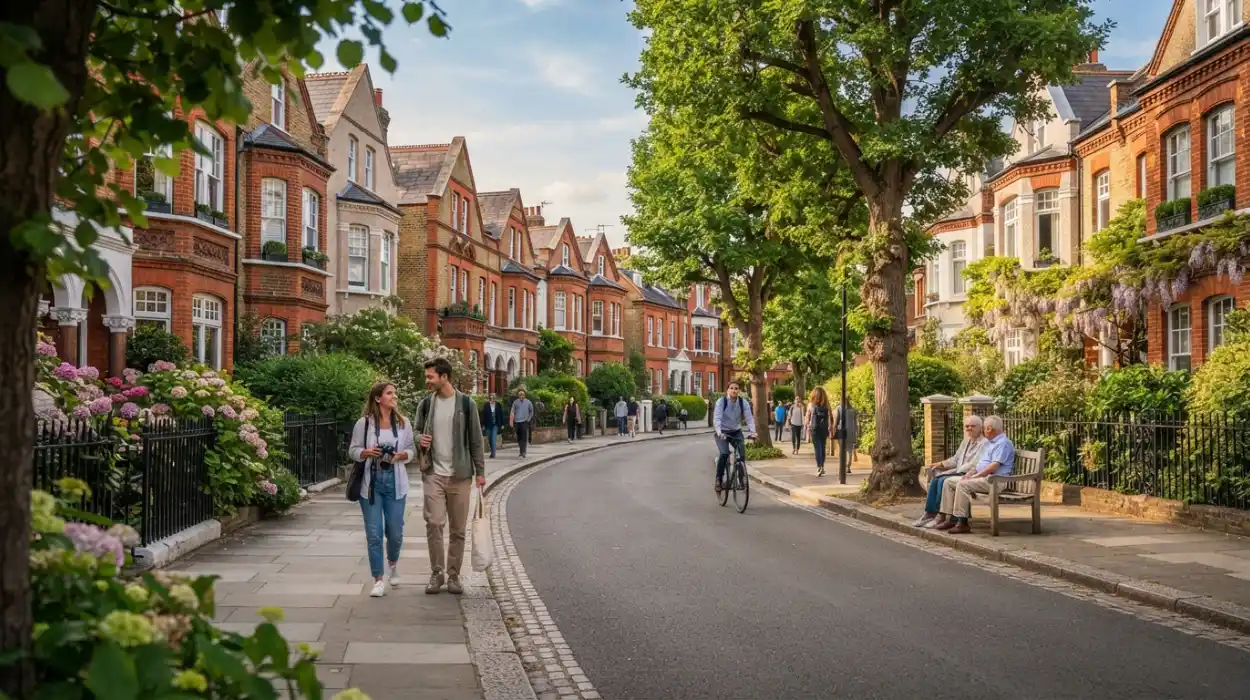
Rather than finding rows of identical properties, visitors encounter a rich mix of Victorian terraces, Edwardian family homes, Arts and Crafts residences, interwar developments and carefully preserved period buildings. Mature trees, landscaped gardens and wide pavements further enhance the area’s distinctive suburban charm.
These streets demonstrate how thoughtful urban planning created neighbourhoods that continue to balance heritage, comfort and community life.
How Did Ealing Become the “Queen of the Suburbs”?
Ealing earned its famous nickname during the late nineteenth and early twentieth centuries as London’s expanding railway network encouraged families to move beyond the crowded city centre.
Developers designed spacious residential neighbourhoods that prioritised healthy living, attractive architecture and green surroundings. Unlike many densely built inner-city districts, Ealing offered larger homes, tree-lined avenues and access to public parks.
The arrival of the Great Western Railway and later the London Underground transformed the borough into an attractive residential destination while allowing many original villages to retain their historic identity.
Today, this careful balance between development and preservation remains one of Ealing’s defining characteristics.
Discover Victorian Streets That Reflect London’s Expansion
Victorian architecture forms an important part of Ealing’s residential landscape. As London’s population grew during the nineteenth century, many elegant terraces and semi-detached homes were constructed to accommodate expanding communities.
Walking through neighbourhoods near Ealing Broadway, Northfields and Hanwell reveals decorative brickwork, bay windows, ornate doorways, cast-iron railings and colourful stained-glass entrances.
Many of these properties remain private homes, carefully maintained by generations of residents who continue preserving their architectural features.
The consistency of these streets creates an impressive visual harmony rarely found in newer developments.
Appreciate Edwardian Elegance Throughout Ealing
Edwardian homes introduced even greater emphasis on light, space and craftsmanship.
Wide entrance halls, decorative timberwork, generous front gardens and distinctive rooflines became common throughout many parts of Ealing during the early twentieth century.
These homes reflected changing lifestyles as families sought healthier suburban environments while remaining connected to Central London through improved transport.
Today, Edwardian streets continue attracting architects, historians and prospective homeowners who appreciate their timeless design and lasting construction quality.
What Makes the Arts and Crafts Influence So Distinctive?
The Arts and Crafts movement had a lasting impact on residential architecture throughout West London, including several parts of Ealing.
Rather than emphasising elaborate decoration alone, these homes focused on craftsmanship, natural materials and practical layouts.
Visitors may notice handmade brick detailing, steep tiled roofs, timber framing, decorative chimneys and carefully designed gardens that complement surrounding landscapes.
This architectural philosophy continues influencing modern housing design while remaining highly valued among conservation specialists.
Explore Residential Roads Around Ealing Broadway
Although Ealing Broadway is best known for shopping and transport, many attractive residential streets lie only a short walk from the busy town centre.
Quiet avenues lined with mature trees quickly replace commercial activity, creating peaceful environments where elegant period homes dominate the landscape.
Residents enjoy easy access to cafés, restaurants, theatres and public transport while benefiting from neighbourhoods that feel remarkably calm compared with central London.
For visitors, these nearby streets provide an opportunity to experience a different side of one of West London’s busiest districts.
How Does Pitshanger Reflect Traditional Community Planning?
Pitshanger remains one of Ealing’s most admired residential communities because it successfully combines attractive housing with a thriving village atmosphere.
The surrounding streets feature well-preserved family homes, landscaped gardens and low-rise architecture that prioritises community living over high-density development.
Independent shops, cafés and local services remain within walking distance, encouraging residents to spend time within their own neighbourhood rather than relying entirely on larger commercial centres.
This integration of residential and commercial spaces contributes significantly to Pitshanger’s enduring popularity.
Discover Hanwell’s Historic Residential Character
Hanwell offers one of the borough’s richest combinations of architectural heritage and historical significance.
Originally a rural settlement, Hanwell gradually evolved alongside London’s growth while preserving many of its historic streets and landmark buildings.
Walking through the area reveals Victorian terraces, Edwardian homes, traditional cottages and carefully restored period properties.
Nearby landmarks such as the Grand Union Canal and the Wharncliffe Viaduct add further historical context, helping visitors understand how transport and engineering influenced residential development.
Why Are Tree-Lined Streets Central to Ealing’s Identity?
One of the first features many visitors notice is Ealing’s impressive collection of mature trees.
Unlike densely developed urban areas, many residential roads were intentionally designed with generous planting that continues enhancing neighbourhood character today.
These trees provide shade during summer, vibrant colours in autumn and valuable habitats for birds and wildlife throughout the year.
Their presence also improves air quality, supports biodiversity and creates attractive streetscapes that encourage walking rather than driving.
This commitment to green infrastructure remains one of Ealing’s defining qualities.
How Do Conservation Areas Protect Ealing’s Heritage?
Several residential neighbourhoods within Ealing benefit from conservation area status.
These protected areas help preserve architectural details, historic street layouts and the overall appearance of important neighbourhoods.
Planning regulations encourage sympathetic restoration while limiting inappropriate alterations that could diminish historical character.
As a result, visitors continue enjoying streets that closely resemble their original appearance despite decades of urban growth.
Conservation efforts also support property values and strengthen community pride.
Experience Everyday London Beyond Tourist Attractions
Exploring residential streets allows visitors to experience London from a different perspective.
Rather than moving between crowded landmarks, travellers discover neighbourhood cafés, independent bakeries, local parks, schools and community spaces where everyday life unfolds naturally.
This slower style of tourism encourages meaningful interactions while revealing aspects of London that many visitors never experience.
Photographers frequently appreciate these quieter streets because they provide opportunities to capture authentic architecture without heavy crowds.
Walking Routes That Showcase Ealing’s Architectural Heritage
A self-guided walking tour offers one of the best ways to appreciate Ealing’s residential beauty.
Begin near Ealing Broadway and explore surrounding Victorian and Edwardian streets before continuing towards Walpole Park.
From there, walk through Pitshanger’s attractive residential roads before travelling to Hanwell to discover period housing alongside the Grand Union Canal.
Alternatively, South Ealing and Northfields provide peaceful routes featuring elegant homes, independent cafés and leafy avenues ideal for relaxed exploration.
Each route highlights different stages of Ealing’s architectural evolution while remaining accessible through excellent public transport.
Practical Tips for Exploring Residential Neighbourhoods
Comfortable footwear is essential because walking remains the best way to appreciate architectural details.
Visit during daylight hours when building features and gardens are easiest to observe.
Spring and summer showcase colourful planting, while autumn creates beautiful tree-lined landscapes filled with seasonal colours.
Remember that these streets are active residential communities. Respect private property, avoid excessive noise and enjoy photography from public spaces only.
Combining residential walks with nearby parks, cafés and local attractions creates a rewarding full-day itinerary.
Why Do Ealing’s Residential Streets Continue Inspiring Visitors?
Ealing’s beautiful residential streets represent far more than attractive places to live. They preserve centuries of architectural achievement, thoughtful urban planning and community development that continue shaping the borough’s identity today.
For international visitors, these neighbourhoods provide an authentic glimpse into London’s suburban heritage beyond the city’s famous landmarks. For local residents, they offer a daily reminder of the area’s remarkable history and enduring character.
Whether admiring Victorian terraces, exploring Edwardian avenues, discovering conservation areas or simply enjoying peaceful walks beneath mature trees, visitors quickly understand why Ealing remains one of London’s most admired residential boroughs. Every street tells part of a larger story, connecting the past with the present through architecture, landscape and community life.
Frequently Asked Questions
Which residential streets in Ealing are best for architecture lovers?
Areas around Ealing Broadway, Pitshanger, Hanwell, Northfields and South Ealing feature some of the borough’s finest Victorian, Edwardian and Arts and Crafts homes.
Why is Ealing called the Queen of the Suburbs?
The nickname reflects Ealing’s spacious residential planning, elegant period homes, leafy streets and reputation as one of London’s most attractive suburban boroughs.
Can visitors walk around Ealing’s residential neighbourhoods?
Yes. Most residential areas are easily accessible on foot and connect conveniently with parks, cafés, local shops and public transport.
What architectural styles are common in Ealing?
Victorian, Edwardian, Arts and Crafts, Georgian influences and interwar suburban housing all contribute to Ealing’s diverse architectural heritage.
Are Ealing’s residential streets family-friendly?
Absolutely. Wide pavements, parks, green spaces and quiet neighbourhoods make them ideal for families, walkers and photographers.
What is the best season to explore Ealing’s residential streets?
Spring and autumn are especially popular because flowering gardens and colourful tree-lined avenues create particularly scenic walking conditions.
How do conservation areas protect Ealing’s historic character?
Conservation areas preserve important buildings, architectural details and traditional streetscapes by guiding sympathetic restoration and limiting unsuitable modern alterations.