
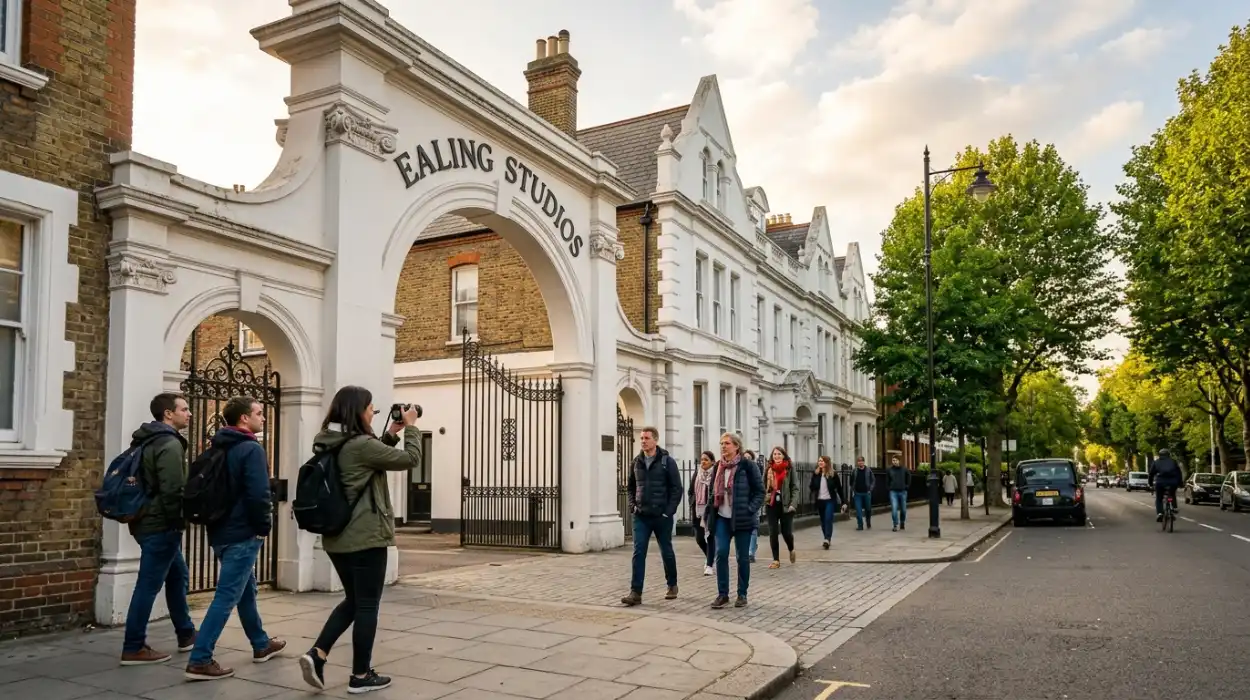
Ealing is often recognised for its leafy streets, beautiful parks and village atmosphere, but it also holds a remarkable place in British film and television history. Long before streaming services and global franchises transformed entertainment, Ealing became one of the country’s most influential centres of filmmaking. The borough’s studios, streets and landmarks have shaped British cinema and television for more than a century.
For visitors and local residents alike, exploring Ealing’s screen heritage offers an opportunity to understand how this corner of West London helped define British storytelling and introduced generations of actors, directors and productions to audiences around the world.
Why Is Ealing Important in British Film History?
Ealing’s significance lies largely in the presence of Ealing Studios, the world’s oldest continuously working film studio.
Founded in 1902 by filmmaker Will Barker, the studio quickly became an important centre for British filmmaking. During the twentieth century, it produced some of the country’s most beloved films and helped establish a distinctive British cinematic identity.
The studio became particularly famous during the 1940s and 1950s when it released a series of productions that later became known as the Ealing Comedies. These films blended humour, social observation and memorable characters, creating stories that still attract audiences today.
The Rise of Ealing Studios
The history of Ealing Studios mirrors the development of British cinema itself.
During the silent film era, the studio produced a wide variety of films, experimenting with storytelling techniques and technical innovations. By the 1930s and 1940s, it had become one of Britain’s leading film production centres.
Under the leadership of producer Michael Balcon, Ealing Studios entered its golden age. Balcon believed that British films should celebrate local culture and everyday life, an approach that shaped the studio’s most famous productions.
This philosophy allowed Ealing to develop a unique cinematic style that distinguished it from Hollywood and contributed to the growth of Britain’s national film industry.
The Famous Ealing Comedies
The term “Ealing Comedies” refers to a collection of films produced mainly between 1947 and 1957.
Among the most celebrated productions are:
- Kind Hearts and Coronets
- The Lavender Hill Mob
- The Ladykillers
- Passport to Pimlico
- Whisky Galore!
These films remain important because they captured aspects of British life with humour and charm while addressing themes such as community, class and social change.
For modern audiences, they offer both entertainment and an insight into Britain’s post-war culture.
Legendary Actors and Filmmakers Connected to Ealing
Ealing’s history is closely linked with some of Britain’s most influential actors and filmmakers.
Alec Guinness became one of the defining faces of Ealing cinema, particularly through his remarkable performances in Kind Hearts and Coronets and The Ladykillers.
Other notable figures associated with the studio include:
- Peter Sellers
- Stanley Holloway
- Margaret Rutherford
- Alexander Mackendrick
Their work helped establish Ealing’s reputation for intelligent and distinctly British storytelling.
Ealing Studios in the Modern Era
Although the golden age of the Ealing Comedies eventually ended, the studios continued to evolve.
Today, Ealing Studios remains an active production centre and has been involved in numerous film and television projects. Modern productions have used its facilities for drama series, documentaries and feature films.
The fact that the studio still operates more than a century after its creation makes it one of the most remarkable institutions in the entertainment industry.
Its longevity also demonstrates the continuing importance of Ealing within Britain’s creative economy.
Television and Ealing’s Growing Screen Reputation
Film is only one part of Ealing’s screen history. The borough has also played an important role in television production.
Its attractive streets, parks and period architecture make it an appealing location for filming. Production companies often seek areas that offer a balance between urban scenery and village character, qualities that Ealing provides in abundance.
As a result, numerous television dramas, documentaries and entertainment programmes have been filmed in and around the borough.
Famous Filming Locations Around Ealing
Several locations across Ealing have appeared on screen over the years.
Walpole Park
Walpole Park offers beautiful green spaces and historic surroundings that appeal to filmmakers.
Pitzhanger Manor
Pitzhanger Manor is one of the borough’s most recognisable landmarks and frequently attracts photographers and production teams.
Ealing Broadway
Ealing Broadway provides a lively urban setting that reflects modern London life.
Residential Streets
Ealing’s tree-lined avenues and Victorian homes often provide ideal backdrops for television dramas and period productions.
Visitors may recognise certain streets and buildings from programmes they have watched without previously realising that they were filmed in Ealing.
Why Do Filmmakers Continue to Choose Ealing?
Several factors explain Ealing’s continuing popularity among film and television producers.
Architectural Variety
The borough contains Victorian, Edwardian and modern buildings, allowing productions to represent different time periods and settings.
Green Spaces
Parks and gardens provide natural scenery that is increasingly valuable in urban filming locations.
Excellent Transport Connections
Ealing’s proximity to central London and major transport routes makes production logistics easier.
Established Screen Heritage
The presence of Ealing Studios creates a strong association with filmmaking and supports the borough’s reputation within the industry.
Exploring Ealing as a Film Tourist
Film tourism has become increasingly popular around the world. Travellers often enjoy visiting places connected to favourite films and television programmes.
For visitors interested in screen history, Ealing offers several experiences:
- Walking around Ealing Studios and its surroundings.
- Visiting Pitzhanger Manor and Walpole Park.
- Exploring historic streets featured in productions.
- Watching classic Ealing Comedies before arriving.
- Combining film history with Ealing’s cafés, restaurants and parks.
Film enthusiasts often discover that Ealing offers a quieter and more authentic alternative to London’s busier tourist attractions.
The Cultural Legacy of Ealing’s Screen History
Ealing’s contribution to film and television extends beyond entertainment.
The borough helped establish important traditions in British storytelling and introduced creative approaches that influenced generations of filmmakers.
Its productions often reflected British values, humour and social change, creating films that remain culturally significant decades after their release.
The continued operation of Ealing Studios ensures that the borough’s relationship with cinema and television remains active rather than merely historical.
Why Ealing’s Film Heritage Still Matters Today
In an age dominated by digital streaming and international productions, Ealing’s screen history reminds visitors of the importance of local storytelling and creative communities.
The borough demonstrates how one area can influence an entire industry while preserving its own distinct identity.
For tourists, exploring Ealing’s film and television heritage offers an opportunity to discover a fascinating part of British cultural history. For local residents, it provides a source of pride and a reminder that their neighbourhood has played a remarkable role in shaping the country’s entertainment landscape.
Ealing’s film and television history is one of the borough’s most fascinating and enduring stories. From the legendary Ealing Studios and the classic Ealing Comedies to modern television productions and film locations, the area has made a lasting contribution to British culture.
Whether you are a cinema enthusiast, a television fan or simply someone interested in London’s hidden history, exploring Ealing’s screen heritage provides an engaging and rewarding experience that reveals a different side of this charming West London borough.
Frequently Asked Questions
Why is Ealing famous for film and television?
Ealing is famous because it is home to Ealing Studios, the world’s oldest continuously operating film studio and the birthplace of the celebrated Ealing Comedies.
Can visitors tour Ealing Studios?
Public access is limited because the studios remain an active production facility, but visitors can view the exterior and explore the surrounding area.
Which famous films were made at Ealing Studios?
Notable productions include The Ladykillers, Kind Hearts and Coronets, Passport to Pimlico and The Lavender Hill Mob.
Are television programmes still filmed in Ealing?
Yes. Ealing continues to attract television and film productions because of its diverse architecture and attractive locations.
Who was Michael Balcon?
Michael Balcon was the producer who led Ealing Studios during its most successful period and helped establish its unique style of filmmaking.
What are the Ealing Comedies?
The Ealing Comedies are a series of British films produced mainly between 1947 and 1957 that became known for their humour and memorable characters.
Is Ealing worth visiting for film lovers?
Yes. Ealing offers historic studios, filming locations, beautiful streets and a rich cinematic heritage that makes it an excellent destination for film enthusiasts.
:::