
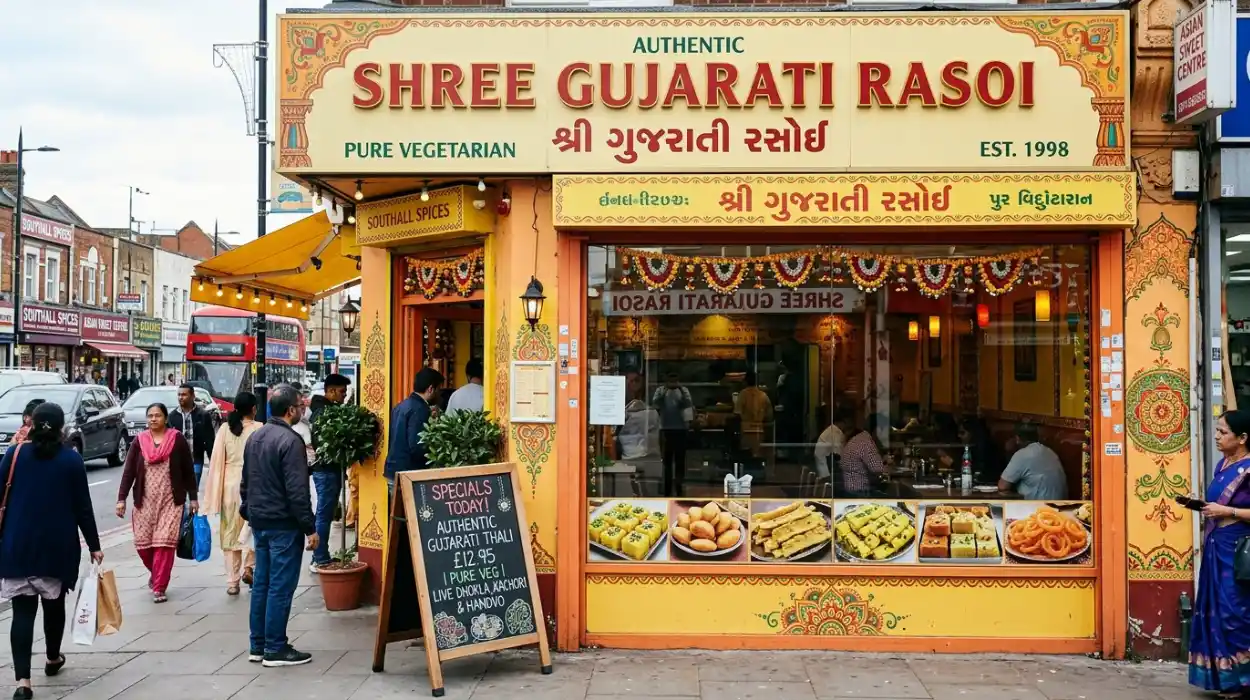
Searching for a Gujarati restaurant Southall is a great way to discover one of India’s most distinctive regional cuisines in the heart of west London. Southall is well known for its vibrant South Asian food culture, and Gujarati cuisine adds an important vegetarian, flavourful and diverse dimension to the area’s restaurant scene.
For local residents of Ealing, Gujarati food can be a comforting choice for a family meal, a quick lunch or a special gathering. For tourists, visiting a Gujarati restaurant in Southall offers an opportunity to experience regional Indian cooking while exploring one of London’s most multicultural neighbourhoods.
Gujarati cuisine is often associated with vegetarian food, thali meals, snacks and sweets, but there is much more to it. Dishes such as dhokla, khandvi, fafda, thepla, undhiyu, dal dhokli and Gujarati kadhi demonstrate the variety of ingredients, textures and cooking methods found across the region.
Whether you already know Gujarati food or are trying it for the first time, understanding the cuisine can help you choose dishes with confidence.
Why Try Gujarati Food in Southall?
Southall provides a natural setting for exploring Gujarati cuisine because of its strong South Asian community and extensive range of specialist food businesses. The area is home to restaurants, sweet shops, bakeries, grocery stores and food outlets representing different parts of India and other countries.
Gujarati food is particularly interesting because it combines simple ingredients with carefully balanced flavours. Sweet, sour, salty and spicy elements can appear together in the same meal, creating a distinctive taste profile.
For diners familiar with Punjabi or North Indian food, Gujarati cuisine can offer something noticeably different. It often places greater emphasis on vegetarian dishes, lentils, vegetables, snacks and combinations of sweet and savoury flavours.
For tourists, eating Gujarati food in Southall can also be part of a wider cultural experience. A restaurant visit can be combined with exploring local shops, markets and nearby neighbourhoods across Ealing and west London.
What Is Gujarati Cuisine Like?
Gujarati cuisine comes from the western Indian state of Gujarat, where food traditions vary between regions and communities. Geography, climate, cultural practices and religious traditions have all influenced the cuisine.
Vegetarian dishes are particularly prominent, with lentils, beans, vegetables, grains and dairy products featuring heavily in many traditional meals.
One of the defining characteristics is the balance of flavours. Some Gujarati dishes combine sweetness with acidity and spice, creating a taste that may initially seem different to diners accustomed to other Indian cuisines.
Meals can also include several small components rather than one large main dish. This is especially clear in Gujarati thali, where rice, breads, vegetables, lentils, snacks, yoghurt-based dishes and sweets may be served together.
Gujarati Thali: A Complete Meal Experience
For many people searching for a Gujarati restaurant Southall, a thali is likely to be one of the most appealing choices. Gujarati thali is designed to offer a variety of flavours and textures in one meal.
A typical thali may include dal, vegetables, kadhi, rice, roti or other breads, pickles, snacks and a sweet dish. The exact selection varies between restaurants and can change according to the season.
The advantage of a thali is variety. Instead of choosing one curry, diners can sample several different preparations at once.
It is also a useful introduction for first-time visitors. If you are unfamiliar with Gujarati cuisine, trying a selection of dishes allows you to identify flavours and textures you particularly enjoy.
Thali meals can be particularly suitable for families and groups because everyone can experience multiple dishes as part of the same dining occasion.
Dhokla and Popular Gujarati Snacks
Gujarati cuisine has a strong tradition of snacks, and dhokla is one of the best-known examples. It is a steamed savoury snack with a light, soft texture and is commonly served with chutneys or other accompaniments.
Dhokla can be enjoyed as a breakfast item, snack or part of a larger meal. Its light texture makes it popular with diners looking for something less heavy than a fried snack.
Other Gujarati snacks may include khandvi, fafda, handvo, patra and samosa variations. Each has its own preparation method and texture.
For visitors exploring Southall, trying Gujarati snacks can be a good way to experience the cuisine without committing to a full thali.
Fafda, Jalebi and Gujarati Breakfast Traditions
Fafda and jalebi are a well-known pairing in Gujarati food culture. Fafda is a crisp savoury snack, while jalebi provides a contrasting sweet flavour.
The combination demonstrates one of the characteristics that makes Gujarati cuisine distinctive: contrasting tastes can work together rather than being kept completely separate.
Breakfast and snack traditions are an important part of the cuisine, and specialist Southall food shops can provide opportunities to explore them.
If you are visiting early in the day, checking restaurant and sweet-shop opening times is worthwhile because some traditional breakfast foods may have limited availability.
Thepla and Gujarati Breads
Thepla is a popular Gujarati flatbread often made with wheat flour and flavourful ingredients such as fenugreek leaves and spices. It can be eaten on its own or accompanied by yoghurt, pickle, vegetables or other sides.
Gujarati breads demonstrate how everyday meals can use simple ingredients creatively. They are also convenient for travel and packed meals, which has helped make thepla popular beyond Gujarat.
Depending on the restaurant, you may find other breads and rotis alongside thepla. Asking staff about the house speciality can help you discover options that may not be immediately familiar from the menu.
Undhiyu and Seasonal Gujarati Cooking
Undhiyu is a traditional Gujarati mixed vegetable dish associated particularly with the winter season. It brings together a variety of vegetables, spices and other ingredients in a slow-cooked preparation.
Its seasonal nature is important because Gujarati cuisine often reflects the availability of fresh produce. Rather than treating every dish as available throughout the year, traditional cooking can change according to ingredients and festivals.
If you see undhiyu on a menu, it can be an excellent choice for diners who want to explore a more traditional Gujarati preparation.
Availability varies between restaurants, so it is worth checking seasonal menus before visiting.
Gujarati Dal, Kadhi and Comfort Food
Dal is central to many Gujarati meals and provides a comforting combination of lentils and seasoning. Gujarati dal can have a distinctive balance of sweet, sour and savoury flavours.
Gujarati kadhi is another important dish. Made with yoghurt and typically thickened with gram flour, it is often seasoned with spices and served with rice.
Together with vegetables, rice and breads, dal and kadhi form the foundation of many traditional Gujarati meals.
For diners who prefer milder and comforting flavours, these dishes can be a good introduction to the cuisine.
Vegetarian Dining in Southall
Gujarati cuisine is especially appealing to vegetarians because so many traditional dishes are naturally meat-free. Lentils, beans, vegetables, grains, dairy and spices provide substantial meals without relying on meat.
A vegetarian diner might choose a thali, vegetable curry, dal, kadhi, thepla or a selection of snacks.
However, vegetarian does not always mean vegan. Gujarati cooking may use yoghurt, milk, butter or ghee, so vegan diners should check individual ingredients.
People with allergies should also ask about preparation methods. Nuts, dairy, gluten and other allergens can occur in snacks, sweets, sauces and desserts.
Jain-Friendly Gujarati Food
Some Gujarati restaurants may cater to Jain dietary practices, although this should always be confirmed with the restaurant.
Jain food can involve restrictions on particular ingredients, including root vegetables such as onions, garlic and potatoes, depending on the individual’s practices.
If you follow Jain dietary requirements, explain your needs clearly before ordering rather than assuming a vegetarian dish will automatically be suitable.
Restaurants experienced with Gujarati and Jain cuisine may be able to recommend appropriate dishes or modify certain preparations.
Gujarati Food for Families
A Gujarati restaurant can be an excellent choice for family dining because a traditional meal often includes several dishes that can be shared.
Children may enjoy mild dal, rice, roti, dhokla or simple snacks, while adults can explore stronger flavours and regional specialities.
Thali dining can also make family meals more interactive. Rather than everyone ordering the same dish, diners can taste different components and discover new favourites.
For large family gatherings, check whether the restaurant accepts bookings and whether tables can accommodate your group comfortably. Southall can become busy during evenings and weekends, so advance planning can be useful.
Gujarati Restaurants for Celebrations
Gujarati food is closely connected with family gatherings, festivals and celebrations, making it a natural choice for special occasions.
A large thali or shared meal can create a communal dining experience, while Gujarati sweets can provide a traditional ending to the occasion.
For birthdays, anniversaries or family events, ask the restaurant about group bookings, set menus and seating arrangements.
If your group includes diners with different dietary requirements, Gujarati cuisine can be particularly practical because there are usually numerous vegetarian choices.
Gujarati Sweets and Desserts
No discussion of Gujarati food is complete without mentioning sweets. Gujarati confectionery includes a wide range of textures and flavours, often using ingredients such as milk, sugar, gram flour, nuts and spices.
Depending on the restaurant or sweet shop, you may find varieties of barfi, peda, jalebi, ladoo and other Indian sweets.
These can be enjoyed after a meal or purchased separately to take home. They are also popular gifts for family and friends.
Tourists may want to try a small selection rather than choosing one unfamiliar sweet, as the textures and sweetness levels can vary considerably.
How to Choose a Gujarati Restaurant in Southall
The best Gujarati restaurant Southall depends on your expectations and the occasion. Start by checking whether the restaurant specialises in Gujarati food or simply includes a few Gujarati dishes within a broader Indian menu.
If you want a traditional experience, look for a menu featuring thali, regional snacks, Gujarati dal, kadhi, thepla or seasonal dishes.
Recent reviews can provide useful information about portion sizes, service, food quality, atmosphere and value. Look for recurring comments rather than relying on one review.
Dietary requirements should also influence your choice. If you require Jain, vegan or allergy-friendly food, contact the restaurant beforehand to discuss suitable options.
Finally, check opening hours and reservation policies, especially if you are visiting during a busy weekend or festival period.
What Should You Order on Your First Visit?
If Gujarati food is new to you, a thali is one of the easiest ways to explore the cuisine. It allows you to sample dal, vegetables, breads, rice, snacks and sweets without choosing each dish individually.
For a lighter introduction, start with dhokla or khandvi. These snacks can provide an introduction to Gujarati textures and seasoning.
If you enjoy breads, try thepla with yoghurt or pickle. For something more substantial, Gujarati dal and kadhi with rice can provide a comforting meal.
Do not forget dessert. A small selection of Gujarati sweets can complete the experience and give you an idea of how the cuisine balances savoury and sweet flavours.
Exploring Southall After Your Meal
A Gujarati meal can easily become part of a wider Southall food and cultural experience. The area is known for its diverse shops, restaurants, sweet shops and community businesses.
Visitors can spend time exploring local food stores, bakeries and other restaurants before or after their meal. Those with more time can travel towards Hanwell, Ealing Broadway, Greenford or other parts of west London.
Southall’s multicultural character makes it especially interesting for food-focused tourists. Within one visit, you may encounter Gujarati, Punjabi, Indian, Nepalese and other culinary traditions.
For local residents, this variety provides opportunities to discover different regional cuisines without travelling far from Ealing.
Searching for a Gujarati restaurant Southall can lead to an enjoyable introduction to one of India’s most diverse vegetarian food traditions. From thali and dal to dhokla, thepla, undhiyu and Gujarati sweets, the cuisine offers far more variety than a single curry.
For first-time diners, a thali can provide the broadest introduction, while snacks such as dhokla and khandvi are useful for lighter meals. Families can benefit from the variety of vegetarian dishes, while tourists can combine a restaurant visit with Southall’s wider food and cultural attractions.
Before visiting, check the current menu, opening hours, reviews and dietary policies. If you have Jain, vegan or allergy-related requirements, speak with restaurant staff in advance.
Whether you are a local looking for a comforting vegetarian meal or a visitor wanting to discover a different regional cuisine, Gujarati dining in Southall offers plenty of opportunities to explore new flavours and traditions.
Frequently Asked Questions
What food is popular at a Gujarati restaurant in Southall?
Popular choices can include Gujarati thali, dhokla, khandvi, fafda, thepla, dal, kadhi, undhiyu and Gujarati sweets. Menus vary, so seasonal and regional specialities may also be available.
Is Gujarati food vegetarian?
Much of traditional Gujarati cuisine is vegetarian, with lentils, vegetables, grains and dairy playing major roles. However, individual restaurant menus can differ, so check the menu if vegetarian food is essential.
What is a Gujarati thali?
A Gujarati thali is a complete meal served with several components, which may include dal, vegetables, kadhi, rice, breads, snacks, pickles and sweets. The exact selection varies by restaurant.
Is Gujarati food spicy?
Gujarati food can include chilli and spices, but it is not necessarily very hot. Many dishes focus on a balance of sweet, sour, salty and savoury flavours. Ask staff about spice levels if you prefer mild food.
Can vegans eat Gujarati food?
Yes, there are vegan Gujarati dishes, but many traditional preparations contain yoghurt, milk, butter or ghee. Vegan diners should check individual ingredients before ordering.
Can I find Jain-friendly food at a Gujarati restaurant?
Some Gujarati restaurants may offer Jain-friendly dishes, but practices vary. If you follow Jain dietary requirements, explain your restrictions clearly and ask staff which dishes are suitable.
What should I try at a Gujarati restaurant for the first time?
A Gujarati thali is an excellent introduction because it allows you to sample several dishes in one meal. Alternatively, try dhokla, thepla or khandvi before moving on to a full traditional meal.