
The Ealing Elizabeth Line has transformed how residents, commuters and visitors travel between west London, central London, Heathrow and destinations further east. For people living in Ealing, the railway provides a fast alternative to some traditional Tube and National Rail journeys, while visitors can use it to reach the borough from Heathrow and central London with fewer changes.
The Elizabeth line is more than simply another railway service. It connects Ealing with major transport hubs including Paddington, Bond Street, Tottenham Court Road, Farringdon, Liverpool Street and Canary Wharf, while also linking west London with Heathrow, Reading and destinations towards Essex.
Whether you are commuting to work, travelling to Heathrow Airport, exploring London for a weekend or considering Ealing as a place to live, understanding the stations, routes, fares, accessibility and connections can make your journey much easier.
What Is the Elizabeth Line?
The Elizabeth line is a major railway operated as part of London’s public transport network. It was officially opened in May 2022, with Queen Elizabeth II opening the railway at Paddington. The line was named in her honour and was designed to create a high-capacity east-west connection across London and beyond.
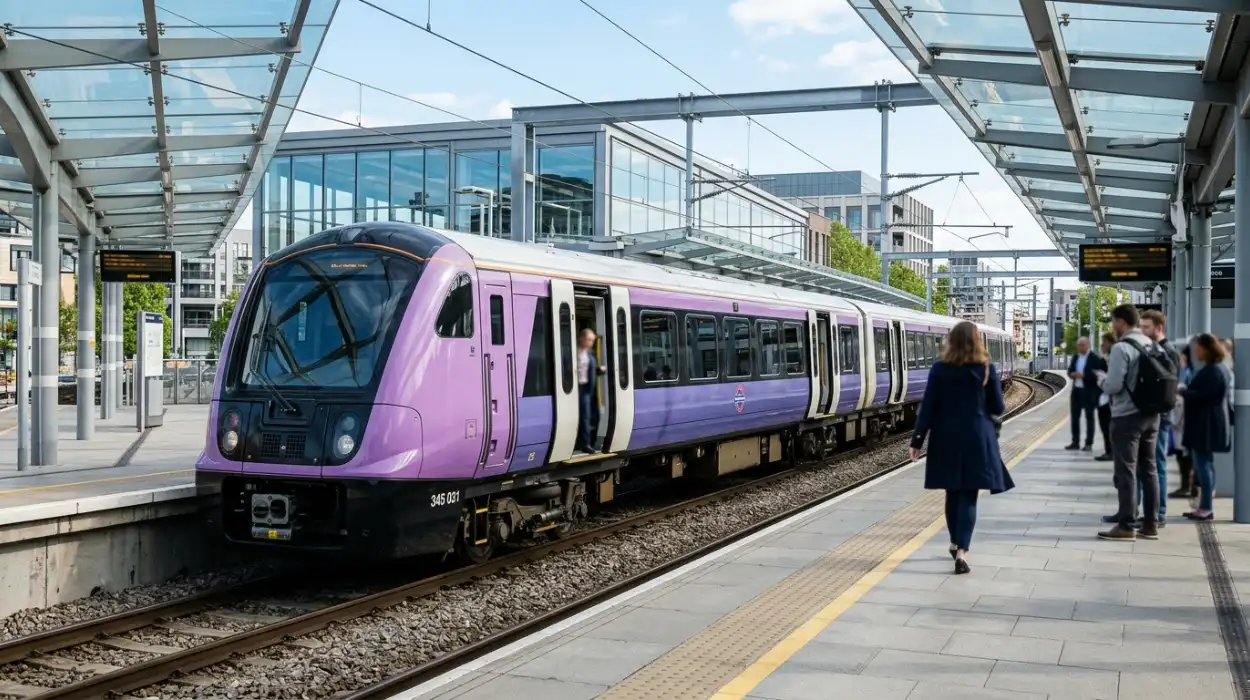
Unlike a conventional Tube line, the Elizabeth line uses modern Class 345 trains and operates across a much longer geographical area. The route stretches from Reading and Heathrow in the west through Ealing and central London before branching towards destinations including Shenfield and Abbey Wood.
For Ealing residents, this means that journeys which previously required an interchange can often be made more directly or with fewer changes.
Which Ealing Stations Have Elizabeth Line Services?
Several stations serving the wider Ealing area are on the Elizabeth line. These include West Ealing, Ealing Broadway, Hanwell and Southall. The official TfL route map shows these stations on the western section of the railway.
Each station serves a slightly different part of the borough and surrounding communities.
Ealing Broadway is particularly important because it is a major interchange with the Central and District lines as well as National Rail services. It is therefore useful for commuters travelling towards central London and for passengers changing between different parts of the transport network.
West Ealing is convenient for residents around West Ealing and nearby neighbourhoods, while Hanwell serves the Hanwell community. Southall, although geographically towards the western edge of the borough, is particularly useful for residents and visitors travelling between Ealing and Heathrow or further west.
The exact service pattern can vary, and not every Elizabeth line train stops at every station, so checking the departure board or journey planner before travelling is sensible.
Why Ealing Broadway Is an Important Transport Hub
Ealing Broadway has long been one of west London’s major transport centres, but the arrival of the Elizabeth line significantly strengthened its role.
Passengers can connect between the Elizabeth line, Central line and District line, while National Rail services provide additional options. This makes the station useful for people travelling to different parts of London rather than simply travelling along the Elizabeth line itself.
For example, someone travelling from Ealing to Oxford Circus might choose the Central line, while someone heading towards Bond Street or Farringdon may find the Elizabeth line more convenient.
This choice is one of the biggest advantages for local residents. Instead of having one fixed route, passengers can compare journey time, connections and service frequency and choose the option that suits them.
Elizabeth Line Journey Times from Ealing
One of the main reasons people search for the Ealing Elizabeth Line is speed. The railway was designed to provide faster cross-London connections and reduce the need for passengers to change trains repeatedly.
From Ealing Broadway, passengers can travel east towards Paddington, Bond Street, Tottenham Court Road, Farringdon, Liverpool Street and Canary Wharf. The official timetable shows frequent services operating through Ealing Broadway towards central London.
Journey times depend on the station, service pattern and time of day, so it is better to check the current TfL journey planner rather than relying on a fixed number.
For a commuter, even saving a few minutes on each journey can become significant over a five-day working week. For tourists, a direct connection can also make it easier to fit several attractions into one day.
Travelling from Ealing to Heathrow Airport
The Elizabeth line is particularly useful for travellers heading between Ealing and Heathrow Airport.
The western section connects Ealing with Heathrow Terminals 2 and 3, Terminal 4 and Terminal 5.
This creates a practical option for tourists staying in Ealing who need to catch a flight. Instead of travelling towards central London and then returning west, passengers can use the Elizabeth line to travel towards Heathrow.
For someone arriving at Heathrow, Ealing can also be a convenient base for exploring London while remaining relatively close to the airport.
However, travellers should check the destination shown on the train before boarding because services can have different destinations. Airport passengers should also allow sufficient time for luggage, walking through stations, security procedures and check-in.
Travelling from Ealing into Central London
The Elizabeth line provides a straightforward route from Ealing towards several major central London stations.
The sequence includes Paddington, Bond Street, Tottenham Court Road and Farringdon before continuing towards Liverpool Street and east London.
This is particularly useful for people working in different parts of central London. A passenger travelling to the West End may find Bond Street or Tottenham Court Road convenient, while someone working around the City can use Farringdon or Liverpool Street.
Tourists can also use these stations as gateways to major attractions, shopping districts, museums, restaurants and London’s business areas.
Connections at Paddington, Bond Street and Farringdon
One of the Elizabeth line’s greatest strengths is its interchange network.
At Paddington, passengers can connect with other railway and Underground services. This makes the station particularly useful for people arriving from the west or connecting to National Rail services.
Bond Street provides access to the West End and connections with the Jubilee and Central lines. This can make destinations around Oxford Street and Mayfair easier to reach.
Farringdon is another major interchange, linking the Elizabeth line with Underground and National Rail services, including connections towards Thameslink destinations.
These interchanges mean the Elizabeth line should not be viewed as a standalone route. Its real value comes from how it fits into the wider London transport network.
How Much Does the Elizabeth Line Cost?
Elizabeth line fares depend on where you travel, the zones involved, the time of travel and the payment method used. Some journeys also have special fare arrangements, particularly on the outer sections of the route.
For most London journeys, passengers can use contactless payment or an Oyster card where valid. Visitors using a Visitor Oyster card tap at the beginning and end of journeys on the Tube, Elizabeth line, London Overground, DLR and National Rail services where applicable.
It is important to touch in and touch out correctly. Failing to complete the journey correctly can result in an incorrect or maximum fare.
If you are travelling beyond the London Oyster area, check payment validity before starting your journey. TfL specifically notes that Oyster is not valid at stations between Reading and West Drayton.
Can You Use Contactless on the Elizabeth Line?
Contactless payment is one of the simplest options for many London journeys. Passengers can use a contactless bank card or compatible device and touch it on the yellow reader at the start and end of the journey.
The important rule is to use the same card or device throughout the journey. Do not touch in with a bank card and touch out with a different card or phone.
For tourists, contactless can be particularly convenient because it avoids purchasing a separate ticket for every journey. Visitors who prefer a physical travel card can also consider an Oyster option depending on their travel plans.
Is the Elizabeth Line Accessible?
Accessibility is an important advantage of the modern railway.
TfL’s accessibility information confirms that Ealing Broadway, West Ealing, Hanwell and Southall have step-free access to all platforms.
Elizabeth line trains also include dedicated wheelchair spaces, priority seating and audio and visual passenger information. The trains have wide, walk-through interiors and multi-purpose areas that can accommodate buggies, luggage and cycles.
This makes the service useful for wheelchair users, passengers with mobility requirements, families travelling with pushchairs and visitors carrying luggage.
Nevertheless, accessibility can depend on the entire journey rather than one station. If you need step-free travel, check every interchange on your planned route before setting off.
What Is the Elizabeth Line Like for Commuters?
For Ealing commuters, the biggest benefit is flexibility. A passenger can choose between the Elizabeth line, Central line, District line, National Rail and bus connections depending on the destination.
Someone working around Canary Wharf, for example, can travel east without making the journey through several separate Underground lines. A commuter heading towards the City can use Farringdon or Liverpool Street as an interchange.
The railway can also make Ealing more attractive to people who work in different parts of London because the transport network is no longer dependent on a single Tube route.
Elizabeth Line for Tourists Visiting Ealing
Visitors sometimes overlook Ealing because central London receives most of the attention from tourists. However, staying in Ealing can provide a quieter base with good transport connections.
The Elizabeth line makes it easier to reach central London attractions while returning to Ealing after a day of sightseeing.
Tourists can also explore the areas around Ealing Broadway, West Ealing and Hanwell rather than treating Ealing simply as somewhere to sleep. Local parks, restaurants, independent businesses and neighbourhood streets provide a different perspective on London life.
TfL itself highlights the Elizabeth line as a route for exploring London’s neighbourhoods, architecture and attractions.
Tips for Using the Elizabeth Line
The simplest way to have a smooth journey is to check your route before leaving.
Look at the train’s destination rather than assuming every Elizabeth line service stops at your station. Some services do not stop at every station.
If you are travelling to Heathrow, check the terminal carefully. Heathrow has multiple stations, so the correct train and terminal information matters.
During busy periods, allow extra time for walking through large interchange stations. Ealing Broadway may be straightforward for a local journey, but changing at major central London stations can involve longer walking distances.
Travellers with luggage should also consider accessibility information and platform locations before travelling.
Is Ealing a Good Place to Live for Transport?
For people who commute regularly, Ealing has a strong transport advantage.
The combination of the Elizabeth line, Central line, District line, National Rail and local buses gives residents multiple ways to reach central London and neighbouring areas.
This is particularly valuable when disruption affects one route. A commuter may be able to switch to another service instead of being completely dependent on one railway line.
The Elizabeth line has therefore become an important part of Ealing’s identity as a well-connected west London borough.
The Ealing Elizabeth Line has made west London travel considerably more connected. With stations including Ealing Broadway, West Ealing, Hanwell and Southall, residents have access to a modern railway linking the borough with central London, Heathrow and destinations further west and east.
For commuters, the major advantage is faster and more flexible access to employment centres. For tourists, it provides an easy connection between Ealing, Heathrow and central London’s attractions. For families and passengers with mobility needs, step-free stations and accessible trains add another practical benefit.
Before travelling, always check the latest timetable, destination and fare information because service patterns can change. Once you understand the route and its connections, the Elizabeth line becomes one of the most useful transport options for exploring Ealing and the wider capital.
FAQs
Which Ealing stations are on the Elizabeth line?
The Elizabeth line serves West Ealing, Ealing Broadway, Hanwell and Southall. These stations connect Ealing with central London, Heathrow and destinations further west and east.
Does the Elizabeth line go from Ealing to Heathrow?
Yes. Elizabeth line services connect the Ealing area with Heathrow stations, including Terminals 2 and 3, Terminal 4 and Terminal 5. Always check the destination and terminal information before travelling.
Is Ealing Broadway on the Elizabeth line?
Yes. Ealing Broadway is an Elizabeth line station and also provides connections with the Central and District lines and other railway services, making it an important interchange in west London.
Can I use contactless on the Ealing Elizabeth line?
Yes, contactless payment can be used for eligible journeys within the London transport network. Touch in and out with the same card or device and check whether your entire journey is within the area where your chosen payment method is valid.
Is Ealing Elizabeth line station step-free?
Ealing Broadway, West Ealing, Hanwell and Southall all have step-free access to their Elizabeth line platforms according to TfL’s current accessibility information.
Is the Elizabeth line faster than the Tube from Ealing?
It can be, depending on your destination. The Elizabeth line offers direct connections to places such as Paddington, Bond Street, Tottenham Court Road and Farringdon, so some journeys require fewer stops or changes. Compare the current journey options before travelling.
Can tourists use the Elizabeth line from Ealing?
Yes. The Elizabeth line is particularly useful for tourists staying in Ealing because it connects the area with central London and Heathrow. Visitors can use contactless payment or suitable Oyster options for eligible journeys and should check the latest TfL journey information before travelling.