
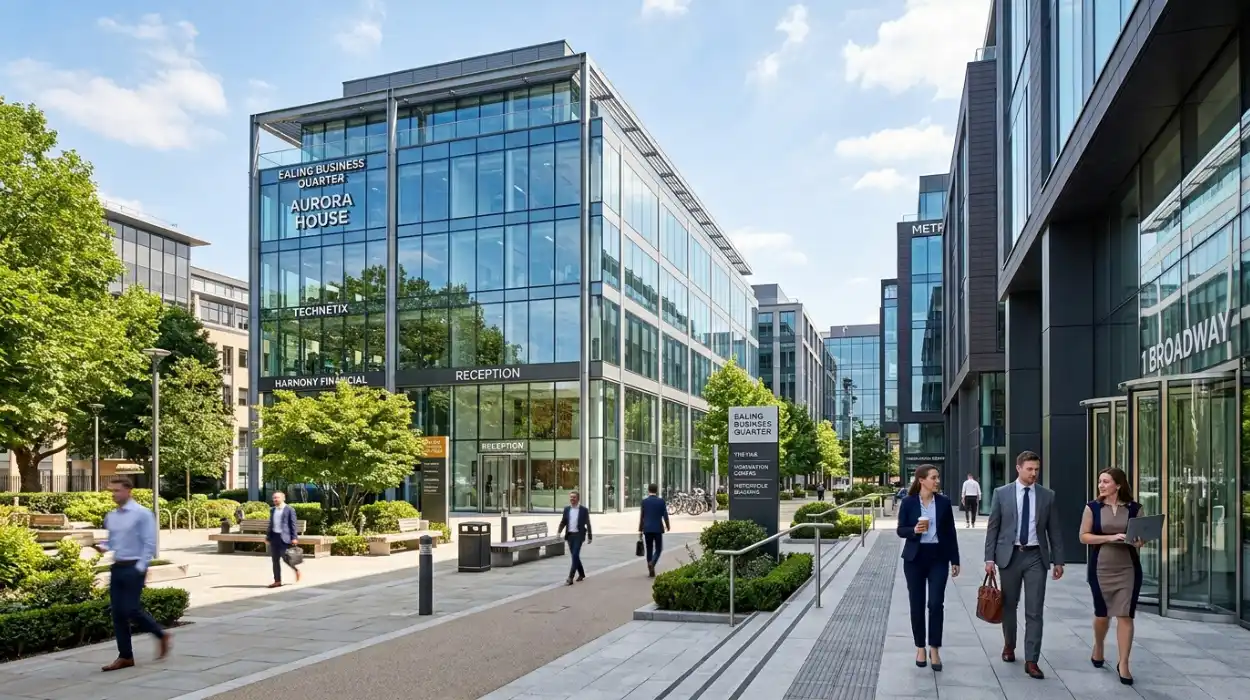
Ealing is one of West London’s most interesting places for businesses, combining established town centres, independent high streets, industrial estates, modern offices and rapidly developing commercial districts. Its location between Central London and Heathrow, together with strong rail, Underground and road connections, makes the borough attractive to companies looking for accessibility without the costs and intensity associated with central London.
Choosing among the best business areas in Ealing depends on what a company actually needs. A creative agency may benefit from the independent atmosphere of Acton, while a manufacturer or logistics company could find Park Royal more practical. A retailer may prioritise footfall in Ealing Broadway or Southall, whereas a professional services firm could prefer an office location close to major transport connections.
Understanding these differences is essential for entrepreneurs, investors, employees, tourists interested in the local economy and businesses considering a move to West London.
Why Ealing is attractive for businesses
Ealing has a diverse economy supported by town centres, high streets, industrial areas, professional services and emerging commercial districts. The borough also benefits from its position within the wider West London economy.
Central Ealing is particularly significant because it provides a wide range of commercial and civic facilities and has strong connections towards Central London and Heathrow. Ealing Council describes central Ealing as a metropolitan centre and notes that the Uxbridge Road corridor is developing as a cluster of office space.
For businesses, location is not only about prestige. Transport accessibility, customer footfall, availability of commercial property, proximity to suppliers, workforce access and local amenities can all affect operating costs and growth potential.
Ealing’s town centres are also important community hubs. They provide places to shop, work, meet and access everyday services, making them valuable locations for businesses that depend on local customers.
Ealing Broadway: Best for professional services and customer-facing businesses
Ealing Broadway is one of the strongest choices for businesses that want a central West London location with excellent connectivity and a substantial local customer base.
The area combines retail, hospitality, offices, professional services and residential communities. Its transport connections make it convenient for employees and clients travelling from different parts of London.
Professional services businesses such as accountants, consultants, recruitment agencies, estate agents, marketing companies and legal firms can benefit from having a recognisable central Ealing address.
Retailers and hospitality businesses can also take advantage of the area’s established commercial environment. Someone visiting Ealing Broadway for shopping may also stop for coffee, lunch, services or other purchases, creating opportunities for businesses that depend on passing customers.
For a small company trying to establish a visible local presence, Ealing Broadway can therefore provide a useful combination of accessibility and commercial activity.
Acton: Best for creative and growing businesses
Acton offers a different business environment from central Ealing. It has a mixture of independent businesses, high-street activity, studios, offices and industrial premises.
Churchfield Road and the area around Acton Central have a more independent, small-scale commercial character, while northern Acton connects into the much larger Park Royal business area.
North Acton is particularly interesting for businesses looking towards future growth. Ealing Council describes it as a fast-developing area with significant planned development and strong transport accessibility.
The area is also relevant to creative, technology and professional businesses. Ealing’s economic strategy identifies creative and digital industries as a priority growth sector, including film, screen and music activity connected to the borough’s creative heritage.
For a start-up or growing company, Acton can therefore offer a balance between connectivity, business infrastructure and a less formal atmosphere than traditional Central London office districts.
Park Royal: Best for industrial, logistics and manufacturing businesses
For industrial and logistics companies, Park Royal stands out as one of the most important business locations in West London.
Park Royal is a major established industrial area with businesses operating across manufacturing, food production, distribution, logistics, media and related sectors. Ealing Council’s current development information describes it as London’s primary established industrial area and identifies substantial employment growth potential.
Its location is particularly useful for companies that need access to major roads and wider transport networks. The area is positioned between Central London and Heathrow, making it attractive for businesses involved in distribution, warehousing and supply chains.
The scale of Park Royal also creates opportunities for companies that need larger commercial premises. A logistics operator, food manufacturer or production business has very different property requirements from a small consultancy, and Park Royal is better suited to these operational needs.
The district is also evolving beyond traditional industrial uses. Creative activity and design businesses are becoming part of its wider commercial identity, creating an interesting mix of established industry and newer sectors.
Southall: Best for retail, food and diverse local markets
Southall has a distinctive commercial identity and is particularly well known for its vibrant retail and food economy. The area’s high streets and businesses serve a large and diverse local community.
For food businesses, restaurants, specialist retailers, grocery shops, fashion businesses and customer-facing services, Southall can provide a strong local market.
The area is also undergoing regeneration, creating opportunities for new businesses and investment. Southall is one of the borough’s major commercial areas and forms part of the wider growth corridor connected to improved transport infrastructure.
Businesses considering Southall should think carefully about their target audience. The area can be particularly suitable for companies whose products or services benefit from a strong local customer base rather than relying entirely on office workers.
Its cultural diversity is another commercial strength. Food, fashion, beauty, hospitality and specialist retail businesses can benefit from an environment where international products and services are already part of everyday commercial life.
Greenford: Best for industrial estates and practical commercial space
Greenford is another important business location for companies that require practical commercial premises. The area includes Greenford Broadway, Westway Cross and industrial estates, creating a mixture of retail and employment uses.
Businesses involved in wholesale, storage, trades, manufacturing and distribution may find Greenford more appropriate than a central high-street location.
One advantage is the relationship between commercial premises and the wider A40 corridor. Businesses that need road access for deliveries, vehicles or regional operations may value this connectivity.
Greenford can also work for companies that want to remain within the London economy without necessarily paying for a highly central office location.
For entrepreneurs comparing commercial property options, it is worth considering the total cost of occupation rather than simply comparing headline rent. Parking, storage, loading access, staff travel and delivery requirements can all influence which area represents better value.
West Ealing and Northfields: Best for independent businesses
West Ealing and Northfields are particularly interesting for smaller businesses that want to operate within established neighbourhood communities.
The commercial environment is less dominated by large-scale corporate premises and more closely connected to local residents. Independent cafés, restaurants, shops, professional services, health businesses and specialist retailers can find opportunities in these neighbourhoods.
This type of location can be valuable for businesses where repeat local customers matter. A hairdresser, fitness studio, dental practice, café or independent retailer may benefit more from being close to its target community than from having a prestigious central address.
Local business directories currently distinguish West Ealing as an area covering Uxbridge Road, Northfields and the streets around Dean Gardens, illustrating the variety of smaller commercial locations within this part of the borough.
Hanwell: Best for community-focused businesses
Hanwell offers another neighbourhood-style business environment. Its commercial areas are closely connected with local residents, independent businesses and community activity.
Boston Road, the Clock Tower area and surrounding streets provide opportunities for smaller customer-facing businesses.
Hanwell can be particularly suitable for entrepreneurs who want to build a loyal local customer base. Businesses such as cafés, food outlets, beauty services, trades, independent shops and professional services can benefit from neighbourhood visibility.
The key consideration is that Hanwell is not trying to compete with Ealing Broadway as a large metropolitan commercial centre. Its strength lies in community, local identity and repeat custom.
For an entrepreneur whose business model depends on relationships and local reputation, this can be an important advantage.
Perivale: Best for established commercial and industrial businesses
Perivale is another area worth considering when looking for practical business premises. It combines established employment areas with recognisable landmarks and industrial activity.
The area is associated with the A40 corridor and includes business estates and employment locations. Its position can make it useful for businesses that need road connectivity rather than constant pedestrian footfall.
Companies involved in storage, distribution, trades, manufacturing and other operational activities may find this type of location more suitable than a traditional town-centre office.
Perivale can therefore be a strong choice for businesses that prioritise functionality, accessibility and premises requirements over a high-street address.
Northolt: Best for local services and practical premises
Northolt provides another option for businesses serving local communities and businesses that need practical commercial space.
The area includes local centres such as Church Road and Mandeville Road, while its position within the wider borough provides connections to other commercial areas.
Local service businesses can benefit from establishing themselves where customers already live. Trades, home services, convenience retail, food businesses and other community-focused companies may find this approach more useful than competing for space in a major town centre.
For businesses considering Northolt, understanding the precise neighbourhood and customer catchment is particularly important. Different parts of the area can have different levels of footfall, accessibility and commercial activity.
Which Ealing business area is best for start-ups?
There is no universal answer because start-ups have different requirements. A technology or creative company may prefer Acton or North Acton because of connectivity and the area’s evolving commercial environment.
A consumer-facing start-up may prefer Ealing Broadway, Southall or a neighbourhood high street where it can build visibility among local customers.
A product-based business requiring storage or workshop space could find Greenford, Perivale or Park Royal more practical.
The best location is therefore the one that matches the business model. Start-ups should consider rent, business rates, transport, staff accessibility, customer demographics, competition, parking and opportunities for expansion before signing a commercial lease.
Which areas are best for small businesses?
Small businesses have particularly broad choices across Ealing. Central Ealing is useful for professional and customer-facing services, while Acton can suit creative and independent businesses.
Hanwell, Northfields and West Ealing can work well for businesses dependent on local communities and repeat customers. Southall can be particularly attractive for retail, food and culturally focused businesses.
Greenford, Northolt and Perivale may be more suitable for companies requiring practical premises or serving customers across a wider geographical area.
This variety is one of Ealing’s biggest commercial strengths. Businesses do not have to follow one standard model when choosing where to locate.
How transport affects business location
Transport is one of the most important factors when choosing a business area in Ealing. Employees need reliable routes to work, customers need to reach businesses easily and companies may need efficient access to suppliers and delivery networks.
Acton is particularly well connected, with several Underground, rail and Overground stations serving different parts of the area.
Central Ealing also benefits from strong public transport connections towards Central London and Heathrow.
For industrial businesses, road access can be equally important. Park Royal, Greenford and Perivale are relevant choices for companies that rely on commercial vehicles and logistics.
A business should therefore assess transport according to its actual operations rather than choosing an area solely because it appears popular.
What makes Ealing’s business economy attractive?
Ealing’s greatest advantage may be its diversity. The borough combines metropolitan centres, neighbourhood high streets, industrial estates, creative districts and emerging commercial areas.
The council has identified several priority growth sectors, including creative and digital industries, the green and circular economy and life sciences. It has also highlighted the borough’s substantial existing business base and connections to major regeneration and investment opportunities.
This creates a broad economic ecosystem. A manufacturer can operate near logistics providers, a creative company can access West London’s media network and a local retailer can serve an established neighbourhood market.
For investors and entrepreneurs, that diversity reduces the need to fit every business into the same type of commercial district.
How should you choose a business area in Ealing?
Before choosing a location, define what the business actually needs. Consider whether customers visit the premises, whether employees need public transport, whether deliveries are frequent and whether the company needs storage, parking or specialist facilities.
Next, consider the target market. A luxury service aimed at professionals may have different location requirements from a takeaway serving a local residential community.
Budget should also be assessed realistically. Rent is only one part of the cost. Business rates, utilities, insurance, fit-out, transport and maintenance can all affect the final figure.
Finally, visit the area at different times of day. A high street that looks busy on a Saturday afternoon may have a very different atmosphere on a weekday morning. Observing footfall, traffic, nearby businesses and customer behaviour can provide information that property listings cannot.
The best business areas in Ealing depend on the type of company, target customers, budget and operational requirements.
Ealing Broadway is a strong option for professional services, retail and customer-facing companies. Acton and North Acton are attractive for creative, technology and growing businesses. Park Royal is particularly important for industrial, logistics and manufacturing operations, while Southall offers a vibrant environment for retail, food and diverse consumer businesses.
Greenford and Perivale provide practical options for companies needing commercial and industrial space, while Hanwell, West Ealing, Northfields and Northolt can suit businesses focused on local communities and neighbourhood demand.
Rather than asking which Ealing area is simply “the best”, businesses should ask which area is best for their particular model. By comparing accessibility, customers, premises, costs and future growth opportunities, entrepreneurs can make a more informed decision and choose a location capable of supporting their business for years to come.
Frequently Asked Questions
What are the best business areas in Ealing?
The best area depends on the type of business. Ealing Broadway suits professional services and retail, Acton is attractive for creative and growing businesses, while Park Royal is particularly suitable for industrial, logistics and manufacturing companies.
Is Ealing Broadway a good place to start a business?
Yes, particularly for customer-facing and professional businesses. Its commercial activity, local population and transport connections can make it an attractive location for companies that need visibility and accessibility.
Is Park Royal good for businesses?
Park Royal is particularly suitable for industrial, manufacturing, food, distribution and logistics businesses. Its scale and strategic location make it one of West London’s most important employment and industrial areas.
Which part of Ealing is best for small businesses?
There is no single best location. Ealing Broadway can suit professional services, while Hanwell, West Ealing and Northfields can work well for independent businesses relying on local customers. Acton is another strong option for creative and growing companies.
Is Acton a good area for businesses?
Acton can be a strong choice because of its extensive transport connections, independent commercial areas and developing North Acton business environment. It is particularly relevant to creative, technology and professional businesses.
Which Ealing areas are best for industrial businesses?
Park Royal, Greenford and Perivale are among the most relevant areas for industrial and operational businesses. The right choice depends on requirements such as warehouse space, loading access, vehicle movements and proximity to customers.
Is Ealing a good place to start a business?
Ealing can be an attractive location because it combines strong transport links, diverse communities, established town centres, industrial areas and emerging commercial districts. The most suitable location depends on the business model, budget and target market.