
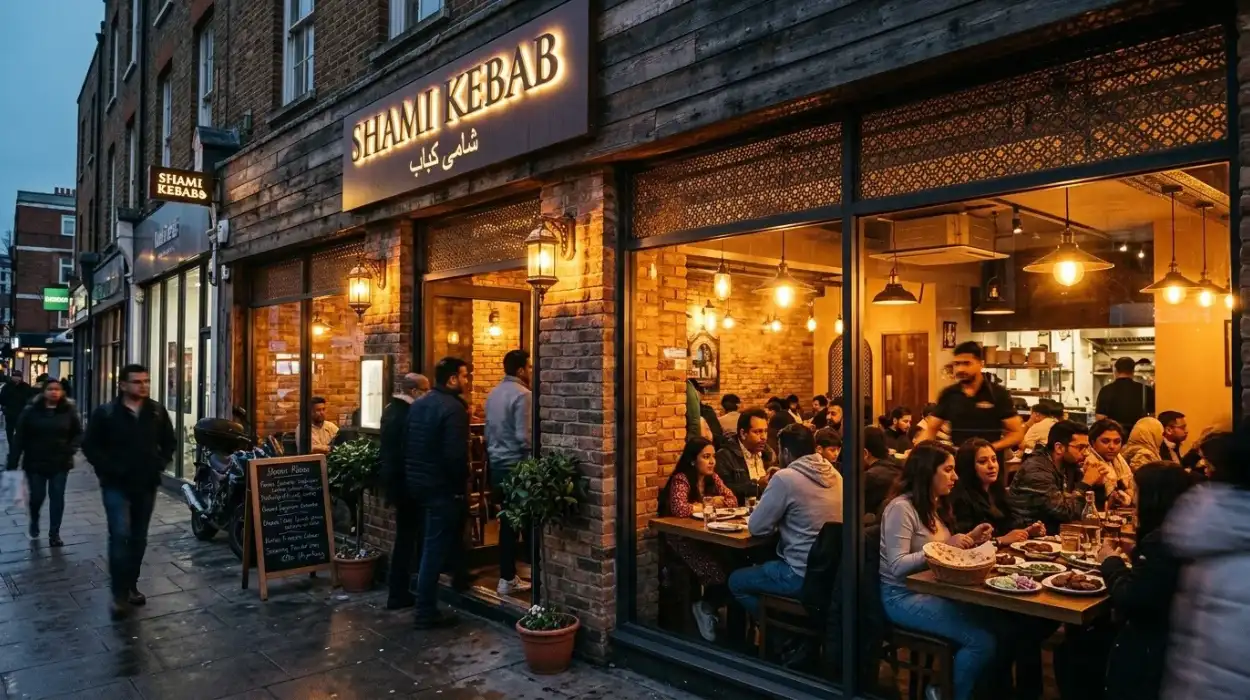
A Shami Kebab Restaurant can be an appealing choice for anyone looking for richly seasoned South Asian food, particularly if kebabs are the main reason for dining out. Shami kebabs are known for their soft texture, aromatic spices and savoury flavour, making them different from the grilled seekh kebab or the crispier fried snacks found across Pakistani and Indian cuisines.
For people living in Ealing and wider West London, searching for a restaurant specialising in shami kebabs can also open the door to a much broader food culture. Restaurants serving Pakistani, Indian, Punjabi and Mughlai-inspired food often offer kebabs alongside curries, biryani, naan, rice dishes, chaats and other regional specialities.
Understanding what makes a shami kebab distinctive, how it is traditionally prepared, what to order alongside it and what to consider when choosing a restaurant can help both local diners and tourists make a more informed decision.
What Is a Shami Kebab?
A shami kebab is a soft, finely textured kebab traditionally associated with the cuisine of the Indian subcontinent. It is commonly prepared using minced meat, lentils, onions, herbs and aromatic spices.
The mixture is cooked until the ingredients become tender, then ground or blended into a cohesive mixture. Small patties are shaped from the mixture and generally shallow-fried before serving.
The result is quite different from a seekh kebab. A seekh kebab is usually shaped around a skewer and grilled, giving it a firmer texture and smoky exterior. A shami kebab is typically flatter, softer and more delicate.
For many diners, this texture is one of its defining characteristics.
Why Are Shami Kebabs So Popular?
Shami kebabs have a combination of characteristics that make them suitable for different occasions.
The meat provides a savoury foundation, while lentils contribute body and texture. Spices, herbs and aromatics create layers of flavour without relying solely on chilli heat.
They can be eaten as a starter, side dish, snack or part of a larger meal. In some South Asian households, shami kebabs are also enjoyed inside bread or buns, accompanied by chutney and salad.
This versatility helps explain why they appear on menus ranging from traditional Pakistani restaurants to broader South Asian eateries.
For someone trying Pakistani food for the first time, a shami kebab can also provide an accessible introduction to the cuisine because it is familiar in concept while still offering distinctive spices and preparation.
What Goes Into a Traditional Shami Kebab?
Recipes differ between households, restaurants and regions, but several ingredients are commonly associated with shami kebabs.
Minced meat is usually combined with lentils, particularly split Bengal gram or chana dal. Onions, ginger, garlic, green chillies, coriander and other herbs can add freshness and aroma.
Spices may include cumin, coriander, black pepper, cloves, cinnamon, cardamom and other warming ingredients.
The mixture is cooked thoroughly before being processed into a fine consistency. Eggs may sometimes be used to help bind the mixture before the patties are fried.
The precise balance is part of what makes different restaurants interesting. One kitchen might produce a mild and aromatic kebab, while another may emphasise black pepper, green chilli or toasted spices.
How Does a Shami Kebab Taste?
A well-prepared shami kebab is generally savoury, aromatic and gently spiced.
Its texture is particularly important. Rather than being coarse like some grilled minced-meat kebabs, it is usually soft and finely textured, with a lightly crisp fried exterior.
The flavour can vary according to the spice mixture. Some versions are noticeably peppery or spicy, while others are milder and allow the meat, lentils and herbs to dominate.
This means that diners who are concerned about very hot food should not assume that every shami kebab will be fiery. Asking restaurant staff about the spice level can be useful.
Shami Kebab Compared With Other Kebabs
The word “kebab” covers a remarkably wide range of dishes across South Asia, the Middle East and Central Asia.
A seekh kebab is commonly made from seasoned minced meat formed around a skewer and cooked over a grill. It tends to have a firmer, grilled texture.
A chapli kebab is a flatter minced-meat kebab associated particularly with north-western Pakistan. It often contains ingredients such as tomato, coriander and crushed spices and has a distinctive coarse texture.
A shami kebab, by contrast, is generally smoother and softer because the cooked mixture is finely processed before the patties are shaped.
For diners choosing between them, the decision can therefore come down to texture as much as flavour.
Someone wanting smoky grilled meat might prefer seekh kebab. Someone looking for a soft, aromatic patty might find shami kebab more appealing.
What Should You Order With Shami Kebabs?
Shami kebabs can be enjoyed on their own, but accompaniments can make the meal more complete.
Mint or coriander chutney is a popular pairing because its freshness contrasts with the richness of the kebab. Sliced onions, cucumber and salad can provide crunch and acidity.
Naan, roti or other flatbreads can turn kebabs into a more substantial meal. Some diners may also combine them with rice dishes or curries when ordering for a group.
For a traditional-style meal, chutney and salad are often enough to complement the kebab without overwhelming its flavour.
If you are ordering several dishes to share, shami kebabs can work particularly well as a starter before biryani, karahi, nihari or another main course.
Shami Kebabs as a Starter
Ordering shami kebabs as a starter is one of the simplest ways to experience them in a restaurant.
A small portion can introduce the flavour and texture without making the diner too full before the main course.
This is particularly useful for groups. One table might order shami kebabs alongside seekh kebabs, samosas or pakoras, allowing everyone to compare different textures and cooking methods.
For tourists unfamiliar with Pakistani cuisine, sharing starters can also be a useful way to discover several dishes without committing to a large individual portion.
Shami Kebab in a Bun or Roll
Another popular way to enjoy a shami kebab is in a bun or bread roll.
The kebab can be combined with chutney, onions, salad and sauces to create a filling snack or casual meal. This style is particularly convenient for takeaway customers.
It also demonstrates how adaptable the dish is. The same kebab can be served as a plated restaurant starter or transformed into a handheld meal.
For someone searching for a quick lunch in West London, a shami kebab roll can therefore be a practical alternative to a full sit-down meal.
Finding a Shami Kebab Restaurant in Ealing
Ealing and the wider West London area have a diverse South Asian food scene, so diners looking for shami kebabs may find them at Pakistani, Indian, Punjabi or broader South Asian restaurants.
However, not every restaurant will prepare shami kebabs in exactly the same way. Some may specialise in grilled kebabs, while others focus on curries or regional dishes.
When searching online, it can help to look beyond the exact phrase “Shami Kebab Restaurant”. Related searches such as “Pakistani restaurant”, “halal kebabs”, “Pakistani kebab near Ealing”, “shami kebab near me” or “South Asian restaurant” can reveal additional options.
The current menu should always be checked before travelling if shami kebab is the specific reason for your visit.
What Should Tourists Know?
International visitors exploring Ealing or London may encounter several South Asian dishes that are unfamiliar at first.
The best approach is to ask about preparation, ingredients and spice levels rather than relying on assumptions.
A shami kebab is not simply another version of a grilled kebab. Its soft texture and lentil-based preparation give it a different character.
Tourists can also consider ordering several small dishes to share. This makes it easier to experience kebabs, chutneys, breads and other Pakistani or Indian specialities within one meal.
For visitors who are already familiar with South Asian food, a specialist restaurant can also provide an opportunity to compare regional interpretations of familiar dishes.
Choosing a Good Shami Kebab Restaurant
Several practical factors can help when choosing where to eat.
First, look at the current menu. If shami kebab is prominently featured alongside other Pakistani dishes, the restaurant may be particularly relevant to what you are looking for.
Customer reviews can also provide clues about portion sizes, service, freshness and consistency. However, reviews represent individual experiences, so they should be treated as one source of information rather than an absolute judgement.
It is also sensible to consider whether you want dine-in, takeaway or delivery. A freshly fried shami kebab may have a different texture when eaten immediately compared with one that has travelled in a takeaway container.
For dietary requirements, ask about ingredients and preparation methods before ordering.
Are Shami Kebabs Spicy?
Shami kebabs can contain chilli and a range of spices, but they are not automatically extremely hot.
Spice levels vary considerably between recipes. Some restaurants may make their kebabs aromatic and mildly spiced, while others may use more green chilli or black pepper.
The flavour is generally about a balance of meat, lentils, herbs and spices rather than simply heat.
If you have a low tolerance for chilli, asking the restaurant about the recipe is the safest approach.
When Is the Best Time to Order Shami Kebabs?
There is no single best occasion.
They work well as an evening starter, a lunchtime snack, part of a family meal or a takeaway option.
During a larger South Asian meal, they can provide a lighter introduction before richer dishes. For a quick meal, placing a shami kebab inside bread with salad and chutney can make a satisfying handheld option.
Families may also find them useful for sharing because their small size makes them easy to divide between diners.
Why Shami Kebabs Deserve a Place on the Menu
A shami kebab represents more than just another kebab variety. Its preparation combines minced meat, lentils, aromatics and spices into a soft patty with a lightly crisp exterior.
That combination makes it distinctive from grilled seekh kebabs, chapli kebabs and other regional varieties.
For Ealing locals, trying one at a Pakistani or South Asian restaurant can be a simple way to explore the area’s multicultural food scene. For tourists, it can provide an introduction to a dish with a strong culinary connection to the Indian subcontinent.
Whether eaten with chutney as a starter, alongside naan as part of a larger meal or in a bread roll as a quick snack, shami kebabs are versatile enough to suit different dining occasions.
The most important consideration is choosing a restaurant whose menu, preparation style and service match your expectations. Checking current menus, reviews, opening hours and dietary information before visiting can help ensure a more enjoyable experience.
Frequently Asked Questions About Shami Kebab Restaurants
What is a shami kebab made from?
A shami kebab is commonly made with minced meat, lentils, onions, herbs and aromatic spices. The cooked mixture is finely processed, shaped into patties and usually shallow-fried.
Is a shami kebab the same as a seekh kebab?
No. A shami kebab is generally a soft, flat patty made from a finely processed mixture, while seekh kebab is usually shaped around a skewer and grilled, giving it a firmer texture.
Are shami kebabs spicy?
Shami kebabs can contain chilli and aromatic spices, but their heat level varies between restaurants and recipes. Some versions are mild, while others are more peppery or spicy.
What do you eat with shami kebabs?
Shami kebabs can be served with mint or coriander chutney, sliced onions, salad, naan or other flatbreads. They can also be included as part of a larger Pakistani or Indian meal.
Can I eat shami kebabs as a main meal?
Yes. Although often served as a starter or side, shami kebabs can become a complete casual meal when served with bread, salad, chutney or other accompaniments.
Are shami kebabs suitable for takeaway?
Yes, shami kebabs are commonly suitable for takeaway. They can be ordered as individual portions, part of a mixed kebab selection or inside a bun or roll, depending on the restaurant.
How do I find a good shami kebab restaurant in Ealing?
Search current menus and customer reviews for Pakistani, Indian, Punjabi and South Asian restaurants in and around Ealing. If shami kebab is your priority, confirm that it is currently available before visiting.