
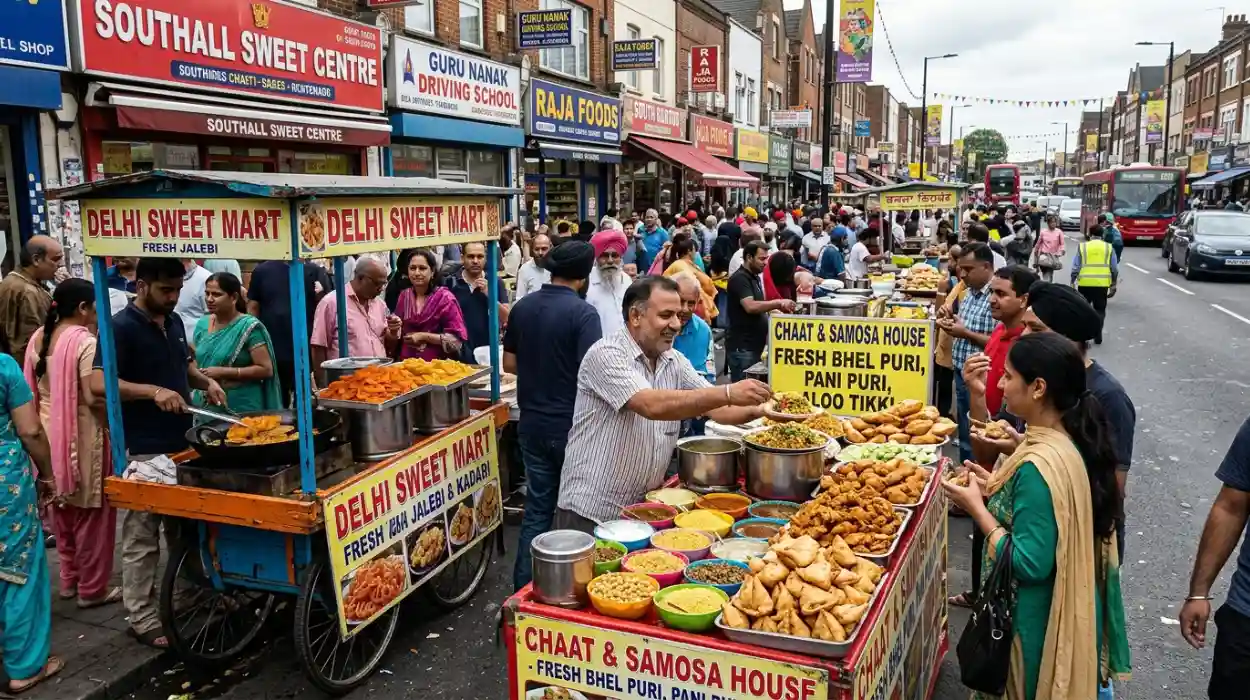
Exploring Southall street food and chaat spots is one of the best ways to experience the lively food culture of West London. Southall is particularly well known for its South Asian communities, specialist food shops, restaurants and busy streets filled with aromas of spices, grilled foods, fried snacks and freshly prepared sweets. For locals in Ealing and visitors exploring London, the area offers an opportunity to discover dishes that are both affordable and full of flavour.
Street food in Southall is not limited to one type of cuisine. You can find Indian and Pakistani snacks, Punjabi favourites, Indo-Chinese dishes, sweets, kebabs and a wide variety of chaat. Among these, chaat has a special appeal because it combines several contrasting flavours and textures in a single serving.
Sweet, sour, spicy, salty, crunchy and creamy ingredients can all appear in the same dish. This makes chaat particularly interesting for first-time visitors and experienced food lovers alike.
What Makes Southall Street Food Special?
Southall’s street food culture reflects the area’s diverse communities and long-standing connection with South Asian food traditions. The food is generally designed to be accessible, quick to serve and easy to enjoy casually.
Unlike formal restaurant dining, street food often encourages customers to order small portions and try several dishes. This makes it ideal for people who want to explore rather than commit to one large meal.
A visitor might begin with samosas, move on to pani puri and finish with jalebi or kulfi. Someone visiting with friends can order several snacks and share them, creating a more varied experience.
The atmosphere is also part of the appeal. Busy food streets, takeaway counters, specialist sweet shops and restaurants create a lively environment that feels distinctly different from a conventional dining area.
What Is Chaat?
Chaat is a broad category of South Asian savoury snacks rather than one specific dish. Recipes vary considerably between regions, families and food businesses.
Common ingredients include potatoes, chickpeas, yoghurt, tamarind chutney, mint chutney, onions, coriander, spices, crispy fried elements and sometimes sev, a fine noodle-like snack made from gram flour.
The characteristic feature of chaat is contrast. A single plate may combine crunchy ingredients with soft potatoes, creamy yoghurt, tangy tamarind and spicy chutney.
This balance is what makes chaat so appealing. It can be intensely flavoured without relying on one ingredient to dominate the entire dish.
Popular Chaat Dishes to Try
Anyone searching for Southall street food and chaat spots will likely encounter several familiar favourites.
Pani puri is one of the most recognisable. Small, crisp puris are filled with ingredients such as spiced potato or chickpeas before being filled with flavoured water. The result is light, crunchy and intensely tangy.
Bhel puri is another popular option. It generally combines puffed rice with vegetables, chutneys, sev and spices. The texture is particularly important, as the dish is designed to be eaten while the crunchy ingredients remain fresh.
Aloo tikki chaat is centred around fried potato patties. These can be topped with yoghurt, chutneys, chickpeas, spices and other garnishes, producing a rich combination of textures and flavours.
Papdi chaat uses crisp papdi as a base, topped with ingredients such as yoghurt, chutneys, potatoes and spices. It can be particularly satisfying for people who enjoy creamy and crunchy combinations.
Samosas and Other Street Snacks
Chaat is only one part of Southall’s street food scene. Samosas are another popular choice, particularly for people looking for a quick savoury snack.
A traditional vegetable samosa generally contains a seasoned filling of potato and other vegetables wrapped in a crisp pastry shell. Meat-filled versions may also be available, depending on the food outlet.
Pakoras are another common snack. These involve vegetables or other ingredients coated in a seasoned batter and fried until crisp. They are often served with chutney.
Kachori, aloo tikki and various types of stuffed or fried snacks can also appear on menus. Trying several small items can provide a better understanding of the range available than ordering one large meal.
The Importance of Chutneys
Chutneys are central to many chaat dishes. They are not simply sauces added for decoration; they contribute acidity, sweetness, freshness and heat.
Tamarind chutney is usually sweet and tangy, providing a distinctive contrast to savoury ingredients. Mint and coriander chutney can provide a fresher, sharper flavour with varying levels of chilli.
Some dishes use several chutneys simultaneously. The interaction between sweet tamarind, spicy green chutney and creamy yoghurt is an important part of the chaat experience.
If you are sensitive to chilli, ask for less green chutney or request sauces separately. This can allow you to enjoy the other flavours without making the dish uncomfortably hot.
Street Food for First-Time Visitors
If you have never tried South Asian street food, it can be tempting to order the most elaborate dish available. However, starting with familiar snacks can make the experience easier.
Aloo tikki, samosa or bhel puri can be good introductory choices. They allow you to experience spices and chutneys without the intensity of some more adventurous dishes.
Pani puri is particularly fun for people who enjoy trying something different, but the combination of flavoured water and crisp puri can be unfamiliar at first.
Another good strategy is to visit with friends. Ordering several small dishes means everyone can try a little without committing to one particular flavour.
Vegetarian Street Food Options
South Asian street food provides many vegetarian choices, making Southall particularly useful for people who do not eat meat.
Samosas, aloo tikki, pani puri, bhel puri, papdi chaat and various pakoras can all be prepared without meat. However, recipes and cooking methods vary between businesses.
Vegetarians should still check ingredients if they have strict dietary requirements. Some chutneys, sauces or fillings may contain unexpected ingredients.
For vegan diners, yoghurt is an ingredient worth checking carefully because it is common in many chaat dishes. Asking for yoghurt to be removed may make certain dishes suitable, but preparation practices should also be considered.
Halal Food and Dietary Requirements
Southall’s food scene includes many halal-friendly options, but halal status should always be confirmed with the individual business if it is essential to your diet.
Street food can also involve several shared preparation areas. Customers with serious allergies should communicate their requirements clearly and ask about ingredients and potential cross-contact.
Common allergens in South Asian food can include dairy, nuts, gluten and certain seeds. Sweets and desserts may contain almonds, pistachios, cashews or milk products.
Being specific when ordering is especially important if you have a medically significant allergy.
Best Times to Explore Southall Street Food
The best time to explore depends on the experience you want. Lunchtime can be convenient for a quick food-focused visit, while evenings can offer a livelier atmosphere.
Weekends may be busier, particularly around popular food streets and established takeaway businesses. If you prefer a quieter experience, visiting outside the busiest periods may make it easier to browse menus and order comfortably.
Weather can also affect the experience. Some street food is best enjoyed immediately after preparation, while takeaway options provide flexibility if you prefer to eat indoors.
Before travelling, check current opening times because individual businesses may operate different schedules.
Street Food for Families
Southall street food can be an enjoyable choice for families because there are many small portions and familiar snacks.
Children may prefer simple samosas, potato-based snacks or sweet treats, while adults can explore spicy chaat and more strongly seasoned dishes.
Sharing several items also allows parents to introduce children to new flavours gradually. Rather than ordering a large portion of one unfamiliar dish, a family can select several small snacks and taste them together.
For younger children, be mindful of chilli levels. Chaat can vary significantly in spiciness, and some chutneys can be quite hot.
Street Food for Students and Budget Diners
One reason street food remains popular is its ability to provide flavourful meals without the formality of a sit-down restaurant.
Students and younger diners can often create a varied meal by combining smaller snacks rather than purchasing one expensive main course. Samosas, chaat, pakoras and other snacks can be shared between friends.
However, prices and portion sizes vary between businesses. Checking the current menu before ordering is the best way to understand what represents good value for your budget.
For people visiting Southall specifically for food, setting a small budget and trying several different snacks can make the experience more interesting.
Desserts After Chaat
A spicy or tangy chaat meal naturally creates an opportunity for something sweet afterwards. Southall is particularly strong when it comes to South Asian desserts and traditional sweets.
Jalebi, gulab jamun, barfi, rasmalai and kulfi are all options that may be available from local sweet shops and dessert businesses.
Kulfi can be especially refreshing after spicy food because it is cold and creamy. Gulab jamun provides a warmer, syrupy alternative.
Trying a traditional sweet after savoury street food also demonstrates the broader connection between Southall’s snack and dessert culture.
Southall Street Food for Tourists
For tourists exploring West London, Southall offers an opportunity to experience a different side of the city’s food culture. Rather than focusing exclusively on traditional tourist attractions, visitors can explore a neighbourhood through its markets, restaurants, shops and food stalls.
A food-focused itinerary could include a morning walk, lunch consisting of chaat and savoury snacks, followed by a visit to a sweet shop.
Tourists unfamiliar with South Asian food may find it useful to ask staff what their most popular dishes are. Local recommendations can help visitors avoid ordering something that does not match their taste or spice tolerance.
Exploring Ealing’s Wider Food Scene
Southall forms part of a wider multicultural food landscape across Ealing and West London. Nearby areas such as Ealing Broadway, Hanwell, Greenford and Perivale also offer restaurants and food businesses representing different cuisines.
For local residents, this makes exploring food across the borough particularly convenient. A Southall food trip can become part of a broader weekend outing rather than a standalone restaurant visit.
For visitors, the diversity of the area demonstrates how London’s food culture extends far beyond central neighbourhoods.
How to Choose Good Chaat
Choosing a good chaat spot involves more than simply looking for the longest menu. Freshness is particularly important because several chaat dishes depend on crisp textures.
Pani puri should ideally be crisp, while bhel puri and papdi chaat are best when crunchy ingredients have not become soggy. Fresh herbs and chutneys should add brightness rather than overpowering the dish.
Busy food outlets can sometimes indicate strong demand, but popularity alone does not guarantee quality. Look for clean preparation areas, good food turnover and clear menu information.
If you are unsure what to order, ask staff which dishes are freshly prepared or particularly popular.
Exploring Southall street food and chaat spots provides an opportunity to experience one of West London’s most exciting food cultures. Chaat combines sweet, sour, spicy, salty, creamy and crunchy elements, while the wider street food scene includes samosas, pakoras, kebabs, sweets and many other specialities.
For first-time visitors, starting with familiar snacks and gradually exploring more adventurous dishes can make the experience enjoyable. Sharing several items with friends or family is another excellent way to discover different flavours.
Locals from Ealing can enjoy Southall as a convenient food destination, while tourists can use its restaurants, shops and street food as a way to experience the area’s multicultural character.
Whether you want a quick snack, a casual meal, a family outing or a full food-focused adventure, Southall’s street food scene offers plenty of opportunities to discover something new.
FAQs
What is the best street food to try in Southall?
Popular choices include pani puri, bhel puri, aloo tikki chaat, papdi chaat, samosas and pakoras. Trying several small dishes is a good way to experience different flavours.
Is Southall chaat spicy?
It can be, but the level of heat varies. Green chilli chutney can be particularly spicy, so ask for less chutney if you prefer milder food.
What is pani puri?
Pani puri consists of small, crisp hollow puris filled with ingredients such as spiced potato or chickpeas and flavoured water. It is known for its tangy, spicy and refreshing combination.
Is Southall street food suitable for vegetarians?
Yes. Many popular street foods, including samosas, pani puri, bhel puri, aloo tikki and pakoras, can be vegetarian. Always check ingredients if you have specific dietary requirements.
Can I find halal street food in Southall?
Southall has many halal food options, but halal status varies between individual businesses. If halal food is essential to you, confirm the restaurant or food stall’s current status before ordering.
What should I eat after chaat?
Traditional South Asian desserts such as jalebi, gulab jamun, rasmalai, barfi and kulfi can make a good follow-up to savoury chaat.
Is Southall street food good for tourists?
Yes. Southall’s food scene offers tourists an opportunity to experience South Asian flavours and local culture beyond central London’s traditional attractions.