

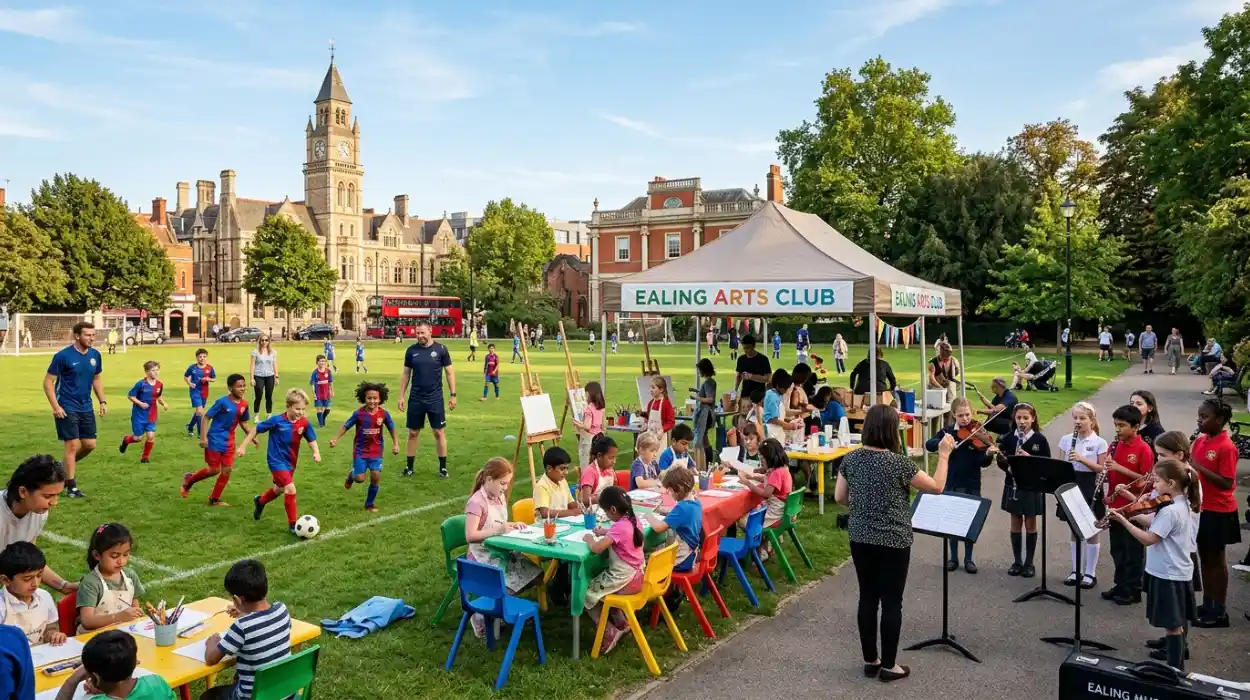
Ealing is a family-friendly part of west London with plenty of opportunities for children to learn, exercise, socialise and develop new interests outside school hours. For parents, choosing the right after-school activities in Ealing can be about much more than simply keeping children occupied. The right activity can help build confidence, encourage independence, develop practical skills and give children a positive routine after the school day.
From football and swimming to dance, music, arts, libraries and educational clubs, families have a wide range of options across Ealing, Acton, Hanwell, Southall, Northfields, West Ealing and nearby neighbourhoods. Some activities are structured around regular weekly sessions, while others are suitable for occasional participation during term time or school holidays.
Whether you have recently moved to Ealing, are visiting west London with children or are a local parent looking for something new, understanding the different choices can make it easier to find an activity that suits your child’s age, personality and interests.
Why After-School Activities Matter for Children
School provides an important academic and social environment, but children also benefit from opportunities outside the classroom. An after-school club can give them a chance to explore interests that may not form part of their normal school timetable.
Physical activities such as football, swimming and gymnastics can support coordination, fitness and teamwork. Creative activities such as painting, dance, drama and music can encourage self-expression. Meanwhile, coding, chess, reading and educational clubs can develop concentration, problem-solving and communication skills.
The social element is equally important. A child who is naturally outgoing may enjoy team sports, while a quieter child might prefer art, music or a smaller educational group. Parents should therefore consider the child’s personality rather than choosing an activity simply because it is popular.
Football and Team Sports
Football remains one of the most accessible choices for children in London. Ealing has parks, sports grounds and community facilities where children can participate in organised football and other team sports.
Team sports can be particularly useful for children who enjoy being active and spending time with friends. Regular training introduces children to basic sporting techniques while teaching them about cooperation, communication and fair play.
Basketball, cricket and other sports may also be available through local clubs and community programmes. Parents should check the age groups, training schedules, ability levels and whether sessions are designed for beginners or more experienced players.
For a child who spends much of the school day sitting in lessons, an energetic activity after school can also provide a useful change of pace.
Swimming and Aquatic Activities
Swimming is another practical activity that combines recreation with an important life skill. Children can progress from basic water confidence to structured swimming lessons as their ability develops.
For younger children, lessons may focus on becoming comfortable in the water and learning basic movements. Older children can work on strokes, breathing techniques, endurance and swimming proficiency.
Parents choosing swimming lessons should consider travel time, session length, class size and the child’s current ability. A convenient swimming venue can make a significant difference because weekly activities are easier to maintain when they fit naturally into the family routine.
Dance, Ballet and Performing Arts
Dance can appeal to children who enjoy movement, music and performance. Depending on the child’s interests, options may include ballet, contemporary dance, street dance, jazz or other styles.
Dance classes can help develop balance, flexibility, rhythm and body awareness. They can also provide an opportunity for children to perform in front of others, which may gradually improve confidence.
Performing arts can extend beyond dance. Drama and theatre activities allow children to develop storytelling, communication and improvisation skills. A child who enjoys pretending, creating characters or telling stories may find drama particularly rewarding.
These activities can also provide a valuable creative outlet after an academically focused school day.
Music Lessons and Creative Learning
Learning an instrument is a popular after-school choice for families who want to encourage a long-term skill. Piano, guitar, violin and singing lessons are among the possibilities parents may explore in and around Ealing.
Music education requires patience and regular practice, so parents should consider whether their child is genuinely interested before committing to intensive lessons. Shorter introductory sessions can help determine whether an instrument is a good fit.
Creative activities do not have to be limited to music. Art, drawing, painting, crafts and photography can allow children to experiment with different forms of expression.
For some children, creative activities offer a relaxing alternative to competitive sports and academic clubs.
Art and Craft Clubs
Art and craft sessions can be especially appealing to younger children who enjoy making things with their hands. Activities might include drawing, painting, model-making, collage and seasonal craft projects.
The value of these sessions goes beyond producing a finished picture. Children practise following instructions, choosing colours, handling materials and completing projects from beginning to end.
Art clubs can also be suitable for children who become overwhelmed by highly competitive environments. The emphasis is often on creativity and participation rather than winning.
Parents looking for after-school activities in Ealing should therefore consider creative clubs alongside traditional sports and tutoring.
Coding, Chess and Educational Clubs
Not every after-school activity needs to be physically demanding. Coding clubs, chess groups, science sessions and educational workshops can provide children with stimulating intellectual challenges.
Coding activities can introduce children to computational thinking, logic and problem-solving. Chess encourages strategic thinking, concentration and planning several moves ahead. Reading and homework clubs can provide structured support for children who benefit from a quieter environment after school.
These activities may be particularly useful when a child’s interests already lean towards technology, puzzles, mathematics or problem-solving.
However, educational activities should still feel enjoyable. Children already spend substantial time learning at school, so an after-school club works best when it combines learning with curiosity and interaction.
Libraries and Community Spaces
Libraries can provide another valuable option for families. Ealing’s library network and community spaces can support reading, children’s activities, workshops and family events, depending on the programme available at each location.
A library-based activity can be a good choice for children who enjoy books, storytelling and quieter environments. It can also encourage independent reading habits.
Community centres can similarly provide opportunities for clubs, workshops and recreational activities. Because programmes can change during the year, parents should check current schedules rather than relying on older listings.
Outdoor Activities in Ealing
Ealing’s parks and open spaces provide opportunities for children to spend time outdoors after school. Places such as Walpole Park, Gunnersbury Park and other local green spaces can be useful for informal play, walking, cycling and family activities.
Outdoor time can be particularly valuable for children who spend most of the school day indoors. A simple visit to a park after school does not require registration, membership or a weekly commitment.
Families can combine organised activities with informal outdoor time. For example, a child might attend football training on one weekday and spend another afternoon cycling or playing in a local park.
How to Choose the Right After-School Activity
The best activity is not necessarily the most prestigious or expensive one. It is the one a child is likely to enjoy and attend consistently.
Start by asking what the child already enjoys. A child who loves running may respond well to athletics or football, while someone who enjoys drawing may prefer art. Children who love stories and performing may naturally gravitate towards drama or dance.
Practical considerations matter too. Parents should look at the distance from school or home, session times, fees, equipment requirements and cancellation policies.
It is also worth considering the child’s workload. Several activities every week can quickly create a busy schedule. One or two well-chosen activities may provide more benefit than filling every afternoon.
After-School Activities for Different Ages
Younger children often benefit from activities that focus on movement, creativity and social interaction. Dance, swimming, arts and crafts and beginner sports can all provide suitable starting points.
Primary-school children may begin exploring more specialised interests, including football, martial arts, music, coding, drama and structured sports.
Older children may prefer activities that develop specific skills or prepare them for competitions, performances or future interests. Their own preferences should have greater influence as they become more independent.
Parents should always check the minimum and maximum ages for individual sessions because requirements vary between providers.
Managing Cost and Time
The cost of extracurricular activities can vary considerably. Some community events and library activities may be free, while private lessons and specialist clubs can involve regular fees.
Families can manage costs by prioritising activities that offer the greatest value for their child’s interests. It may also be worth checking whether local organisations offer trial sessions, sibling discounts, termly packages or reduced-cost community programmes.
Time is another important consideration. An activity that takes place close to school may be easier to manage than one requiring a long journey across west London.
A realistic routine is more sustainable than an overloaded timetable. Children need time for homework, meals, rest, family life and unstructured play as well.
Making After-School Activities a Positive Experience
Children should feel that extracurricular activities are something they enjoy rather than another source of pressure. Parents can encourage commitment without turning every session into a performance test.
It is normal for interests to change. A child may enjoy football for one year and then discover an interest in music, swimming or art. Allowing some flexibility can help children understand their own strengths and preferences.
The most successful after-school routine often combines different types of experiences: physical activity for exercise, creative activities for expression and social or educational activities for development.
Finding the Best After-School Activities in Ealing
Ealing offers families a broad choice of activities across sports, arts, education, music and community programmes. The best option depends on the child’s age, interests, personality, schedule and the family’s budget.
Parents should compare current local programmes carefully, ask about trial sessions where available and consider how an activity fits into the wider weekly routine. It is also sensible to check safeguarding arrangements, staff qualifications, class sizes and collection procedures when choosing organised childcare or clubs.
For families living in Ealing, the advantage is variety. Whether a child dreams of becoming a footballer, enjoys creating artwork, wants to learn an instrument or simply needs somewhere positive to spend time after school, there are opportunities to explore.
Ultimately, the best after-school activities in Ealing are those that help children stay active, curious, confident and connected while allowing them to discover interests beyond the classroom.
Frequently Asked Questions
What are the best after-school activities in Ealing?
Popular choices include football, swimming, dance, music, drama, arts and crafts, coding, chess and other educational clubs. The best option depends on the child’s age and interests.
Are there free after-school activities in Ealing?
Some community events, library activities and outdoor activities may be free, although regular organised clubs often charge fees. Availability changes, so families should check current local programmes.
What activities are suitable for younger children?
Swimming, beginner dance, arts and crafts, storytelling and introductory sports can be suitable for younger children. Parents should check the age requirements of each provider.
Are there sports clubs for children in Ealing?
Yes. Families can explore children’s football, swimming, basketball, cricket and other sports through local clubs, leisure facilities and community programmes.
Can after-school activities help children’s development?
Yes. Different activities can support physical fitness, communication, confidence, creativity, teamwork, concentration and problem-solving skills.
How many after-school activities should a child do?
There is no universal number. One or two enjoyable activities may be enough, particularly when children also need time for homework, rest, family life and unstructured play.
How should parents choose an after-school club in Ealing?
Consider the child’s interests, age, ability, timetable and the activity’s location. Parents should also check fees, safeguarding arrangements, staff qualifications, class sizes and trial-session options where available.