
Ealing is often celebrated as one of London’s greenest boroughs, offering far more than spacious parks and tree-lined streets. Throughout the year, its carefully maintained gardens, colourful flower beds, ornamental landscapes and community green spaces transform the borough into a changing display of seasonal beauty. From vibrant spring blossoms and fragrant summer roses to golden autumn foliage and elegant winter planting, Ealing provides memorable outdoor experiences for gardeners, photographers, families and nature enthusiasts alike.
For worldwide tourists, these gardens offer a peaceful alternative to London’s busier attractions while showcasing British horticultural traditions. For local residents, they provide relaxing spaces to reconnect with nature, enjoy seasonal events and appreciate the borough’s commitment to preserving attractive public landscapes. Exploring Ealing’s gardens across the changing seasons reveals why this West London destination continues to attract visitors seeking beauty, tranquillity and inspiration.
Why Ealing Is One of London’s Greenest Boroughs
Ealing has earned its reputation through decades of investment in parks, gardens and urban green spaces. The borough combines historic estates, landscaped public parks, riverside walks and community gardens that encourage biodiversity while providing attractive recreational areas.
Unlike many heavily urbanised parts of London, Ealing balances residential development with extensive planting schemes, mature trees and seasonal floral displays. These carefully managed environments support wildlife, improve air quality and create welcoming public spaces throughout the year.
Visitors quickly notice how gardens are integrated into everyday life. Whether strolling through neighbourhood parks, relaxing near historic buildings or enjoying floral displays outside civic spaces, greenery remains a defining feature of the borough’s identity.
Walpole Park Showcases Outstanding Seasonal Planting
Walpole Park stands among Ealing’s most celebrated horticultural destinations. Adjacent to the historic Pitzhanger Manor, this beautifully restored park blends heritage landscapes with carefully planned flower beds and ornamental gardens.
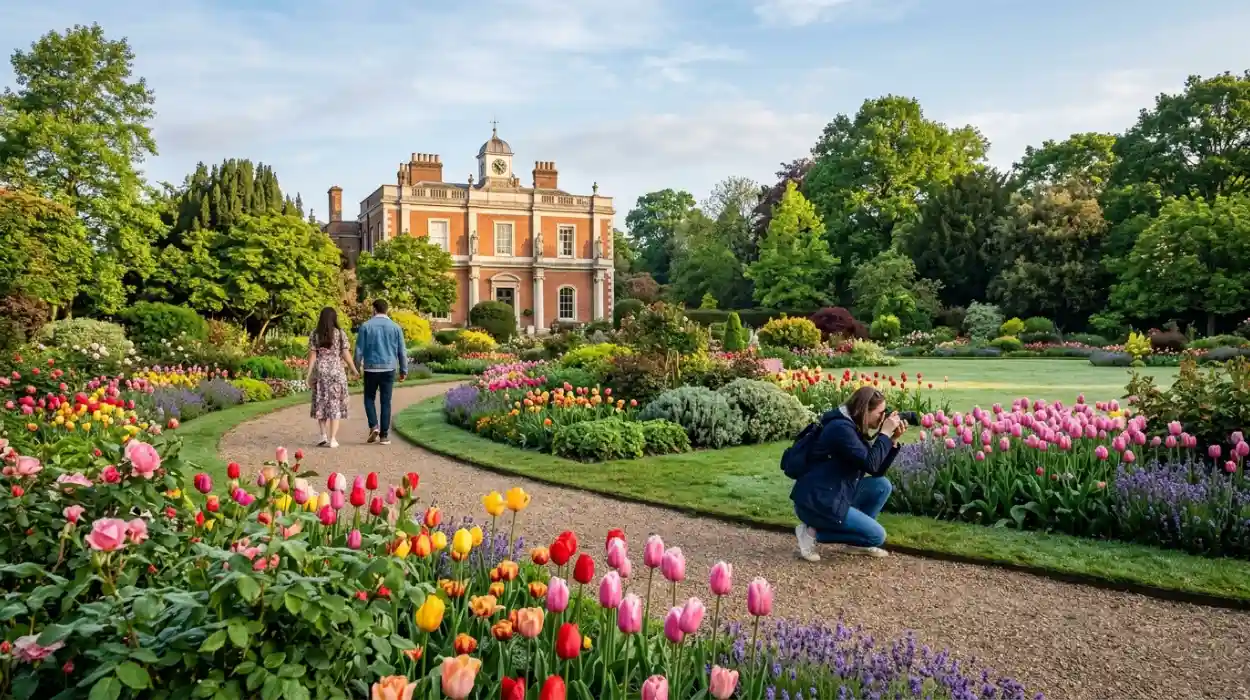
Spring brings spectacular displays of daffodils, tulips, magnolias and flowering cherry trees that attract photographers and garden enthusiasts from across London. Fresh green lawns and colourful borders create an inviting setting for leisurely walks and family picnics.
During summer, roses, lavender and herbaceous perennials fill the gardens with colour and fragrance. Butterflies and bees become increasingly active, demonstrating the park’s importance as a habitat for pollinators.
Autumn transforms the landscape with rich shades of gold, amber and crimson as mature trees create picturesque pathways. Even winter retains visual interest through evergreen planting, ornamental grasses and elegant tree structures.
Throughout every season, Walpole Park illustrates how thoughtful landscape design creates beauty that changes without losing its appeal.
Pitzhanger Manor Gardens Blend History and Horticulture
The gardens surrounding Pitzhanger Manor offer another exceptional example of Ealing’s horticultural heritage. Originally designed to complement Sir John Soane’s remarkable country house, these gardens continue to reflect historic landscape principles while supporting modern conservation and planting initiatives.
Visitors can admire formal planting schemes alongside open lawns and mature trees that frame views of the manor itself. Seasonal flowers ensure there is always something new to discover regardless of the time of year.
Garden enthusiasts particularly appreciate the careful restoration work that has preserved historical character while introducing sustainable planting suited to contemporary environmental goals.
The combination of architecture, history and horticulture creates one of Ealing’s most rewarding outdoor experiences.
Lammas Park Offers Colourful Landscapes for Every Season
Lammas Park is widely known for its open recreational spaces, but its gardens and seasonal planting also deserve recognition.
Spring introduces flowering trees and colourful bulbs that brighten pathways throughout the park. Summer sees expansive lawns surrounded by vibrant planting, making it a popular destination for picnics, outdoor reading and family activities.
Autumn creates dramatic displays as mature trees develop brilliant foliage, while winter reveals elegant silhouettes and peaceful open views ideal for reflective walks.
The park’s variety of habitats supports birds, butterflies and other wildlife, encouraging visitors to observe nature alongside the changing floral displays.
Gunnersbury Park Combines Grand Gardens with Historic Beauty
Although shared with neighbouring boroughs, Gunnersbury Park remains easily accessible from Ealing and provides extensive formal gardens, woodland landscapes and seasonal floral displays.
Historic buildings overlook beautifully maintained lawns, ornamental lakes and colourful planting schemes that evolve throughout the year. Spring blossoms introduce fresh colours, while summer gardens become vibrant with flowering shrubs and perennial borders.
Autumn foliage reflects across the park’s lakes, creating outstanding photography opportunities, and winter highlights the estate’s architectural elegance against simpler natural surroundings.
Visitors often combine garden exploration with museum visits, creating a balanced day that celebrates both heritage and nature.
Community Gardens Add Local Character
Beyond its larger parks, Ealing supports numerous community gardens that reflect the creativity and dedication of local residents.
These shared spaces encourage sustainable gardening, biodiversity and neighbourhood participation. Volunteers cultivate flowers, herbs and native plants while creating welcoming environments where people of all ages can learn about horticulture.
Community gardens also strengthen local relationships by bringing together gardeners, schools and environmental organisations through seasonal planting projects and educational workshops.
Visitors interested in sustainable urban gardening often find these spaces particularly inspiring.
Seasonal Floral Displays Transform Public Spaces
One of the most distinctive aspects of Ealing’s horticultural landscape is the continual change created by seasonal planting.
Spring introduces colourful bulbs including crocuses, daffodils and tulips, followed by flowering trees that line streets and park pathways.
Summer features vibrant hanging baskets, ornamental beds and fragrant roses that attract bees and butterflies. Public squares and civic buildings become brighter through carefully coordinated floral displays.
Autumn replaces vivid flowers with warm foliage, ornamental grasses and seed heads that provide texture as temperatures begin to fall.
Winter demonstrates that gardens remain attractive even without abundant blooms. Evergreen shrubs, winter-flowering plants and carefully pruned trees create elegant landscapes filled with subtle beauty.
These continual transformations encourage repeat visits throughout the year.
Wildlife Thrives Among Ealing’s Gardens
Ealing’s gardens do far more than provide visual beauty. They also support thriving ecosystems that benefit birds, insects and other wildlife.
Flower-rich planting attracts pollinators including bees, butterflies and hoverflies, while mature trees provide nesting opportunities for numerous bird species.
Garden ponds, hedgerows and wildflower areas create habitats supporting frogs, dragonflies and beneficial insects. Visitors frequently observe robins, blackbirds, woodpeckers and other familiar birds while exploring the borough’s parks.
Conservation-focused planting demonstrates how attractive public gardens can also contribute to environmental sustainability.
Photography Opportunities Throughout the Year
Photographers regularly visit Ealing because every season offers unique visual possibilities.
Spring blossoms create delicate pastel colours ideal for portrait and landscape photography. Summer provides dramatic contrasts between bright flowers and lush green lawns.
Autumn is particularly popular thanks to vibrant foliage and softer natural light that enhances outdoor images. Winter offers peaceful compositions featuring frosty mornings, bare branches and historic buildings surrounded by subtle seasonal planting.
Early mornings and golden-hour evenings provide especially rewarding conditions for capturing the borough’s gardens at their most atmospheric.
Family-Friendly Gardens for Relaxation and Learning
Ealing’s gardens appeal to visitors of all ages. Families often spend entire afternoons exploring flower beds, observing wildlife and enjoying picnics in safe outdoor environments.
Children benefit from opportunities to learn about plants, insects and seasonal changes through direct experience rather than classroom study. Many parks also include playgrounds, cafés and accessible pathways that make visits comfortable for everyone.
Schools regularly organise educational trips introducing pupils to horticulture, biodiversity and environmental conservation.
These experiences encourage future generations to appreciate nature while enjoying healthy outdoor recreation.
Planning a Garden-Themed Day in Ealing
Visitors hoping to experience Ealing’s finest floral displays can easily create a rewarding day itinerary.
Begin at Pitzhanger Manor and Walpole Park, where historic gardens provide an excellent introduction to the borough’s horticultural heritage.
Continue towards Lammas Park for open green spaces before spending the afternoon exploring Gunnersbury Park’s landscaped gardens and woodland walks.
Stopping at a nearby independent café for lunch allows visitors to relax before continuing their exploration.
Comfortable footwear, a camera and seasonal clothing help ensure an enjoyable experience regardless of the weather.
Why Seasonal Gardens Reflect Ealing’s True Character
Although Ealing is widely recognised for its parks, historic architecture and film heritage, its seasonal gardens reveal another important aspect of the borough’s identity. Carefully maintained floral displays, community gardens and heritage landscapes demonstrate a long-standing commitment to environmental stewardship, public wellbeing and civic pride.
These gardens provide beautiful settings for relaxation, education and photography while supporting biodiversity across one of London’s greenest boroughs. They also encourage visitors to return throughout the year as each season introduces fresh colours, textures and experiences.
Whether you are discovering Ealing for the first time or exploring familiar neighbourhoods from a new perspective, its seasonal gardens offer memorable moments of beauty that celebrate the changing rhythms of nature in every month of the year.
Frequently Asked Questions
Which garden is the most popular in Ealing?
Walpole Park is one of Ealing’s most popular gardens thanks to its seasonal planting, historic setting and proximity to Pitzhanger Manor.
When is the best time to see floral displays in Ealing?
Spring and summer offer the most colourful blooms, while autumn provides spectacular foliage and winter showcases elegant evergreen planting.
Are Ealing’s gardens suitable for families?
Yes. Most gardens feature accessible paths, open lawns, playgrounds and picnic areas, making them ideal for family visits.
Can visitors photograph Ealing’s gardens?
Absolutely. Public parks and gardens provide excellent photography opportunities throughout the year, especially during spring blossom and autumn foliage seasons.
Are there community gardens in Ealing?
Yes. Ealing supports several community gardens where volunteers promote sustainable gardening, biodiversity and local environmental projects.
Which gardens are best for wildlife enthusiasts?
Walpole Park, Lammas Park and Gunnersbury Park all support birds, butterflies, bees and other wildlife thanks to their varied planting and natural habitats.
How long should I allow to explore Ealing’s gardens?
Half a day is enough to visit one or two major gardens, while a full day allows visitors to explore several parks, enjoy seasonal displays and relax in nearby cafés.