
Ealing is widely recognised for its leafy parks, bustling town centre, and welcoming neighbourhoods, but another important part of its identity lies within its historic churches. These buildings represent centuries of architectural development, local traditions, and community life. Whether you are visiting West London for sightseeing, researching local heritage, or simply looking for peaceful places to explore, Ealing’s churches reveal stories that stretch from medieval England to the present day.
Beyond their religious purpose, many churches have become cultural landmarks, conservation projects, community hubs, and architectural treasures. They showcase Victorian Gothic craftsmanship, medieval foundations, elegant stained glass, impressive bell towers, memorials, and beautiful churchyards that preserve the area’s history.
This guide explores some of the most remarkable historic churches across Ealing while highlighting the architecture, heritage, and community stories that continue to shape these special places.
Why Historic Churches Matter in Ealing
Historic churches offer much more than places of worship. They document the evolution of local communities, changing architectural styles, and important historical events that have influenced Ealing over hundreds of years.
Many churches were built when small rural villages gradually transformed into thriving suburban neighbourhoods. As Ealing expanded during the Victorian era, churches became central gathering places where residents celebrated weddings, baptisms, festivals, and charitable activities.
Today these buildings remain valuable heritage assets, attracting history enthusiasts, photographers, architecture students, and visitors seeking a quieter side of London.
The Architectural Heritage That Defines Ealing’s Churches
Walking through Ealing reveals a fascinating mix of architectural periods.
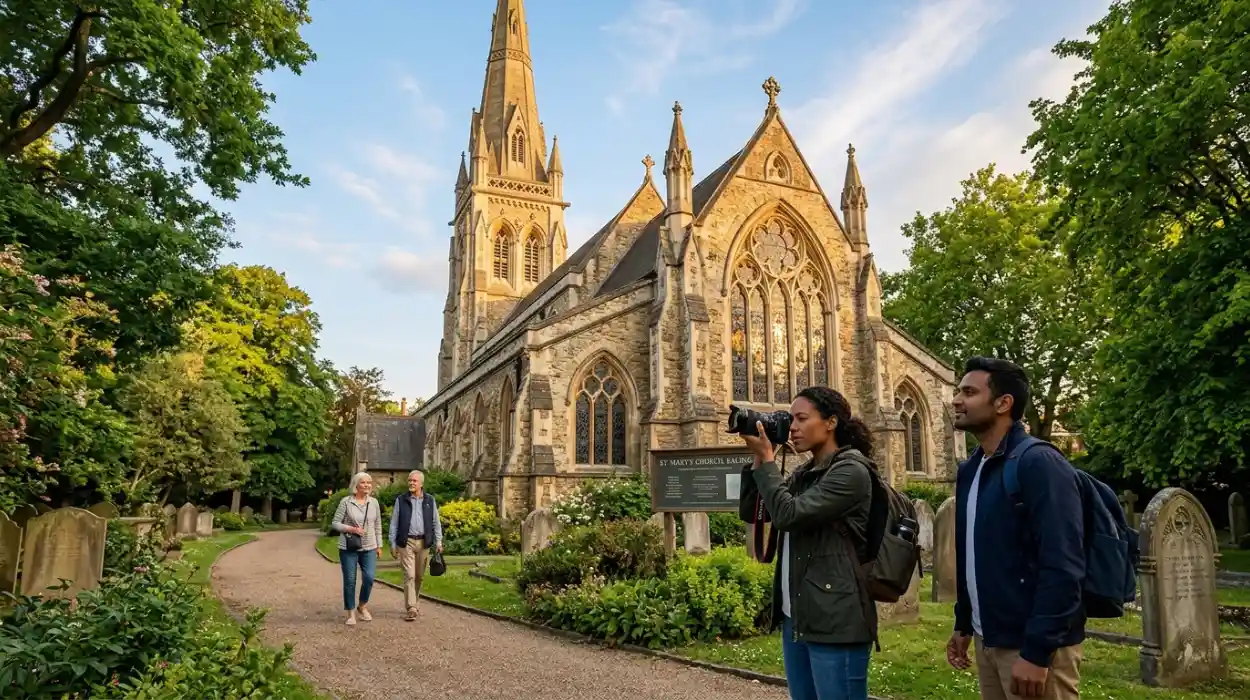
Some churches preserve medieval foundations dating back several centuries, while others showcase Victorian Gothic Revival design with soaring towers, pointed arches, intricate stone carvings, and decorative stained-glass windows.
Visitors often notice features including:
- Stone bell towers
- Gothic arches
- Traditional brick construction
- Victorian stained glass
- Historic memorial plaques
- Ornate wooden interiors
- Carved stone entrances
- Beautiful churchyards
These architectural elements reflect different periods of British history while demonstrating exceptional craftsmanship that has survived generations.
St Mary’s Church – Ealing’s Historic Centrepiece
Among Ealing’s best-known historic landmarks, St Mary’s Church represents one of the area’s oldest places of worship. Although rebuilt and extended over different periods, parts of its history reach back many centuries.
The church has witnessed enormous changes as Ealing evolved from a rural settlement into one of London’s most desirable boroughs. Its peaceful churchyard contrasts beautifully with the surrounding urban landscape, offering visitors a glimpse into the area’s earlier character.
Inside, visitors can admire traditional architectural details, memorials dedicated to former residents, and a welcoming atmosphere that reflects its continuing role within the local community.
Christ the Saviour Church and Victorian Grandeur
Victorian expansion brought impressive new churches across Ealing, and Christ the Saviour Church stands as one of the finest examples.
Its Gothic Revival architecture reflects nineteenth-century design principles, featuring high vaulted ceilings, detailed stonework, elegant windows, and carefully crafted interior decoration.
The church continues hosting community events, concerts, educational programmes, and local initiatives that strengthen neighbourhood connections beyond regular worship.
Its combination of architectural beauty and active community engagement makes it one of Ealing’s most admired historic churches.
St Barnabas Church and Community Development
As Ealing’s population grew during the late nineteenth century, churches such as St Barnabas became essential centres for expanding residential communities.
The building reflects traditional Victorian church architecture while continuing to support local residents through educational programmes, family events, charity initiatives, and cultural activities.
Visitors often appreciate how historic buildings like St Barnabas remain active rather than simply functioning as preserved monuments.
St Peter’s Church and Local Heritage
St Peter’s Church contributes another chapter to Ealing’s religious and architectural story.
Its attractive design, peaceful surroundings, and longstanding community presence illustrate how churches evolved alongside growing neighbourhoods.
Many local residents associate churches like St Peter’s with significant life events spanning multiple generations, making these buildings repositories of personal as well as public history.
Beautiful Churchyards That Preserve Local History
One often-overlooked aspect of visiting historic churches is exploring their surrounding churchyards.
These peaceful green spaces preserve centuries of local history through historic gravestones, memorial inscriptions, mature trees, and carefully maintained gardens.
Walking through an old churchyard provides insight into:
- Family histories
- Local occupations
- Military service
- Community development
- Victorian memorial traditions
- Regional craftsmanship
Many visitors find these quiet spaces equally fascinating as the churches themselves.
Remarkable Architectural Features Worth Looking For
Every historic church contains details that reward careful observation.
Look closely for medieval stone carvings, stained-glass windows depicting biblical scenes, decorative timber roofs, carved pulpits, brass memorials, and impressive organs.
Some churches display restored Victorian craftsmanship alongside surviving medieval elements, creating an architectural timeline within a single building.
Photography enthusiasts particularly appreciate changing natural light passing through colourful stained glass, producing dramatic interior scenes throughout the day.
Community Stories That Continue Today
Historic churches remain deeply connected with modern community life.
Many organise:
- Food banks
- Charity fundraising
- Community cafés
- Children’s activities
- Choir performances
- Classical music concerts
- Seasonal festivals
- Heritage open days
These activities demonstrate how centuries-old buildings continue serving contemporary society rather than existing solely as historical attractions.
Visitors frequently discover that local volunteers enjoy sharing stories about restoration projects, architectural features, and fascinating historical events connected to each church.
Exploring Ealing Through Heritage Trails
One enjoyable way to discover Ealing is by combining several churches into a self-guided heritage walk.
Many churches sit within walking distance of parks, conservation areas, historic streets, independent cafés, and local shops.
A heritage trail may include visits alongside destinations such as:
- Walpole Park
- Pitzhanger Manor
- Lammas Park
- Ealing Green
- Dickens Yard
- Haven Green
This approach allows visitors to experience both Ealing’s historic character and its modern atmosphere during a single day.
Seasonal Experiences When Visiting Historic Churches
Every season offers a slightly different perspective.
Spring brings colourful gardens and flowering churchyards.
Summer offers longer daylight for architectural photography and heritage walks.
Autumn creates striking scenery with golden leaves surrounding historic buildings.
Winter introduces festive decorations, Christmas services, concerts, and seasonal community events that showcase the churches’ continuing cultural importance.
Each season enhances the visitor experience in unique ways.
Practical Tips Before Visiting
Planning ahead helps maximise your visit.
Check opening times before travelling, as some churches have limited visitor hours outside services or organised events.
Dress respectfully when entering active places of worship.
Photography policies may vary, particularly during ceremonies or community gatherings.
Take time to explore surrounding streets because many historic buildings, traditional pubs, independent cafés, and heritage landmarks are located nearby.
Respect quiet areas where people may be praying or reflecting.
Why Historic Churches Appeal to Every Visitor
Historic churches attract people with many different interests.
Architecture enthusiasts admire craftsmanship and design evolution.
History lovers uncover stories spanning centuries.
Photographers capture intricate details and atmospheric interiors.
Families enjoy educational heritage visits.
Local residents reconnect with community traditions.
International tourists experience a different side of London beyond famous city-centre attractions.
This broad appeal makes Ealing’s churches valuable destinations regardless of personal background or religious beliefs.
Preserving Ealing’s Architectural Legacy
Historic churches require ongoing conservation to protect valuable stonework, timber structures, stained glass, and memorials from age and weather.Restoration projects often involve heritage specialists, architects, local volunteers, conservation organisations, and generous fundraising efforts.
These initiatives ensure future generations can continue appreciating buildings that represent centuries of local identity.Supporting heritage events, guided tours, and conservation programmes helps preserve these remarkable landmarks while strengthening community pride.
Exploring historic churches across Ealing offers far more than architectural sightseeing. Every church tells stories about local families, changing communities, artistic craftsmanship, and the evolution of one of West London’s most distinctive boroughs.
From medieval foundations to Victorian Gothic masterpieces, these buildings reveal how faith, architecture, and community have shaped Ealing through generations. Whether you are visiting for photography, heritage, peaceful reflection, or local history, the churches provide meaningful experiences that complement the area’s parks, museums, and historic streets.
Taking time to explore these remarkable landmarks allows both visitors and residents to discover a quieter, richer, and more authentic side of Ealing that continues inspiring people today.
Frequently Asked Questions
Which is the oldest church in Ealing?
St Mary’s Church is considered one of Ealing’s oldest churches, with historical origins dating back several centuries, although it has undergone multiple restorations and expansions.
Are Ealing’s historic churches free to visit?
Most historic churches welcome visitors free of charge, although donations are appreciated to support maintenance and conservation work.
Can tourists take photographs inside Ealing churches?
Photography is generally allowed, but individual churches may have restrictions during services or special events. Always check local guidance before taking photographs.
What architectural style is most common among Ealing’s churches?
Victorian Gothic Revival is the most prominent style, although several churches also include medieval foundations and later architectural additions.
Are guided heritage tours available in Ealing?
Many heritage organisations and local history groups occasionally organise guided walks that include historic churches alongside other important landmarks.
When is the best time to explore historic churches in Ealing?
Spring and autumn provide comfortable weather for walking tours, while Christmas offers concerts and seasonal events that showcase many churches at their most vibrant.
Can families include church visits in a day exploring Ealing?
Yes. Historic churches are easily combined with parks, museums, cafés, heritage trails, and local attractions, making them ideal stops during a family day out.