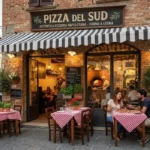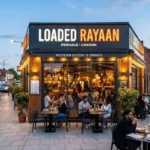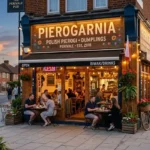

Ealing’s high streets are much more than places to shop. They are everyday meeting points where residents buy groceries, visit cafés, use local services, meet friends and participate in neighbourhood life. While modern shopping centres and online retail have transformed the way people spend money, traditional high streets in Ealing continue to provide something that digital spaces cannot easily reproduce: a strong sense of place and community.
Across the borough, high streets have developed their own personalities. Ealing Broadway offers a busy town-centre experience, while Pitshanger Lane has a distinctive village atmosphere. Hanwell combines independent businesses with a long historical story, and Northfields, South Ealing, Greenford and other neighbourhood centres provide their own local shopping parades and community connections.
For visitors, exploring these streets can reveal a more authentic picture of everyday West London life. For residents, they remain practical and social parts of the neighbourhood. Understanding how Ealing’s high streets developed also explains why they continue to influence the borough’s community identity today.
Why Ealing’s High Streets Matter to Local Communities
Ealing Council describes the borough’s town centres and high streets as important parts of economic, social and civic life. They provide places to meet, learn, work, relax and access everyday services, while also creating local pride and supporting businesses and employment.
This wider role explains why a high street cannot be judged only by the number of shops it contains. A successful local centre also depends on its cafés, restaurants, libraries, community organisations, independent traders, public spaces and pedestrian environment.
A resident might visit the high street to collect a prescription, buy vegetables, have lunch and meet a friend without thinking of these activities as part of community building. Yet collectively, these everyday interactions create familiarity. Shopkeepers recognise regular customers, neighbours meet by chance and local businesses become part of the area’s social fabric.
That repeated human contact is one reason traditional high streets remain relevant even when people can order almost anything online.
Ealing Broadway: The Borough’s Major Commercial Centre
Ealing Broadway is the best-known shopping destination in the borough and has developed considerably over the past two centuries. Ealing’s local history explains that the old route through the area, later associated with the Uxbridge Road, connected London with Oxford and supported inns and travellers. During the Victorian period, Ealing developed from a largely rural parish into a town, with roads, schools and public buildings appearing as its population increased.
The arrival of improved transport helped accelerate this transformation. By the twentieth century, Ealing Broadway had become a major shopping centre, reflecting the borough’s changing role within West London.
Today, Ealing Broadway combines shops, cafés, restaurants, entertainment and services with transport connections. It therefore serves both local residents and visitors.
Its modern appearance should not obscure the historical story underneath. Streets around the centre contain layers of Victorian and twentieth-century development, while landmarks such as Ealing Town Hall, Walpole Park and Pitzhanger Manor help connect the commercial centre with the area’s broader heritage.
Pitshanger Lane and the Village High Street Experience
If Ealing Broadway represents the busy town-centre model, Pitshanger Lane offers a very different interpretation of a traditional high street. The area is widely associated with Pitshanger Village, and its attractive parade of shops is surrounded by residential streets and green spaces. Ealing’s character study identifies the area as having an attractive shopping parade and a strong village identity.
Pitshanger’s appeal comes partly from its independent businesses. A council centre assessment describes the area as having the feel of a traditional British high street, with independent retailers such as a butcher, baker, fishmonger and bookshop alongside cafés, restaurants and specialist businesses.
This combination creates a very different shopping experience from a large commercial centre. Instead of travelling there solely for a particular purchase, people may browse, stop for coffee, chat with traders or combine errands with a walk.
Pitshanger Library adds another community dimension. Located directly on Pitshanger Lane, it provides access to books, computers, internet services and library events.
For visitors wanting to understand Ealing’s neighbourhood character, Pitshanger Lane is therefore worth exploring slowly rather than simply passing through.
Hanwell Broadway and a Strong Sense of Local History
Hanwell is another excellent example of how a traditional high street can reflect a neighbourhood’s history. Ealing Council describes Hanwell as a historic area with a bustling high street and independent stores.
The area’s history reaches much further back than its modern shops. Hanwell was an ancient settlement, mentioned in the Domesday Book, and developed from a largely rural community into a much more populated urban area during the nineteenth and early twentieth centuries.
Transport played a particularly important role. The Great Western Railway reached Hanwell in the nineteenth century, while trams began running through the area in 1901. Improved transport helped encourage housing development and population growth.
This history can still be appreciated when exploring the neighbourhood. The high street is not simply a collection of modern businesses; it sits within an area shaped by railway development, housing expansion, community institutions and changing patterns of employment.
The centre’s clock tower and surrounding streets also provide useful reference points when exploring Hanwell on foot. Current planning and retail research highlights its cafés, restaurants, independent and specialist shops, services and local atmosphere.
Northfields and the Character of a Local Shopping Parade
Northfields demonstrates how smaller high streets can become important community centres without needing to be major tourist destinations. The neighbourhood is primarily residential, and its local shopping areas provide convenient access to everyday goods, cafés, food businesses and services.
For residents, this type of high street can be particularly valuable because it supports the concept of a walkable neighbourhood. Instead of travelling into a major town centre for every task, people can complete many daily activities close to home.
Northfields is also useful for visitors who want a quieter experience of Ealing. A walk along the local shopping streets can be combined with nearby residential architecture, cafés and green spaces.
The atmosphere is less about large-scale retail and more about convenience, familiarity and neighbourhood interaction. That distinction is important when considering what makes a high street meaningful to the people who live around it.
South Ealing and Everyday Community Life
South Ealing provides another example of a high street where everyday services and local businesses contribute to neighbourhood identity. Residents use the area for food shopping, cafés, personal services and other regular errands.
This type of local centre may not appear on every tourist itinerary, but that is precisely why it can be interesting. Travellers who spend time away from major attractions can observe how London residents actually organise their daily routines.
A traditional high street works best when it serves several purposes at once. Someone might stop for breakfast, collect groceries, visit a salon and then continue home. These overlapping uses generate activity throughout the day rather than concentrating visitors around a single attraction.
For Ealing, this everyday functionality is an important part of the borough’s identity.
Greenford and the Changing High Street Landscape
Greenford demonstrates another side of Ealing’s commercial history. The area has developed alongside major changes in transport, housing, industry and population. Like other parts of the borough, its local centres serve residents while adapting to modern shopping habits.
Ealing’s broader history shows that many areas outside the central town were once relatively small villages. Improved transport and twentieth-century development transformed places such as Greenford, Perivale and Northolt as London expanded westwards.
This transformation helps explain why modern high streets can contain such varied architecture and businesses. Older buildings may stand beside later developments, while independent retailers operate near national chains.
For visitors, Greenford can therefore be viewed as part of a wider story about suburban London: rural settlements gradually becoming interconnected urban neighbourhoods.
The People Behind Ealing’s High Streets
A high street’s identity ultimately comes from people. Traders, employees, residents, volunteers, customers and community organisers all contribute to its character.
Independent businesses can become particularly important because they often develop relationships with their customers. A local shop may serve several generations of one family, while a café can become a regular meeting point for neighbours.
Community groups also play a role. Ealing has established structures designed to support traders and strengthen town centres. The Ealing High Streets Taskforce brings together local trader groups, Business Improvement Districts, council teams and other partners to support high streets across the borough.
This collaborative approach recognises that high streets are shared environments. Their success depends not only on individual shops but also on how businesses, residents and public authorities work together.
High Streets as Places to Meet, Not Just Shop
One of the biggest changes in modern high streets is the growing importance of experiences. People increasingly visit local centres for reasons that extend beyond purchasing goods.
Cafés provide social spaces. Restaurants create destinations for eating together. Libraries support learning. Community events bring residents into public spaces. Independent shops provide opportunities for browsing and conversation.
Ealing’s high streets benefit from this mixture of uses. The council’s description of town centres as places to meet, learn, work, have fun and relax captures this broader role.
For visitors, this means a high-street walk can be just as informative as visiting a formal attraction. Watching how residents use the space can reveal the social personality of a neighbourhood.
How History Still Shapes the High Streets Today
Ealing’s historical geography continues to influence its modern commercial centres. The old routes that connected settlements, the railway lines that encouraged suburban development and the Victorian expansion of the borough all helped establish the patterns seen today.
Ealing’s Uxbridge Road remains particularly significant because the historic route helped shape the development of the central area. The arrival of trams in 1901 further changed movement and supported urban growth.
Hanwell experienced a similar relationship between transport and population growth, while neighbourhoods such as Pitshanger developed their own identities around local shopping streets and surrounding residential areas.
This means that exploring a high street can also be a form of local history. The shops may change, but the underlying street pattern and relationship with surrounding neighbourhoods can remain remarkably durable.
Supporting the Future of Traditional High Streets
Traditional high streets face genuine challenges. Online shopping, changing consumer habits, rising operating costs and competition from large retail centres can affect independent businesses.
Yet Ealing’s approach recognises that high streets need to offer more than shopping. The council’s regeneration work focuses on improving town-centre character, movement, local trade, enterprise and employment.
The future therefore depends partly on creating attractive places where people want to spend time. Better public spaces, accessible transport, independent businesses, cultural activities and community events can all contribute.
Supporting a local high street can be as simple as choosing a neighbourhood shop, visiting an independent café, attending a community event or recommending a local business to friends.
These small actions collectively help maintain the diversity that makes traditional high streets distinctive.
How to Explore Ealing’s High Streets Like a Local
Visitors can get more from Ealing by treating its high streets as destinations rather than simply routes between attractions. Begin with Ealing Broadway and explore towards Ealing Green and Walpole Park. Another option is to spend time around Pitshanger Lane before walking towards Pitshanger Park.
Hanwell is particularly rewarding for people interested in history. Explore the high street before continuing towards local heritage landmarks and the Brent Valley. Northfields and South Ealing are better suited to visitors who want to experience quieter residential neighbourhoods and everyday local commerce.
The best approach is to walk slowly, notice shopfronts and architecture, stop at independent businesses and observe how residents use the area.
Why Traditional High Streets Remain Central to Ealing’s Identity
The continuing importance of traditional high streets in Ealing comes down to their ability to combine commerce with community. They provide places where people can buy necessities, discover independent businesses, meet friends, access services and participate in neighbourhood life.
Ealing Broadway shows how a major commercial centre can remain connected to local history. Pitshanger Lane demonstrates the appeal of the village-style high street. Hanwell combines independent businesses with centuries of history, while Northfields, South Ealing and Greenford show the value of smaller local centres.
Together, these places create a network of neighbourhoods rather than one single definition of Ealing.
For locals, they remain part of everyday life. For tourists, they offer an opportunity to experience a less formal and more personal side of West London. And for the future, their continued success will depend on maintaining the qualities that make people want to visit, shop, meet and belong.
Ealing’s traditional high streets therefore remain much more than retail destinations. They are living parts of the borough’s history constantly changing, yet still helping define what it means to be part of an Ealing community.
Frequently Asked Questions
What are the main traditional high streets in Ealing?
Important local centres include Ealing Broadway, Pitshanger Lane, Hanwell, Northfields, South Ealing and shopping areas in Greenford and other neighbourhoods. Each has a different scale and community character.
Which Ealing high street has the strongest village atmosphere?
Pitshanger Lane is particularly associated with a traditional village-style high street. It has independent retailers, cafés, restaurants, a library and a strong local identity.
Why is Ealing Broadway important historically?
Ealing Broadway developed as Ealing grew from a largely rural parish into a Victorian town. The historic route towards Uxbridge and Oxford helped shape the area’s development, while improved transport encouraged further growth.
Is Hanwell worth visiting for its high street?
Yes. Hanwell combines a bustling high street and independent businesses with a rich history involving railways, trams, housing expansion and local landmarks.
What makes a high street important to a community?
A strong high street provides more than shops. It can offer cafés, restaurants, libraries, services, meeting places, community activities and opportunities for social interaction, helping create local identity.
Are Ealing’s high streets good for tourists?
They can be excellent for visitors who want to experience everyday West London life. Walking through neighbourhood shopping streets provides a different perspective from visiting major attractions alone.
How can people support Ealing’s traditional high streets?
Residents and visitors can support them by shopping locally, using independent businesses, visiting cafés and restaurants, attending local events and participating in community initiatives. These activities help maintain the economic and social diversity of Ealing’s neighbourhood centres.