
Ealing is one of those parts of West London where modern city life exists comfortably alongside traditional British experiences. Contemporary cafés, busy transport connections, independent shops and multicultural restaurants sit close to historic buildings, Victorian streets, leafy parks, traditional pubs and long-established community spaces. For visitors and local residents alike, this mixture makes Ealing an interesting place to experience a more familiar side of British life without leaving London.
Exploring traditional British experiences in Ealing does not necessarily mean searching for formal tourist attractions. Some of the most memorable experiences can be surprisingly simple: enjoying an afternoon walk through a historic park, having tea in a local café, visiting a heritage building, browsing a neighbourhood market or spending time in a traditional pub. These activities provide an opportunity to understand how everyday British culture has developed alongside a changing modern neighbourhood.
Whether you are visiting Ealing for the first time or have lived in the borough for years, there are plenty of ways to discover its heritage, social traditions and distinctive local character.
Why Ealing Is Ideal for Traditional British Experiences
Ealing has a long history as a settlement and later as a London suburb, and traces of that history remain visible throughout the borough. Its parks, villas, churches, public buildings, independent businesses and older residential streets provide a strong sense of place.
At the same time, Ealing is not preserved as a historical museum. It is a living London borough where heritage exists alongside modern lifestyles. This makes traditional experiences feel more natural because they are part of everyday neighbourhood life rather than staged solely for tourists.
For international visitors, Ealing can therefore offer a more relaxed introduction to British culture. Instead of spending the entire day around central London’s major attractions, you can explore local streets, enjoy green spaces and experience the types of places residents use regularly.
Take a Traditional Walk Through Walpole Park
A walk through Walpole Park is one of the easiest ways to experience Ealing’s quieter British character. The landscaped park provides open lawns, mature trees, pathways and attractive surroundings close to the centre of Ealing.
Walking through a public park is a simple but deeply established part of British leisure culture. On a pleasant afternoon, you may see people walking dogs, exercising, reading, meeting friends or enjoying a picnic.
For visitors, the park offers a chance to slow down after exploring Ealing Broadway. Rather than treating it simply as a green space, take time to observe its landscaping, mature vegetation and relationship with nearby heritage buildings.
Autumn can be particularly attractive, with changing leaves providing a traditional seasonal atmosphere. Spring and summer bring longer days, while winter walks can offer a quieter experience.
Visit Pitzhanger Manor and Gallery
Pitzhanger Manor & Gallery is one of Ealing’s most important heritage destinations and an excellent place to explore the area’s architectural history. The Grade I-listed Regency villa was designed by architect Sir John Soane and provides a direct connection with Britain’s architectural past.
The building’s historic character makes it especially interesting for visitors who want more than a quick photograph. Exploring heritage architecture can reveal how wealthy Georgian and Regency-era households lived, entertained guests and designed their surroundings.
The gallery programme also gives the site a contemporary cultural dimension. This combination of historic architecture and modern exhibitions reflects Ealing itself: traditional foundations combined with present-day creativity.
After visiting the manor, you can continue exploring the surrounding area and Walpole Park, making the heritage site part of a wider afternoon itinerary.
Experience the British Pub Tradition
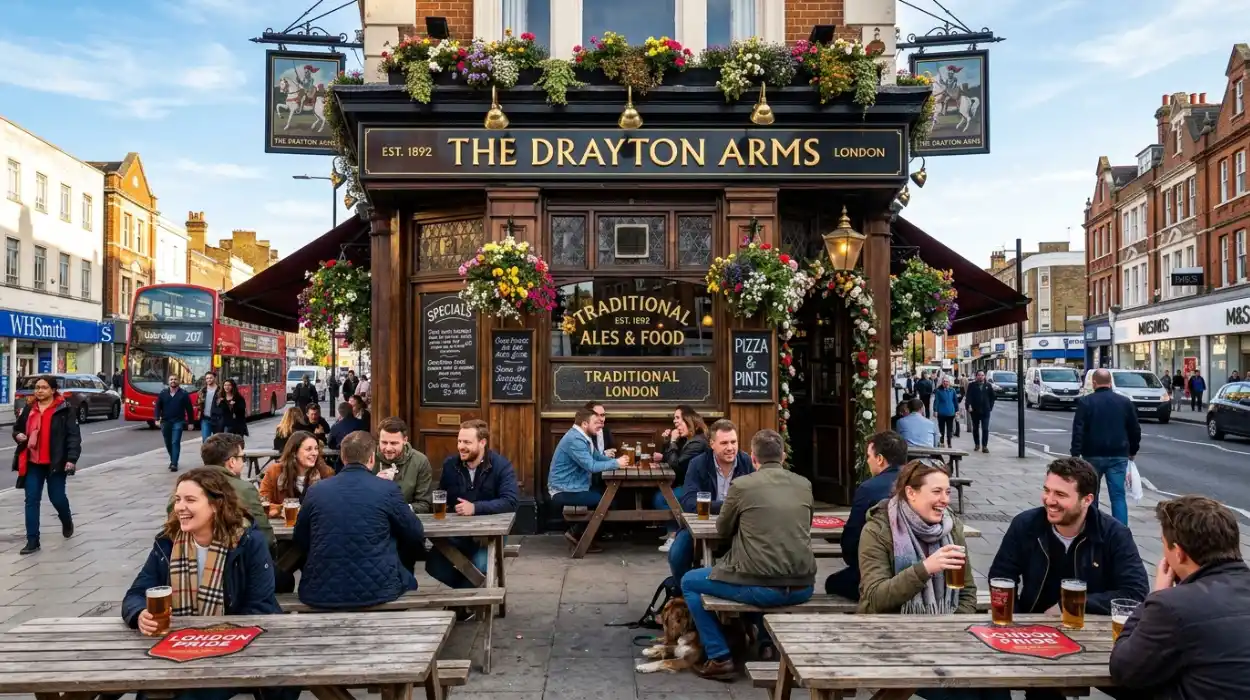
The traditional British pub remains one of the country’s most recognisable social institutions, and Ealing has a number of pubs where visitors can experience this aspect of local culture.
A British pub is not simply somewhere to drink. Historically, pubs have served as meeting places where neighbours socialise, watch sport, enjoy food and spend time together. Today, many pubs have evolved considerably, offering modern menus and drinks while retaining traditional features such as wooden interiors, fireplaces, pub gardens and relaxed seating.
For someone unfamiliar with British pub culture, visiting during a quieter afternoon can be more comfortable than arriving during a busy evening. You can order a soft drink, tea or a meal if you do not drink alcohol and still enjoy the social atmosphere.
Traditional pub food can also be part of the experience. Depending on the venue, dishes may include fish and chips, pies, sausages with mash or a Sunday roast.
Enjoy a British Afternoon Tea
Afternoon tea is another classic British experience that can be incorporated into an Ealing day out. Traditionally associated with tea, small sandwiches, cakes and scones, afternoon tea developed into a social occasion rather than simply a meal.
You do not need to travel into central London to appreciate the basic idea. Local cafés and tea rooms may offer variations of afternoon tea or traditional cakes and hot drinks.
For visitors, afternoon tea can be a relaxed way to pause between sightseeing activities. It is particularly suitable for families, couples or friends who want an experience that feels distinctly British without requiring an elaborate itinerary.
If you specifically want a formal afternoon tea service, check the venue’s current menu and booking requirements in advance, as not every café offers a dedicated afternoon tea package.
Explore Ealing’s Historic Streets
One of the most rewarding traditional British experiences in Ealing is simply walking through its older residential neighbourhoods. Streets lined with Victorian and Edwardian homes can reveal architectural details that are easy to miss when travelling by car or public transport.
Look for bay windows, brick façades, decorative entrances, mature front gardens, traditional railings and variations in architectural style. These details show how London’s suburban communities developed during periods of rapid population growth.
A self-guided walking route can be particularly enjoyable. Begin around Ealing Broadway and gradually move into quieter residential streets, taking time to observe how the commercial centre transitions into traditional suburban neighbourhoods.
Remember that these are lived-in residential areas. Photography and sightseeing should be respectful, with attention given to private property and residents’ privacy.
Discover Ealing’s Village-Like Character
Although Ealing is firmly part of London, some areas retain a village-like atmosphere. This is particularly noticeable in neighbourhoods where independent shops, cafés, green spaces and community facilities sit close together.
This local character is an important part of traditional British suburban life. Instead of relying entirely on large shopping centres, residents may use independent businesses, local services and neighbourhood cafés.
For tourists, this can be an opportunity to experience a slower pace. Sit outside a café, browse local shops, walk through a nearby park and observe the everyday rhythm of the neighbourhood.
The experience is not about finding something spectacular at every turn. It is about appreciating the small details that make a London neighbourhood feel distinctive.
Explore Ealing’s Food Heritage
British food has changed significantly over the years, but traditional dishes remain part of the country’s culinary identity. Ealing’s diverse food scene provides an interesting setting for exploring this heritage alongside international cuisine.
Visitors can look for traditional British dishes such as fish and chips, pies, roast dinners and classic puddings. A Sunday roast is particularly associated with British family and pub culture, although availability varies by venue.
At the same time, Ealing’s multicultural population means traditional British food exists alongside Indian, Caribbean, Polish, Middle Eastern, Italian and other culinary influences.
This is not a contradiction. Modern British food culture has always evolved through migration, trade and changing tastes. Exploring both traditional and international food in Ealing gives visitors a more realistic understanding of contemporary British life.
Spend Time in Ealing’s Green Spaces
Britain’s parks have long played an important role in leisure, and Ealing has an impressive collection of green spaces. Alongside Walpole Park and Ealing Common, residents can explore green areas in neighbourhoods such as Hanwell, Acton and Perivale.
A simple park visit can become a traditional British experience when combined with a picnic, leisurely walk or outdoor reading session.
Families may bring food and enjoy a relaxed afternoon, while photographers can capture seasonal landscapes. Joggers, dog walkers and people meeting friends contribute to the everyday atmosphere.
For tourists, visiting a local park also offers a break from the intensity of London’s central attractions.
Explore Hanwell’s Heritage
Hanwell is particularly interesting for people who want to combine traditional architecture, greenery and local history. The neighbourhood contains historic buildings and landmarks alongside its residential streets and natural spaces.
The Hanwell Viaduct is an especially recognisable heritage structure. Its impressive arches provide a reminder of the engineering and transport developments that helped shape West London.
A walk through Hanwell can therefore combine several aspects of traditional British life: historic infrastructure, residential architecture, green spaces and local community activity.
It is an excellent area to explore at a slower pace rather than rushing from one attraction to another.
Discover Britain’s Changing Market Culture
Markets have traditionally played an important role in British towns and neighbourhoods, providing places where people could purchase food, clothing, household goods and other products while interacting with local traders.
Modern Ealing continues to have a strong shopping and market culture, although the experience has evolved considerably. Local markets and independent businesses can provide opportunities to discover food, crafts, produce and community events.
When visiting a market, take time to speak politely with stallholders, sample locally available products where appropriate and observe how residents use the space.
For visitors, markets can often provide a more authentic understanding of local routines than formal attractions.
Experience British Seasonal Traditions
Traditional British experiences in Ealing change with the seasons. Spring brings blossom, longer walks and outdoor events, while summer creates opportunities for picnics, park visits and outdoor dining.
Autumn introduces colourful parks and cooler evenings, making it an ideal time for heritage walks and cosy cafés. Winter brings festive decorations, Christmas shopping and seasonal community events.
These seasonal changes are part of what makes British local life distinctive. Rather than looking for one fixed cultural experience, visitors can return to Ealing at different times of year and discover a different atmosphere.
How Tourists Can Build a Traditional Ealing Day
A traditional-style Ealing day can be simple to organise. Start with a morning walk through one of the borough’s historic neighbourhoods, then visit Pitzhanger Manor to explore local heritage.
Afterwards, have lunch at a pub or local restaurant before spending some time in Walpole Park. In the afternoon, enjoy tea and cake at a café and continue towards Ealing Broadway for shopping or evening food.
This type of itinerary works because it combines history, food, green space, architecture and social life without requiring long journeys between attractions.
Local residents can create a similar experience by choosing one neighbourhood each weekend and exploring it on foot.
Traditional Ealing Is Still Part of Modern London
The most interesting thing about traditional British experiences in Ealing is that they have not disappeared. They have adapted.
Historic buildings continue to be used, parks remain important social spaces, pubs have evolved their menus, independent cafés provide modern interpretations of British food and traditional neighbourhood streets remain part of everyday life.
Ealing demonstrates that British tradition does not always have to mean something old-fashioned. A family having a picnic in a Victorian park, friends meeting at a local pub, visitors exploring a historic manor or residents enjoying tea at a neighbourhood café can all represent different forms of contemporary British culture.
For travellers, this provides a more personal way to understand London. For residents, it offers a reminder that local heritage can still be experienced without travelling far from home.
FAQs About Traditional British Experiences in Ealing
What traditional British experiences can I enjoy in Ealing?
You can explore historic architecture, visit heritage sites, walk through traditional parks, enjoy British food, visit local pubs and cafés, explore markets and experience seasonal community events.
Is Ealing a good place to experience British culture?
Yes. Ealing combines historic suburban character with modern London life, making it suitable for visitors who want to experience everyday British culture away from the busiest central attractions.
Where can I experience British history in Ealing?
Pitzhanger Manor & Gallery and the historic areas around Hanwell are good starting points. Ealing’s older residential streets and heritage architecture also reveal aspects of the borough’s development.
Can tourists experience traditional British food in Ealing?
Yes. Depending on the venue, you can find British favourites such as fish and chips, pies, Sunday roasts, cakes and traditional desserts. Ealing’s diverse food scene also provides an opportunity to compare British dishes with international cuisines.
Are there traditional British pubs in Ealing?
Ealing has a range of pubs, including venues with traditional interiors, pub gardens and British-style menus. Check individual venues for current opening hours, food service and events.
What is the best time of year to experience Ealing’s traditional character?
Every season offers something different. Spring and summer are ideal for parks and outdoor activities, autumn is excellent for heritage walks and winter provides festive events and cosy indoor experiences.
Is Ealing suitable for tourists who want to avoid central London crowds?
Yes. Ealing offers parks, heritage buildings, residential streets, cafés, pubs and local shopping areas that allow visitors to experience a quieter side of London while remaining well connected to the city centre.