
For people who work in central London but want a more relaxed place to live, Ealing is one of West London’s most practical choices. The borough combines strong transport connections with residential streets, green spaces, high streets, restaurants, schools and a wide range of housing. It is also large enough to offer noticeably different lifestyles depending on where you choose to live.
The best Ealing areas for London commuters are not necessarily the same for everyone. A professional travelling to the City may prioritise a fast connection to Liverpool Street or Farringdon, while someone working around Oxford Circus may prefer easy access to the Central line. Families may care more about parks, schools and quieter streets, whereas younger renters might prioritise restaurants, cafés and a short walk to a station.
Ealing Council describes the borough as having strong public transport accessibility, with Ealing Broadway acting as a major transport hub and the borough benefiting from Underground, rail and bus connections.
Why Ealing Is Popular With London Commuters
Ealing has long had a reputation as a desirable suburban base for people working in London. Historically, improved railways, trams, buses and trains made commuting into the capital easier, helping Ealing develop into a residential centre for people travelling to work in central London.
Today, that commuter appeal remains strong. Ealing Broadway is particularly important because it brings several transport options together, while West Ealing, South Ealing, Northfields, Ealing Common and other stations provide alternatives depending on where you live.
The arrival of the Elizabeth line has further improved connectivity from Ealing Broadway. For commuters, this matters because journey convenience is not simply about distance. A home that is 10 minutes closer to London but requires several changes can be less practical than one with a direct or simple connection.
Ealing also has its own employment base, shops and leisure facilities, meaning commuters do not have to travel into central London for every part of their daily life. Ealing Council identifies the town centre as a major commercial and civic centre, with strong connections to both central London and Heathrow.
Ealing Broadway: Best for Maximum Transport Convenience
If your priority is having as many transport choices as possible, Ealing Broadway is one of the strongest options.
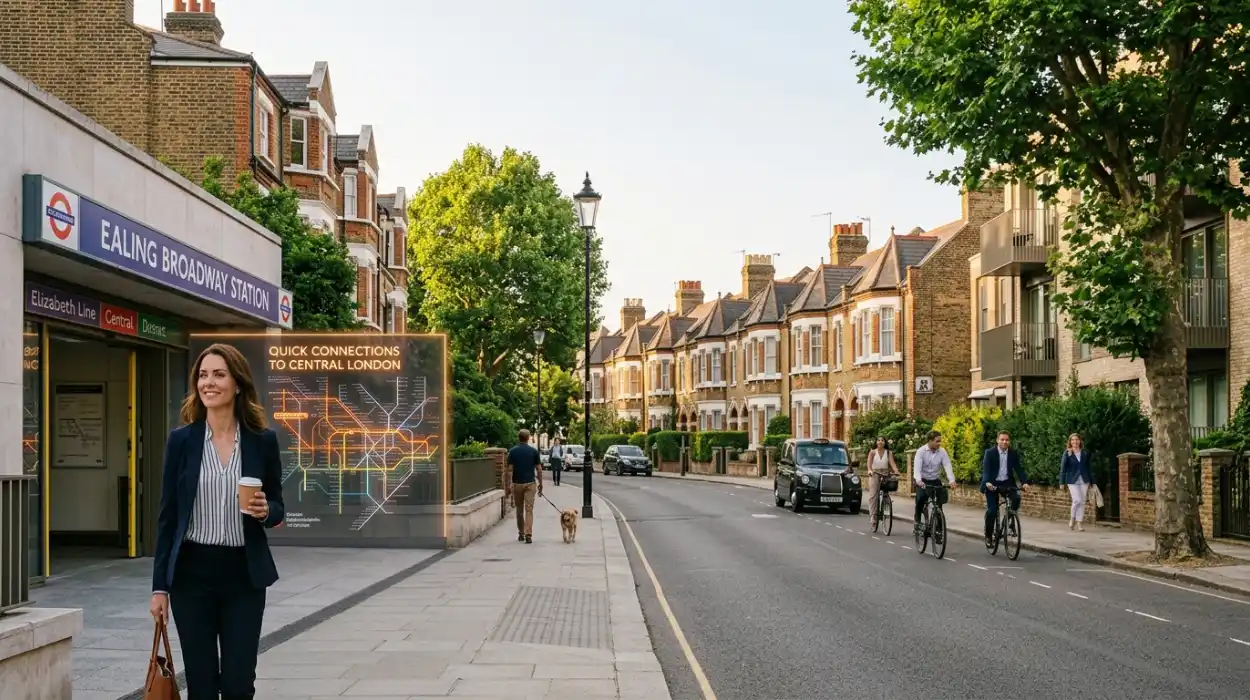
The area around Ealing Broadway station provides access to the Elizabeth line, Central line and District line, making it particularly attractive to commuters whose workplaces change or who occasionally need to travel across different parts of London.
The Elizabeth line is especially useful for people travelling towards Paddington, Bond Street, Tottenham Court Road, Farringdon and Liverpool Street. This makes Ealing Broadway appealing to commuters working in the West End, financial districts and other central locations.
The neighbourhood itself is also highly convenient. Ealing Broadway has shops, cafés, restaurants, supermarkets and entertainment within easy reach. Ealing Council identifies the town centre as the borough’s metropolitan centre and notes its strong commercial and civic role.
The main trade-off is that the most convenient parts can feel busier and more urban than quieter Ealing neighbourhoods. Property close to the station can also command a premium because commuters value transport accessibility.
West Ealing: Best for Elizabeth Line Commuters
West Ealing is another strong choice, particularly for people who want Elizabeth line access without necessarily living directly beside Ealing Broadway.
West Ealing station provides access to the Elizabeth line, while the surrounding area has its own high street and local amenities. The neighbourhood can suit commuters who want a more local atmosphere while remaining well connected.
The council is also investing in improvements through the West Ealing Liveable Neighbourhoods programme, including measures designed to make walking, cycling and public transport easier and improve links to the Elizabeth line station.
For a commuter, this creates an important distinction: transport convenience is not just about the train journey. The walking route from your front door to the station can affect your experience every morning.
West Ealing can therefore be attractive to someone who wants relatively easy access to central London while maintaining a neighbourhood feel.
South Ealing: Best for a Quieter Commuter Lifestyle
South Ealing is worth considering if you want a residential atmosphere but still need Underground access.
The area around South Ealing station has local shops, cafés and everyday amenities, while nearby green spaces make it appealing to people who prefer a suburban environment. It is particularly relevant for commuters whose work destinations are better suited to the Piccadilly line network or who want connections towards parts of West London.
South Ealing also sits close to Northfields and Boston Manor, giving residents several nearby options depending on the exact location of their home.
The neighbourhood’s balance is its main attraction. You are not living in the middle of a major town centre, but you are still within a well-connected part of the borough.
For couples and professionals who want somewhere calmer after work, South Ealing can offer a useful compromise between accessibility and residential character.
Northfields: Best for a Village-Like Feel
Northfields is one of the most popular choices for people who want a strong community atmosphere alongside commuter-friendly transport.
Northfield Avenue provides a local high street with independent businesses, cafés, restaurants and everyday services. This helps create the feeling that you have your own neighbourhood rather than simply living somewhere close to a station.
Northfields station is on the Piccadilly line, giving commuters a direct Underground connection towards central London and destinations further east. The area is also close to South Ealing and other transport options.
Ealing Council identifies Northfields as one of the area’s important neighbourhood centres, alongside South Ealing and Pitshanger Lane.
For someone working in central London who values a pleasant local environment at weekends, Northfields can be particularly appealing.
Ealing Common: Best for Green Space and Central Connections
Ealing Common offers a different type of commuter experience. Its major attraction is the combination of open space and transport accessibility.
Living near Ealing Common gives residents access to the Underground network while also putting the large green space of Ealing Common on the doorstep. This can make a noticeable difference to people who spend most of their weekdays in offices.
The area is suitable for commuters who want to walk, exercise or relax outdoors without travelling far from home.
It can also work well for people who regularly travel towards different parts of central and West London because nearby Underground connections provide alternatives to relying solely on one route.
For families and professionals who want a quieter residential setting without moving too far from central London, Ealing Common deserves serious consideration.
Pitshanger: Best for a Local Community Atmosphere
Pitshanger is often considered by people who prioritise neighbourhood character over having a major station immediately outside their home.
Pitshanger Lane functions as a local centre, and the surrounding residential streets have a strong community atmosphere. Ealing Council recognises Pitshanger Lane as one of Ealing’s neighbourhood centres.
The area can appeal particularly to families and established households looking for more space and a quieter environment.
The compromise is transport. Depending on exactly where you live, you may need a bus, walk or cycle to reach your preferred station. Therefore, Pitshanger makes more sense for a commuter who values home life and local amenities rather than someone determined to minimise every minute of their daily commute.
Hanwell: Best for Space, Greenery and Community
Hanwell can be a strong option for commuters who want more of a traditional suburban feel.
The neighbourhood has a historic character, independent shops, green spaces and a strong community identity. Ealing Council describes Hanwell as having a bustling high street, independent stores and a variety of residential properties.
The area is particularly attractive to people who enjoy outdoor space. Brent Lodge Park, Churchfields and the Brent River Park provide opportunities for walking, cycling and relaxing away from the busy centre of London.
Hanwell also benefits from rail connections, while West Ealing is within reach for additional services and amenities.
For someone who works in London but wants to feel as though they are returning to a genuine neighbourhood at the end of the day, Hanwell can be an excellent choice.
Which Ealing Area Is Best for Your Commute?
The right area depends heavily on your workplace.
If you work around Paddington, Bond Street, Tottenham Court Road or Farringdon, Ealing Broadway and West Ealing are particularly attractive because of Elizabeth line connectivity.
If your workplace is better served by the Central line, Ealing Broadway and nearby areas may offer a convenient solution.
For commuters travelling towards destinations served by the Piccadilly line, Northfields and South Ealing can be particularly useful.
If your priority is a quieter lifestyle rather than the shortest possible commute, consider Hanwell or Pitshanger and evaluate the complete door-to-door journey.
This is important because a five-minute difference on the train can be less significant than a 15-minute walk between your home and station.
What Should London Commuters Look for When Choosing an Ealing Area?
Transport should be high on the list, but it should not be the only factor.
Start by checking your expected door-to-door journey, rather than simply searching for the fastest train. Consider walking time, station access, interchange requirements and the frequency of services.
Next, think about your working pattern. Someone commuting five days a week will probably value transport convenience more strongly than someone working remotely three days a week.
Housing is another major consideration. Ealing contains everything from flats and mansion blocks to Victorian and Edwardian houses, garden-suburb properties and modern developments. Ealing Council notes that housing character varies considerably across the town, from spacious villas and garden suburbs to mansion blocks and newer high-density developments.
Finally, consider daily life. A nearby supermarket, gym, GP surgery, park, café or high street can be more valuable than saving a few minutes on the commute.
Is Ealing Affordable for London Commuters?
Ealing is not one single housing market. Prices and rents vary considerably between neighbourhoods, property types and proximity to transport.
Homes close to major stations can attract strong demand because commuters place a premium on convenience. Larger family properties in quieter neighbourhoods can also be expensive because of space, gardens and local amenities.
Rather than comparing only headline property prices, prospective residents should calculate the total monthly cost of living. This includes rent or mortgage payments, council tax, transport, utilities and other regular expenses.
Ealing Council’s housing information also shows that different parts of the borough fall into different rental market areas, reflecting variations in local housing circumstances.
For renters, viewing several areas before committing can reveal substantial differences in atmosphere, property quality and station accessibility.
Ealing vs Central London for Commuters
Choosing Ealing over central London involves a lifestyle decision as much as a transport decision.
Central London can reduce the commute dramatically, but accommodation is often more expensive and living space can be limited. Ealing gives residents access to London’s employment and cultural opportunities while providing more suburban surroundings.
This is especially useful for people who want parks, local high streets, larger homes or a stronger separation between work and home.
Ealing’s planning framework also emphasises its role as a walkable collection of neighbourhoods, with local centres and green spaces contributing to everyday life.
For many commuters, that balance is the main reason Ealing remains attractive.
The best Ealing areas for London commuters depend on the relationship between your workplace, transport needs and preferred lifestyle.
Ealing Broadway is the strongest all-round choice for transport convenience. West Ealing is attractive for Elizabeth line users who want a local neighbourhood atmosphere. Northfields and South Ealing work well for people who value the Piccadilly line and residential surroundings, while Ealing Common combines greenery with useful Underground connections.
Pitshanger and Hanwell are particularly appealing if you prioritise community, space and a quieter lifestyle over having the absolute shortest commute.
Ultimately, Ealing’s strength is its variety. Instead of choosing between central London convenience and suburban living, commuters can find different levels of both within the same borough.
Frequently Asked Questions
Which Ealing area is best for commuting to central London?
Ealing Broadway is generally one of the strongest choices because it offers multiple transport options, including the Elizabeth line and Underground services. West Ealing is another excellent option, particularly for Elizabeth line commuters.
Is Ealing Broadway good for London commuters?
Yes. Ealing Broadway is a major transport hub with strong connections into central London, making it particularly suitable for commuters who want flexibility and frequent travel options.
Is West Ealing a good place to live for commuters?
West Ealing can be a good choice, especially for people who value Elizabeth line access and local amenities. Its ongoing neighbourhood improvements are also designed to strengthen walking, cycling and public transport connections.
Which Ealing area is best for families who commute to London?
Northfields, South Ealing, Ealing Common, Hanwell and parts of Pitshanger can appeal to families because they combine residential surroundings with access to transport, schools, shops and green spaces.
Is Hanwell good for commuting into London?
Hanwell can work well for commuters who want more space and a community atmosphere. It also has rail connections and access to nearby West Ealing for additional transport choices.
Is Ealing cheaper than living in central London?
Ealing can provide more suburban housing options and living space than many central areas, although prices and rents vary considerably. The best comparison should include both housing and commuting costs.
Should I live near Ealing Broadway or choose a quieter neighbourhood?
Choose Ealing Broadway if minimising transport time and having multiple routes are your priorities. Choose areas such as Northfields, South Ealing, Hanwell or Pitshanger if you are willing to trade a little commuting convenience for a quieter or more community-focused lifestyle.