
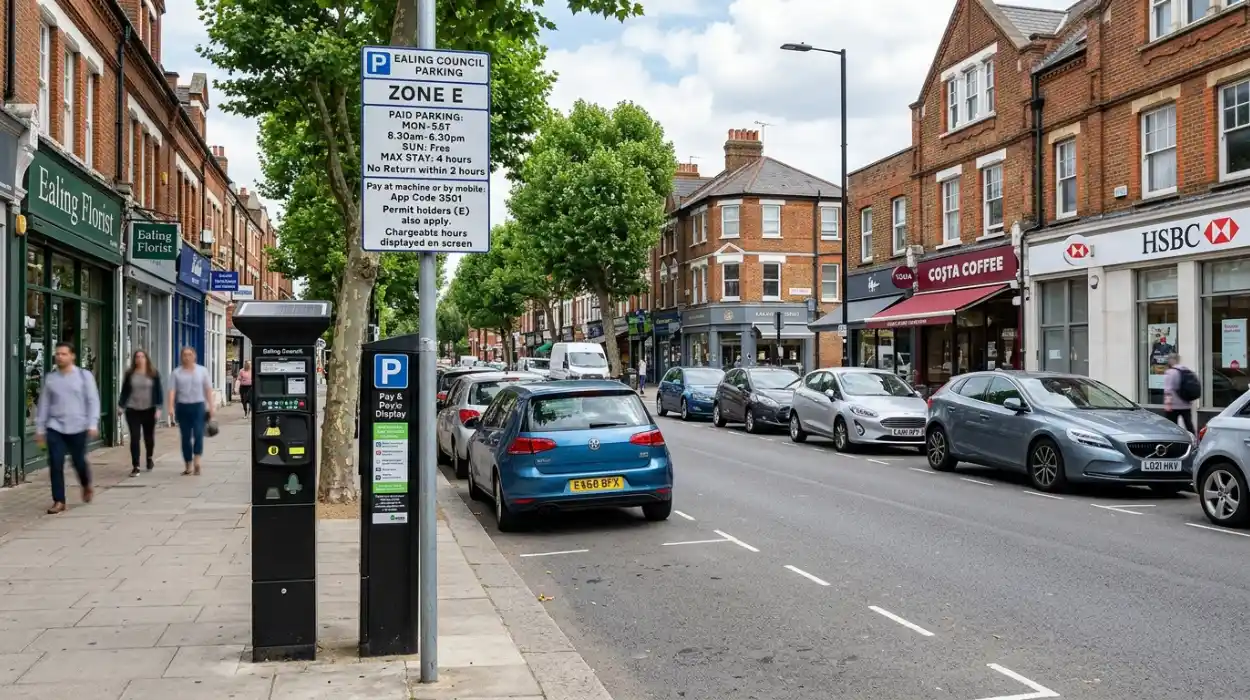
Parking in Ealing can be straightforward when you understand the different parking controls, payment methods, restrictions and areas available to drivers. As one of West London’s busiest and most well-connected boroughs, Ealing attracts residents, commuters, shoppers, visitors and people travelling through the area every day. That means parking demand can be high, particularly around Ealing Broadway, shopping streets, stations and popular local attractions.
For anyone driving into the area, knowing where you can park, when restrictions apply and how much parking may cost can make a significant difference to the experience. On-street parking, pay-and-display bays, residents’ parking zones, car parks and private parking facilities all operate differently. Drivers should also pay attention to signs and road markings rather than assuming that a space is available simply because there is no obvious obstruction.
Is parking difficult in Ealing?
Parking in Ealing can be challenging at busy times, particularly in central areas. Ealing Broadway attracts shoppers, commuters, restaurant customers and visitors, creating considerable demand for nearby spaces. Residential streets can also have controlled parking arrangements designed to protect spaces for local residents.
The level of difficulty depends heavily on where and when you are travelling. A weekday morning near a major station can be very different from a Sunday afternoon in a quieter residential area. Drivers visiting for a short appointment may find a paid parking bay convenient, whereas someone staying for several hours may prefer a dedicated car park.
Planning ahead is therefore more useful than simply driving around looking for an empty space.
Where can you park in Ealing?
There are several types of parking available across Ealing. These include council-controlled on-street parking bays, residents’ parking areas, public car parks and privately operated facilities.
On-street spaces can be convenient when you are visiting a particular shop, café, restaurant or business. However, they often have time restrictions, payment requirements or permit conditions. Always read the nearby signs before leaving your vehicle.
Public car parks can be a better option if you expect to stay for several hours. They remove some of the uncertainty associated with searching for a street space and can be particularly useful when visiting Ealing Broadway or attending a local event.
Private car parks may have their own tariffs and terms, so drivers should check the conditions displayed at the entrance or payment area.
Parking around Ealing Broadway
Ealing Broadway is one of the busiest areas for parking because it combines a major shopping destination with restaurants, offices, residential streets and transport connections. Drivers visiting the Broadway should expect parking demand to increase during shopping hours and busy periods.
If you are visiting for shopping, compare the available parking options before setting off. A nearby car park may be more practical than searching for an on-street space, especially if you are carrying shopping or travelling with children.
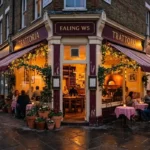
For restaurant customers, the best parking choice can depend on the time of day. An evening visit may have different parking availability from a weekday lunchtime visit, but restrictions can still apply. Never assume that a bay becomes unrestricted simply because it is outside normal business hours.
Understanding controlled parking zones
A controlled parking zone, often referred to as a CPZ, is an area where parking restrictions apply according to signs, road markings and local rules. Ealing contains a number of controlled parking areas designed to manage demand and protect residential parking.
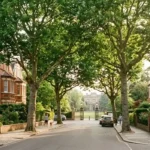
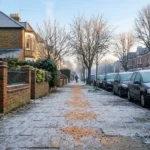
Drivers unfamiliar with the area should be particularly careful when entering residential streets. A space may appear available but could be reserved for permit holders during certain hours.
The entrance to a controlled zone is normally marked by signs explaining when controls operate. Individual streets can also have signs providing more specific information.
If you are visiting a friend, attending an appointment or staying in accommodation within a controlled parking area, check whether visitor parking arrangements are available before you arrive.
Residents’ parking in Ealing
Residents’ parking schemes are intended to give people who live in controlled areas greater access to nearby parking. Permit requirements vary according to the specific scheme and location.
Visitors should not assume that they can park in a residents’ bay simply because they are visiting someone who lives nearby. Depending on the area, a resident may need to arrange a visitor permit or use another permitted parking option.
This is particularly important for longer visits. If you are staying with friends or family, ask them in advance about the local parking restrictions rather than relying on finding a space after arrival.
The same principle applies to tradespeople and contractors. Special permits or permissions may be required when working at a property within a controlled zone.
Pay-and-display and paid parking
Paid parking is available in various parts of Ealing, although the exact tariff, operating hours and maximum stay can vary between locations.
Before paying, check the information provided at the parking bay or payment machine. You may need to enter your vehicle registration number rather than displaying a paper ticket, depending on the payment system being used.
Mobile parking services can also make payment more convenient where supported. However, drivers should make sure they select the correct location and vehicle registration before confirming the session.
Keep an eye on the maximum permitted stay. Paying for parking does not necessarily mean that you can remain in the space indefinitely.
How much does parking in Ealing cost?
Parking costs in Ealing vary according to the location, type of parking and length of stay. Central areas and locations close to transport hubs can be more expensive or have stricter time limits than quieter parts of the borough.
A driver planning a two-hour shopping trip should compare the cost of an on-street stay with the tariff at a nearby car park. Although a car park may initially appear more expensive, it can sometimes offer greater convenience and certainty.
Prices and parking policies can change, so drivers should check the current tariff before travelling. This is particularly important if you are visiting Ealing from outside London and are unfamiliar with local arrangements.
Parking near Ealing Common and Walpole Park
Ealing Common and Walpole Park are popular areas for leisure, walks and family outings. Parking near parks can become more competitive during sunny weekends, school holidays and special events.
If you are visiting Walpole Park, consider how long you expect to stay. A short walk may only require a brief parking session, while a family afternoon could mean several hours.
It is also worth remembering that the closest parking space is not always the easiest option. Parking slightly further away and walking a few minutes can sometimes save time compared with driving repeatedly around the busiest streets.
Parking for Ealing restaurants and cafés
Ealing has a diverse restaurant scene, with venues around Ealing Broadway, Haven Green, South Ealing and Northfields. Parking requirements vary considerably depending on the restaurant’s location.
If you are dining during the evening, check whether nearby streets have resident restrictions or whether dedicated parking is available. Do not assume that restaurant customers automatically receive permission to use nearby private or residential spaces.
For larger groups, planning parking can be especially important. If several people are travelling separately, choosing a restaurant close to a public car park or transport station may make the evening easier.
Visitors can also consider travelling by public transport if parking appears inconvenient, particularly when visiting the central Ealing area.
Parking for commuters and station users
Ealing is an important transport hub, with stations serving different parts of London. Some drivers may want to leave their vehicles before continuing their journey by Underground or rail.
This can be useful for people travelling into Central London, but parking availability near stations can be limited. Drivers should check whether a particular facility is intended for long-stay parking, short-stay use or permit holders.
If you regularly commute, compare the cost of parking with travelling from a nearby station by bus, bicycle or public transport. Even where parking is available, the combined cost of fuel, parking and public transport can make driving less economical than using public transport for the entire journey.
Blue Badge parking in Ealing
Blue Badge holders have specific parking rights, but these rights depend on the location and type of restriction. A Blue Badge does not mean that every parking restriction can be ignored.
Drivers using a Blue Badge should check the relevant signs and markings carefully and follow the rules for displaying the badge and time clock where required.
It is also sensible to plan accessible parking in advance if you are visiting an unfamiliar part of Ealing. The closest suitable space may not always be immediately outside your destination.
Parking near Ealing attractions
Visitors may drive to Ealing to explore attractions, parks, restaurants and cultural locations. Ealing Studios and Walpole Park are among the places that can feature on a visitor’s itinerary, while Ealing Broadway offers shopping and dining.
When planning a sightseeing trip, parking should be treated as part of the itinerary rather than an afterthought. Decide where you want to spend most of your time and identify suitable parking nearby.
For example, someone visiting Walpole Park and Ealing Broadway could choose a central parking facility and explore both areas on foot. This may be easier than moving the car several times throughout the day.
Common parking mistakes to avoid
One of the most common mistakes is failing to read the parking sign. Drivers sometimes see an empty bay and assume they can park without checking whether it is reserved for permit holders or subject to time restrictions.
Another mistake is entering the wrong vehicle registration when using a digital parking service. Always check the details before confirming payment.
Drivers should also avoid parking on yellow lines, blocking entrances, obstructing pavements or using spaces reserved for specific users. Even a short stop can create problems if the location is restricted.
Finally, do not rely entirely on old information from websites or previous visits. Parking regulations can change, so current signs and official information should take priority.
How to make parking in Ealing easier
The easiest way to reduce parking stress is to plan before travelling. Check the destination, identify nearby parking options and estimate how long you expect to stay.
Arriving earlier can also help, particularly if you are visiting a busy shopping area or attending an appointment at a fixed time. Leaving extra time allows you to find an alternative if the first parking option is full.
If you are staying for several hours, compare different parking types rather than automatically choosing the closest bay. A short walk can sometimes provide a better combination of price, availability and convenience.
For regular journeys, consider whether driving is actually necessary. Ealing’s strong public transport connections can make travelling without a car practical for many trips, particularly around the town centre.
What should visitors know about parking in Ealing?
Visitors should remember that Ealing is part of London, where parking restrictions can be detailed and location-specific. A rule applying on one street may not necessarily apply in exactly the same way on another.
Always check the signs where you park, pay the correct charge when required and make sure you leave the vehicle within the permitted period.
If you are visiting from outside London, also consider traffic conditions. Finding a parking space is only one part of the journey; congestion can add considerably to travel time during busy periods.
For tourists staying in Ealing, asking your accommodation provider about nearby parking can also be useful. They may know whether private parking is available or whether local restrictions affect overnight parking.
Is it better to drive or use public transport in Ealing?
There is no single answer because it depends on your destination and circumstances. Driving can be useful when carrying heavy items, travelling with several people or visiting somewhere away from major transport links.
For central Ealing, however, public transport can often be more convenient. Ealing Broadway provides access to rail and Underground services, while buses connect the wider neighbourhood.
If your destination is close to a station, travelling by public transport can remove the need to search for a parking space altogether. It can also make a restaurant visit more convenient if you plan to have drinks.
For tourists, combining public transport with walking can be an effective way to explore Ealing without spending time looking for parking.
Parking in Ealing becomes much easier when drivers understand the difference between on-street bays, controlled parking zones, residents’ permits, public car parks and private facilities. The main challenge is not simply finding an empty space but making sure the space is legally available for your particular vehicle and length of stay.
Whether you are visiting Ealing Broadway for shopping, meeting friends for dinner, taking the family to Walpole Park or commuting through West London, a little preparation can save time and prevent unnecessary parking penalties.
The most reliable habit is simple: check the signs, confirm the restrictions, pay where required and never assume that an apparently empty space is unrestricted. Parking conditions can change, so use current local information when planning your journey.
Frequently Asked Questions
Is parking free in Ealing?
Some parking may be free at certain times or in certain locations, but this depends on the individual street and restrictions. Always check the signs before leaving your vehicle, as controlled zones and time restrictions can apply.
Where is the best place to park in Ealing Broadway?
The most suitable parking option depends on how long you plan to stay. Public car parks can be convenient for longer visits, while on-street spaces may suit shorter stops where permitted.
Can visitors park in residents’ bays in Ealing?
Visitors generally need to follow the specific restrictions applying to the residents’ bay. In some areas, residents can arrange visitor permits. Check the local signage and permit requirements before parking.
How do I pay for parking in Ealing?
Payment methods vary by location. Some parking areas use payment machines, while others may support mobile or digital payment. Check the information displayed at the parking location and enter your vehicle details accurately.
Is there parking near Walpole Park?
There are parking options in the surrounding streets and nearby areas, but availability and restrictions vary. During busy weekends and events, spaces can be harder to find, so planning ahead is recommended.
Can I park in Ealing with a Blue Badge?
Blue Badge holders have specific parking concessions, but restrictions still apply in some locations. Always check the relevant signs and follow the rules for displaying your badge and time clock.
Is it easier to use public transport instead of parking in Ealing?
For central Ealing, public transport can often be a convenient alternative to driving because the area has strong rail, Underground and bus connections. Driving may be preferable when carrying heavy items or travelling to less accessible locations.