
Understanding the speed limit rules on residential streets in Ealing is important for residents, visitors, pedestrians, cyclists and anyone driving through the borough. Ealing is a busy part of west London, covering neighbourhoods and town centres including Ealing Broadway, West Ealing, Hanwell, Acton, Southall, Greenford, Northolt and Perivale. Residential roads can vary considerably, from quiet suburban streets to roads connecting larger routes and local centres.
For drivers, one of the most important points is that 20mph is the standard speed limit across Ealing’s roads. Ealing Council has stated that it has implemented a 20mph speed limit across all roads in the borough, with the policy intended to improve road safety and make walking and cycling more accessible.
However, drivers should not rely solely on assumptions about a particular road. Speed-limit signs, road markings, traffic orders and temporary restrictions should always be followed. This is particularly important when travelling between residential streets, main roads, school areas and roads managed by different authorities.
Is the speed limit on residential streets in Ealing 20mph?
Yes. Ealing has introduced a borough-wide 20mph speed limit. This means that drivers should generally expect a maximum speed of 20 miles per hour on roads covered by the borough-wide limit. Ealing’s transport planning documents describe the introduction of a borough-wide 20mph limit as part of its wider road-safety and active-travel approach.
This represents an important change from the traditional 30mph limit that drivers may associate with built-up areas in Britain. Older information about Ealing can therefore be misleading. Historical Ealing Council documents recorded that borough roads had previously been subject to limits of 30mph or below, while 20mph zones covered selected residential areas.
The current position is different. A driver visiting Ealing should pay attention to the current signs and road markings rather than assuming that a residential street automatically follows the national urban 30mph limit.
Why does Ealing use 20mph limits on residential roads?
Residential streets have a mixture of road users. People may walk along pavements, cross between parked vehicles, cycle to local shops, take children to school or enter and leave driveways. Lower vehicle speeds give drivers more time to recognise hazards and respond.
The policy also fits into London’s wider Vision Zero approach to reducing deaths and serious injuries on the road network. Transport for London says that lower speeds can reduce both the likelihood and severity of collisions, particularly where there are significant numbers of pedestrians and cyclists.
London-wide evidence also provides context. A 2025 London Assembly response reported that TfL monitoring had found fewer people killed or seriously injured on borough roads following the introduction of 20mph speed limits, although individual schemes and roads can produce different results.
For people living in Ealing, the purpose is therefore not simply to make vehicles travel more slowly. It forms part of a broader approach involving safer streets, walking, cycling, public transport and road design.
How can drivers tell that a road is 20mph?
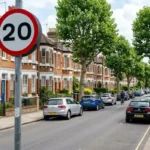
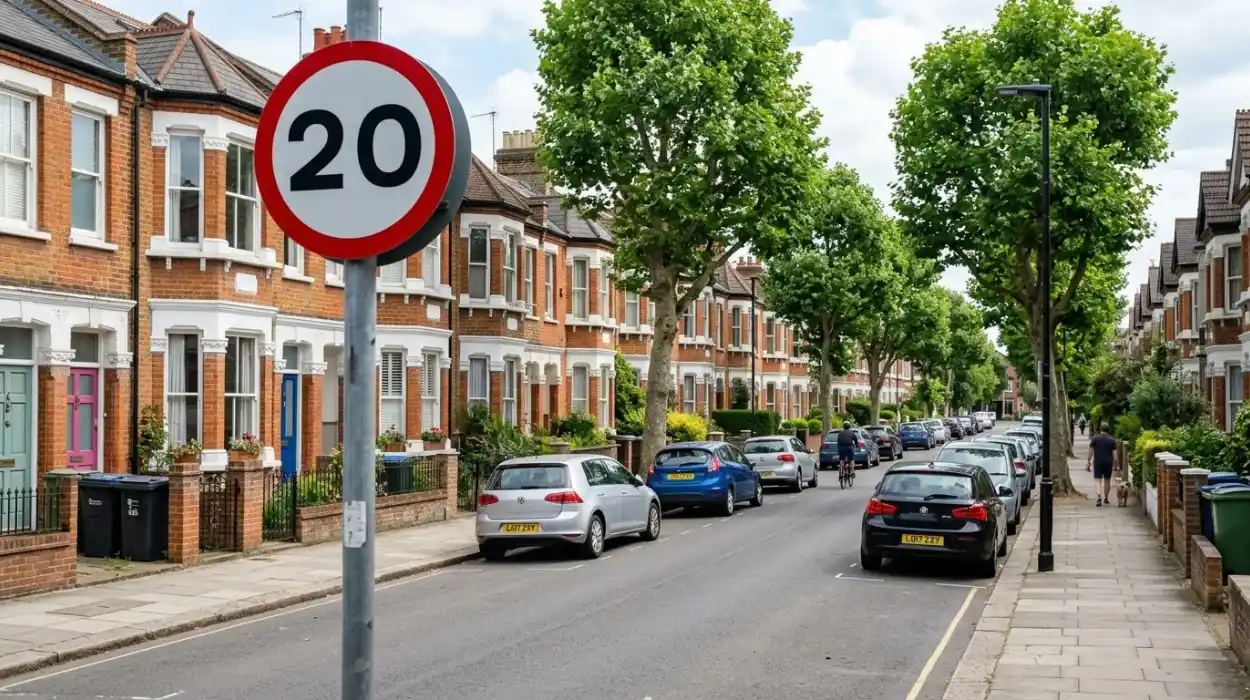
Drivers should look for 20mph speed-limit signs and road markings. Signs provide the legal indication of the applicable limit, while painted 20 markings can reinforce the message on the road surface.
A circular speed-limit sign showing 20 establishes the maximum permitted speed for that section of road. Drivers should also remain alert for changes caused by temporary traffic management, roadworks, special restrictions or other traffic orders.
This is particularly relevant to visitors who may be unfamiliar with Ealing. A sat-nav may help with navigation, but it should not be treated as the final authority on the speed limit. Road signs take priority.
Does every residential-looking road have a 20mph limit?
The appearance of a road is not what determines its legal speed limit. A road may look residential because it has houses, parked cars and pavements, but the applicable restriction depends on the legal speed-limit arrangement for that road.
Likewise, a larger road may pass through a built-up neighbourhood while having different characteristics from a quiet residential street. Ealing’s road network includes borough-managed roads as well as roads forming part of London’s strategic transport network.
Transport for London manages the TfL Road Network, which represents roughly 5% of London’s roads. The remaining majority are managed by local authorities. TfL is also continuing to review and lower speed limits on roads under its control where appropriate.
The practical rule is simple: check the signs on the road you are actually travelling on.
What about Ealing’s main roads?
Not every road in Ealing feels like a traditional residential street. Roads connecting areas such as Acton, Ealing Broadway, Southall, Greenford and other parts of the borough can carry considerably more traffic.
The 20mph policy does not mean that drivers should stop considering the road environment. Junctions, pedestrian crossings, cycle lanes, parked vehicles, buses, delivery vehicles and changing traffic conditions can all affect the safest appropriate driving speed.
A legal maximum is not always a target speed. If visibility is poor, pedestrians are close to the carriageway or traffic conditions require additional caution, driving below the maximum can be appropriate.
This distinction is especially useful for tourists who may be unfamiliar with UK driving conventions. The posted speed limit represents the maximum legal speed under normal conditions; it does not guarantee that travelling at that speed is suitable in every situation.
Are school streets different from normal 20mph roads?
Yes. School Streets are an additional traffic-management measure rather than simply another speed limit.
Ealing has implemented a School Streets programme around schools. These schemes can temporarily restrict motor-vehicle access during particular school arrival and departure periods. Ealing Council’s air-quality strategy describes School Streets as temporary closures around schools during peak arrival and departure times.
A driver approaching a school should therefore look for signs explaining the restriction and the times when it operates. A road may have a 20mph speed limit while also being subject to a separate School Street restriction.
This distinction matters because following the speed limit does not automatically mean that a driver is permitted to enter a restricted street during an active School Street period.
What should tourists know when driving in Ealing?
Visitors driving in Ealing should familiarise themselves with British road signs before setting off. UK vehicles drive on the left-hand side of the road, and speed limits are displayed in miles per hour rather than kilometres per hour.
A tourist unfamiliar with London may also encounter buses, cyclists, pedestrians, controlled parking areas, yellow lines, pedestrian crossings and bus lanes within a relatively short journey.
Residential streets can be particularly demanding because parked cars may narrow the usable carriageway. Drivers should maintain a suitable speed, leave adequate space and be prepared for pedestrians or cyclists to appear unexpectedly.
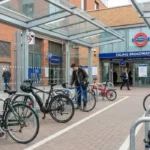
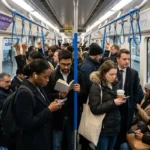
It is also worth remembering that Ealing is well connected by public transport. Ealing Broadway, Ealing Common, West Ealing, Southall, Hanwell and other areas have rail, Underground, Elizabeth line or bus connections. Visitors who do not need to drive may find public transport more practical for journeys between local centres.
How does 20mph affect pedestrians and cyclists?
A lower speed limit can provide a greater safety margin in areas where people walk and cycle. At lower speeds, drivers generally have more time to identify hazards and bring a vehicle to a stop.
This is particularly relevant around residential junctions, crossings, parks, local shopping areas and schools. Ealing’s transport policies have connected its 20mph programme with measures designed to make walking and cycling more attractive.
For cyclists and pedestrians, however, a 20mph limit does not remove the need for caution. Cyclists should remain aware of traffic, while pedestrians should use appropriate crossings where available and avoid assuming that every driver has seen them.
Road safety depends on the behaviour of everyone using the street.
What happens if a driver exceeds the speed limit?
Exceeding a posted speed limit is a motoring offence in the UK. Enforcement is primarily a matter for the police, rather than simply being something that an individual London borough can enforce independently.
Ealing Council has previously highlighted the distinction between setting local speed limits and enforcing speeding offences. In a 2023 letter concerning 20mph enforcement, the council stated that speeding enforcement powers remained with the Metropolitan Police at that time.
Drivers should therefore not assume that a quiet residential street is unlikely to be monitored. Enforcement arrangements can involve police activity and other road-safety measures, while traffic-management infrastructure may also be used to encourage compliance.
The safest approach is to follow the posted limit throughout the journey rather than trying to determine whether enforcement is likely on a particular street.
What is the difference between a 20mph zone and a 20mph limit?
The terms can sound interchangeable, but they can describe different road arrangements.
A 20mph speed limit establishes a maximum legal speed for the relevant road or area. A 20mph zone has historically referred to an area where a 20mph restriction may be supported by traffic-calming or other road-design measures.
Ealing has had 20mph zones for many years. Older council documentation recorded numerous established zones across areas including Greenford, Southall, Hanwell and West Ealing.
The borough-wide 20mph policy is broader than those earlier individual zones. This is why older web pages discussing only certain Ealing neighbourhoods should not be assumed to represent the current position.
How should local drivers approach residential streets?
Local drivers should treat the 20mph limit as part of everyday urban driving rather than simply a restriction to observe when a speed camera is visible.
A good approach is to scan further ahead, anticipate pedestrians near junctions, watch for cyclists, allow parked vehicles to create additional hazards and reduce speed when visibility is limited.
For example, a driver travelling through a residential street in Hanwell may encounter parked vehicles, a side road and pedestrians within a short distance. Even at 20mph, careful observation is necessary. Similarly, someone driving through West Ealing or Southall should be prepared for changing traffic conditions around shops, bus stops and pedestrian activity.
The objective is to combine compliance with sensible defensive driving.
Why checking the current road signs matters
Speed-limit arrangements can change following new traffic orders, road improvements, temporary works or changes to the road network. TfL is continuing to implement its Lowering Speed Limits Programme on roads it manages, while borough councils manage the majority of London’s roads.
This means online information can provide useful background, but it should not replace the signs encountered during an actual journey.
For anyone asking what are the speed limit rules on residential streets in Ealing, the practical answer is that 20mph is the borough-wide standard, but drivers should always confirm the applicable restriction through the signs and markings at their location.
Safe driving in Ealing: the practical takeaway
Ealing’s residential streets are generally governed by a 20mph speed limit, reflecting the borough’s wider road-safety and active-travel policies. The limit applies across Ealing’s roads under the borough-wide approach, while roads under different management arrangements may also be subject to specific traffic orders and changes.
For residents, this means becoming familiar with the 20mph environment and driving according to the conditions rather than treating the limit as a target. For tourists, understanding UK speed-limit signs and remembering that limits are measured in miles per hour can prevent common mistakes.
Whether travelling through Ealing Broadway, Acton, Hanwell, Southall, Greenford, Northolt or Perivale, checking the signs, anticipating vulnerable road users and allowing extra caution around schools and busy residential areas are essential parts of safe road use.
FAQs About Speed Limits on Residential Streets in Ealing
Is the speed limit on residential streets in Ealing 20mph?
Yes. Ealing has implemented a borough-wide 20mph speed limit across its roads. Drivers should still check the signs and road markings at their location for the applicable restriction.
Are all roads in Ealing limited to 20mph?
Ealing Council has stated that a 20mph speed limit has been implemented across all roads in the borough. However, drivers should always follow the current signs because different authorities can manage different parts of London’s road network and traffic orders can change.
Can I drive at 30mph on a residential street in Ealing?
Drivers should not assume that the national urban 30mph limit applies in Ealing. The borough-wide 20mph policy means drivers should follow the applicable 20mph restriction unless road signs lawfully indicate otherwise.
Are Ealing School Streets subject to different rules?
Yes. Some School Streets can temporarily restrict motor-vehicle access during specified school arrival and departure periods. Drivers should read the signs at each location because restrictions can operate at particular times.
Do speed limits apply to cyclists in Ealing?
Speed-limit rules apply to vehicles using the road, but cyclists should also ride responsibly and adapt their speed to the conditions. Everyone using residential streets should take account of pedestrians, junctions and other road users.
Are 20mph limits enforced in Ealing?
Speeding offences are enforced through the relevant policing and enforcement arrangements. Ealing Council has previously stated that speeding enforcement powers were held by the Metropolitan Police rather than the council itself.
What should tourists remember when driving in Ealing?
Tourists should remember that vehicles drive on the left in the UK, speed limits are displayed in miles per hour, and Ealing generally operates within a 20mph environment. Always follow current road signs, watch for School Street restrictions and take extra care around pedestrians, cyclists and parked vehicles.