

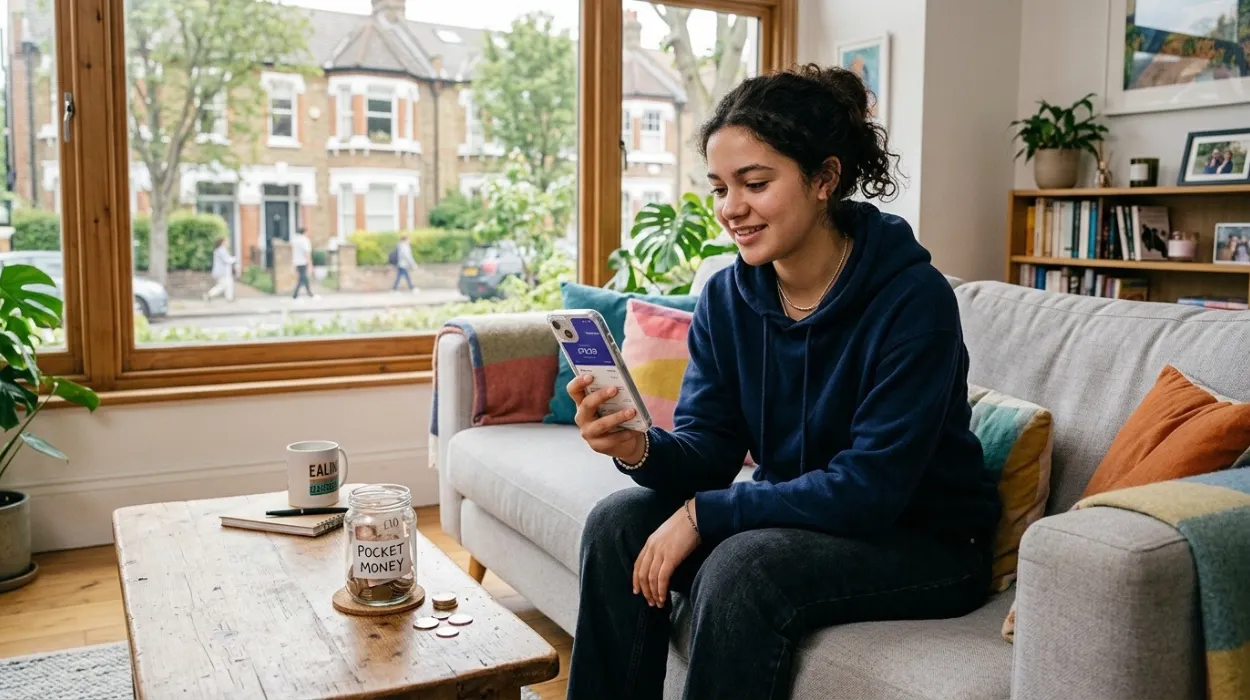
Pocket money can become a surprisingly important part of family life when children become teenagers. In Ealing households, parents may wonder how much pocket money is reasonable, while teenagers may compare what they receive with friends at school, what they see online and what they need for everyday activities.
There is no official Ealing Council pocket money rate for teenagers. The amount a family chooses to give is a private household decision rather than a standard local entitlement. What feels reasonable can depend on the teenager’s age, whether they receive money weekly or monthly, household finances and whether pocket money is intended to cover treats only or everyday expenses such as snacks, travel and social activities.
For families in areas such as Ealing Broadway, West Ealing, Acton, Hanwell, South Ealing, Northfields, Greenford, Perivale, Southall and Northolt, the cost of teenage life can also vary depending on travel, school arrangements and how often young people socialise outside the home.
Is There A Standard Amount Of Pocket Money For Teens In Ealing?
There is no single standard amount that teenagers in Ealing are expected to receive.
A 13-year-old who receives money mainly for personal treats may need considerably less than a 17-year-old who is expected to pay for some lunches, social activities or personal purchases.
Parents therefore tend to approach pocket money in different ways. Some give a small weekly allowance, others provide a monthly amount, and some give money only when a particular activity or expense arises.
The important question is not simply “How much do Ealing teenagers get?” but “What is the money expected to cover?”
A teenager receiving £10 a week for occasional treats has a very different arrangement from one receiving £40 a month and being expected to save part of it for clothes, gifts and social activities.
How Much Pocket Money Might A Younger Teen Need?
For younger teenagers, pocket money is often mainly about learning how to manage money rather than covering major living expenses.
A 12- or 13-year-old might use an allowance for sweets, drinks, small purchases, hobbies or occasional treats with friends. Parents may also encourage them to save a proportion rather than spend everything immediately.
At this age, a smaller weekly amount can make budgeting easier because teenagers can see how quickly their available money disappears.
For example, a parent might provide a weekly allowance and explain that additional money is not automatically available whenever the child spends it early. This creates an opportunity to learn about planning, delayed gratification and distinguishing between wants and needs.
The amount itself is less important than establishing clear expectations.
What About Teenagers Aged 14 To 16?
As teenagers become more independent, their spending can increase.
A 14- to 16-year-old may want money for meeting friends, snacks, cinema trips, hobbies, inexpensive gifts, games or occasional meals outside the home. They may also have school-related social activities that require additional spending.
This is often the stage when comparisons with friends become more noticeable.
A teenager might say that “everyone else” receives more pocket money. Parents should remember that different families include different expenses within their allowances. One teenager may receive less cash but have parents paying separately for transport, phone costs and social activities. Another may receive more pocket money but be expected to cover certain personal purchases.
Comparing the headline amount without understanding what it covers can therefore be misleading.
Do Older Teens Need More Pocket Money?
Older teenagers often have greater financial independence, which can make a larger allowance reasonable for some households.
A 16- or 17-year-old may travel independently, meet friends more frequently, buy lunch occasionally or have part-time work. Their financial needs can therefore look quite different from those of a younger teenager.
However, parents do not necessarily need to increase pocket money simply because a child has reached a particular birthday.
A better approach is to consider increasing responsibility alongside age. If a teenager is learning to manage a larger budget, the additional money can have a purpose rather than simply becoming more spending money.
For example, an older teenager could receive a monthly amount and be expected to manage certain discretionary expenses from it.
Should Pocket Money Be Weekly Or Monthly?
Weekly pocket money can work particularly well for younger teenagers because it provides frequent opportunities to practise budgeting.
If a teenager spends the entire amount within two days, the experience provides a natural lesson about planning. Parents can discuss what happened without turning every purchase into a conflict.
Monthly pocket money can be more appropriate for older teenagers who are ready to manage a larger amount over a longer period.
A monthly system can encourage planning for bigger purchases. A teenager may decide to save part of the allowance for a concert, clothing item, birthday present or activity with friends.
Some Ealing households may also use a combination: regular pocket money plus additional money for specific expenses that parents consider essential.
Should Pocket Money Cover Travel?
This is one of the most important questions families should settle before deciding on an allowance.
A teenager travelling independently around Ealing, West London or into central London may have regular transport costs. If parents expect the teenager to pay for journeys from their pocket money, the allowance needs to be substantially different from an arrangement where parents provide travel separately.
Travel for school, college or an essential appointment is generally better treated separately from discretionary spending.
For example, a teenager may receive pocket money for personal spending while their parent continues to provide money or a travel arrangement for necessary journeys.
Clear boundaries can prevent arguments about whether transport money counts as “pocket money”.
What Should Pocket Money Pay For?
There is no universal rule, but families should agree on the categories before setting the amount.
Pocket money might cover:
- Snacks and occasional treats
- Social activities
- Small hobbies or games
- Gifts for friends
- Personal accessories
- Saving towards larger purchases
- Optional purchases that are not essential
Parents may continue to cover essential expenses such as school equipment, necessary clothing, basic meals, essential travel and healthcare.
The distinction between essential and discretionary spending is particularly useful for teenagers because it teaches them that having a limited budget does not mean they have to pay for everything themselves.
Should Parents Pay For Chores Separately?
Families have different views on whether pocket money should be connected to household chores.
One approach is to provide a regular allowance because every family member is expected to contribute to household life. Another is to provide basic pocket money and offer additional payments for optional jobs beyond normal responsibilities.
For example, keeping a bedroom reasonably tidy might be considered a normal responsibility, while helping with a larger gardening or cleaning task could be treated as an optional paid job.
The second approach can teach teenagers that additional work can generate additional income, while a regular allowance can provide consistency.
Neither system is automatically better. What matters is that the rules are clear and consistent.
Should Teenagers Save Part Of Their Pocket Money?
Encouraging teenagers to save some of their allowance can be more valuable than simply increasing the amount they receive.
Parents might suggest a simple split between spending and saving. The exact percentage can vary according to age and circumstances.
A teenager saving for a particular goal may find this especially motivating. Instead of being told simply to “save money”, they can identify something they actually want and calculate how many weeks of pocket money are needed to reach the target.
This can turn saving into a practical financial skill.
Older teenagers can also learn about bank accounts, budgeting, standing orders and the difference between available money and money that has already been committed.
What If A Teenager Says Their Friends Get More?
This is probably one of the most common pocket money conversations.
Teenagers naturally compare themselves with friends. However, parents rarely know the complete financial arrangement in another household.
A friend might receive £30 a week but have to pay for their own lunches. Another might receive £10 but have their parents pay for most activities separately.
Rather than competing with another family’s allowance, parents can explain what their own household budget allows and what the teenager’s allowance is designed to cover.
This can also be an opportunity to discuss household finances without sharing information that a child does not need to know.
Does Household Income Affect Pocket Money?
Household income can have a significant influence on how much money parents can comfortably provide.
Families have different housing costs, energy bills, food expenses, childcare responsibilities and other financial commitments. A household in Ealing may have a completely different financial situation from another family living nearby.
Pocket money should therefore not become a measure of how financially successful a household is.
A smaller allowance can still teach excellent financial habits if the teenager learns how to plan, save and prioritise. Conversely, a larger allowance does not automatically teach good money management.
Parents should choose an amount that is sustainable rather than stretching the household budget to match what other teenagers appear to receive.
What About Teenagers With Part-Time Jobs?
Some older teenagers start earning their own money through part-time employment.
This changes the role of pocket money.
Parents might reduce or stop regular discretionary allowance once a teenager has a reliable income, while continuing to cover essential costs. Alternatively, they may keep a smaller allowance while encouraging the teenager to save their earnings.
Part-time work can introduce additional financial lessons, including understanding payslips, tax, budgeting and separating spending money from savings.
A teenager who earns their own money may also become more conscious of how quickly small purchases add up.
How Much Should Teenagers Save?
There is no single percentage that works for every teenager.
A younger child may benefit from saving a small amount regularly, while an older teenager with a specific financial goal may choose to save a much larger proportion.
The purpose is to establish the habit of setting money aside before spending everything available.
For instance, if a teenager receives £20 and immediately spends £18, they have little flexibility left. If they decide in advance to save £5, they learn to make spending decisions with the remaining amount.
The lesson is more important than the exact figure.
How Can Ealing Parents Make Pocket Money Work?
A practical system can be simple.
First, decide the amount based on what the household can comfortably afford. Then define what the money is intended to cover. Next, choose weekly or monthly payments depending on the teenager’s age and ability to budget.
Parents should also decide whether chores are included, whether essential travel is separate and whether additional money will be provided for special occasions.
Reviewing the arrangement every few months can be useful. A teenager’s needs can change quickly, particularly when they move from secondary school towards college, sixth form, apprenticeships or employment.
The goal is not to find the “correct” Ealing pocket money figure. It is to create a system that is fair, predictable and educational.
Pocket Money In Ealing Is About More Than The Amount
Teenagers may naturally focus on how much money they receive, but parents can use pocket money to teach much broader financial skills.
Budgeting, saving, prioritising, comparing prices and understanding opportunity cost all become easier when young people manage a limited amount of their own money.
For families across Ealing, Acton, Hanwell, Southall, Greenford, Perivale, Northolt and surrounding areas, there is no official local amount that every teenager should receive.
The most sensible allowance is one that reflects the teenager’s age, responsibilities, spending needs and the family’s financial circumstances. When expectations are clear, pocket money can become less about arguments over cash and more about preparing young people for financial independence.
Frequently Asked Questions About Teen Pocket Money In Ealing
How much pocket money should a 13-year-old get?
There is no fixed amount. Parents can consider the child’s age, household budget and what the allowance needs to cover. Younger teenagers often benefit from a manageable weekly amount.
How much pocket money should a 16-year-old get?
A 16-year-old may need more financial independence than a younger teenager, particularly if they socialise or travel independently. The appropriate amount depends on which expenses parents continue to pay separately.
Do Ealing teenagers get a standard pocket money allowance?
No. There is no standard Ealing Council pocket money allowance for teenagers. Each household decides how much money to provide and what it should cover.
Should pocket money cover school lunches and travel?
It can, but many families keep essential expenses such as necessary school travel and meals separate from discretionary pocket money. The important thing is to agree on the arrangement clearly.
Is it better to give teenagers pocket money weekly or monthly?
Weekly payments can make budgeting easier for younger teenagers, while monthly payments can help older teenagers practise managing money over a longer period.
Should teenagers earn pocket money through chores?
That depends on the family. Some parents connect allowances to chores, while others treat normal household responsibilities separately and pay only for additional tasks.
What should teenagers do if their friends receive more pocket money?
Parents can explain what their own allowance covers and focus on household circumstances rather than matching another family’s spending level. Different families often pay for different expenses separately.