
Travelling from Ealing towards central London on the Central line can be convenient, particularly from Ealing Broadway, but the experience can change considerably depending on the time of day. During busy commuting periods, trains, platforms and interchange stations can become crowded, making a journey feel much less comfortable than it would during quieter periods.
For local residents, knowing when demand is highest can make the daily commute easier to plan. For tourists staying in Ealing, avoiding the busiest periods can mean a more relaxed journey towards attractions, shopping districts and major transport connections in central London.
The Central line runs directly from Ealing Broadway through West Acton, North Acton, East Acton, White City, Shepherd’s Bush, Notting Hill Gate, Marble Arch, Bond Street, Oxford Circus, Tottenham Court Road, Holborn, St Paul’s and Bank before continuing eastwards. TfL’s current timetable shows frequent services from Ealing Broadway, although actual journey conditions can vary with demand, delays and planned works.
When Is The Central Line Busiest From Ealing?
The busiest periods are generally associated with the weekday morning and evening commuting peaks.
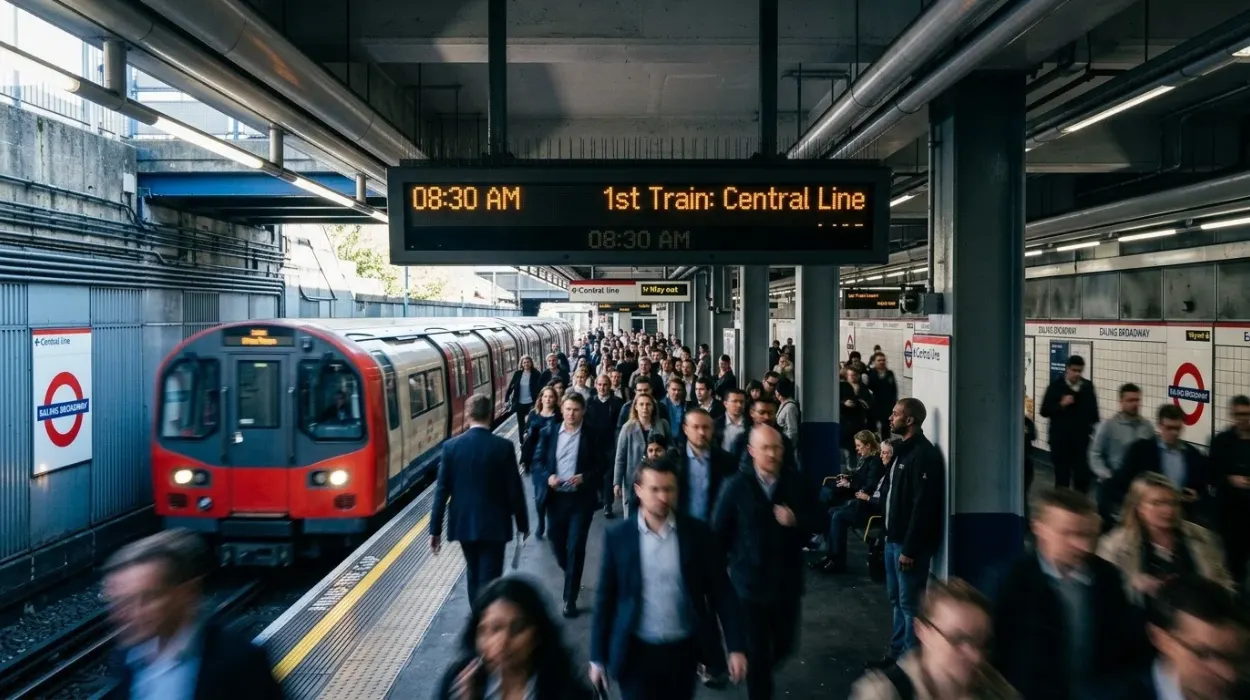
For travellers leaving Ealing towards central London, the morning peak is usually the most important period to avoid, particularly from around 7:00am through to 9:00am. Passenger demand tends to build as commuters travel towards workplaces in areas such as Bond Street, Oxford Circus, Tottenham Court Road, Holborn and the City.
The busiest conditions can be particularly noticeable around 7:30am to 9:00am. Someone boarding at Ealing Broadway during this period may find that trains become progressively busier as they approach West London interchanges and central London.
TfL’s Central line working timetable identifies a specific morning peak and evening peak on weekdays, reflecting the higher level of service required to handle commuting demand.
The evening peak works differently. Rather than everyone travelling in the same direction, passengers leave offices and central London at different times. Nevertheless, roughly 4:30pm to 7:00pm can be a busy period, particularly for passengers travelling west towards Ealing.
Why The Morning Rush From Ealing Can Feel Particularly Busy
Ealing Broadway is an important transport interchange, connecting the Central line with the District line, Elizabeth line and National Rail services. This means passengers are not only starting their journeys in Ealing but can also be transferring between different services.
A commuter might arrive at Ealing Broadway from another part of the borough, change from the Elizabeth line or District line, and then board a Central line train. The result can be a substantial concentration of passengers at the station during weekday mornings.
Once a train leaves Ealing Broadway, additional passengers can board at West Acton, North Acton and East Acton. By the time it reaches White City and Shepherd’s Bush, available space may be considerably more limited.
This is why the difference between leaving Ealing at 6:30am and leaving at 8:00am can be noticeable even though both journeys use exactly the same route.
What Time Should You Avoid Travelling In The Morning?
If your schedule allows flexibility, avoiding approximately 7:30am to 9:00am on weekdays is a sensible approach.
For commuters who need to arrive in central London for a conventional office start, travelling earlier can sometimes provide a more comfortable experience. For example, leaving Ealing Broadway around 6:30am can be considerably less stressful than boarding at 8:15am.
However, there is no single minute when the Central line suddenly becomes crowded. Passenger demand rises and falls gradually, and conditions can vary according to the day, station and direction of travel.
If you are a tourist, travelling before the main commuter peak or waiting until after it has passed can be particularly worthwhile. Attractions in central London often open later than offices, so visitors may not need to travel during the busiest commuting period anyway.
When Is The Evening Peak From Central London To Ealing?
The evening commute is generally busiest between approximately 4:30pm and 7:00pm on weekdays.
This matters if you spend the afternoon in central London and plan to return to Ealing. Stations such as Oxford Circus, Bond Street, Tottenham Court Road, Holborn and Bank can experience significant passenger activity as people leave work.
For someone returning to Ealing Broadway, travelling shortly after the working day ends can mean standing for part or all of the journey.
If you can delay your return until around 7:30pm or later, the journey may feel more relaxed. However, this is a general planning guideline rather than a guarantee of an empty train.
TfL’s Central line information shows frequent services throughout the day, but passenger numbers and service conditions are separate issues. A frequent train does not necessarily mean a comfortable journey during the busiest periods.
Which Central Line Stations Can Feel Especially Busy?
Crowding is not evenly distributed across the route.
From Ealing, passengers may notice increasing demand at West Acton, North Acton, East Acton and White City. Shepherd’s Bush is another important interchange, with connections to National Rail and London Overground.
Further east, Notting Hill Gate, Bond Street, Oxford Circus, Tottenham Court Road, Holborn and Bank are major destinations or interchange points. TfL’s timetable confirms the connections available at several of these stations, including Jubilee and Elizabeth line connections at Bond Street and Bakerloo and Victoria connections at Oxford Circus.
For tourists, Oxford Circus and Tottenham Court Road can be particularly relevant because they provide convenient access to major shopping, entertainment and sightseeing areas.
If you are travelling with children, large luggage or mobility equipment, the busiest stations can feel more challenging than they would for an individual commuter travelling with a small bag.
What Are The Best Times To Travel From Ealing?
There is no completely empty period that can be guaranteed, but travellers looking for a quieter experience can generally consider mid-morning, early afternoon and later evening.
For example, a tourist could travel from Ealing Broadway around 10:00am or 10:30am after the main morning rush. Similarly, travelling between roughly 11:00am and 3:30pm is often more practical for sightseeing than attempting to travel during commuter peaks.
Midday travel also has another advantage: you can reach central London without having to compete with the largest concentration of commuters.
The Central line timetable demonstrates that services continue throughout these periods, so avoiding rush hour does not necessarily mean sacrificing access to central London.
Is The Central Line Busy At Weekends?
Weekend travel follows a different pattern from weekday commuting.
There is no conventional Monday-to-Friday office rush on Saturdays and Sundays, but the Central line can still become busy because of shopping, tourism, sporting events, concerts and leisure activities.
Saturday afternoons may therefore be busy around destinations such as Oxford Circus and central London’s shopping areas. Sunday conditions can also change depending on events and engineering works.
A tourist should not assume that a weekend automatically means a quiet Tube journey. Event-related demand can produce significant crowds even outside normal commuting hours.
TfL’s timetable also shows that Central line services operate at different times across the week, so checking the journey planner before setting out remains sensible.
Should Tourists Avoid The Central Line During Peak Hours?
Not necessarily. The Central line is one of London’s useful east-west Underground routes, and avoiding peak hours is mainly about comfort rather than whether you can travel at all.
A tourist staying in Ealing may have little reason to travel during the weekday morning peak. Many attractions, museums and shops do not require visitors to arrive at 8:00am.
For example, someone staying near Ealing Broadway could have breakfast locally, explore Ealing Common or nearby attractions, and then travel towards central London later in the morning.
Travelling outside peak periods can also make navigation easier. Visitors unfamiliar with London’s transport network may find crowded platforms and packed trains more difficult to manage, particularly when carrying luggage.
How Can Ealing Commuters Make The Journey Easier?
Commuters who cannot avoid rush hour can still make the journey more manageable.
First, check the TfL journey planner and service status before leaving home. A normally busy journey can become substantially more difficult when there are delays or cancellations.
Second, allow additional time if you have a meeting, appointment or flight connection. The scheduled journey time is not the same as the total door-to-door journey time.
Third, consider alternative services when they make sense. Ealing Broadway provides connections with the Elizabeth line, District line and National Rail, giving passengers additional options depending on their destination.
For example, someone travelling towards Paddington or parts of east London may find the Elizabeth line more suitable than remaining on the Central line for the entire journey.
What If You Need To Travel During Rush Hour?
Sometimes peak travel simply cannot be avoided.
If you need to travel between approximately 7:30am and 9:00am, arrive at Ealing Broadway with enough time to navigate the station without rushing. If possible, avoid travelling with unnecessary luggage and position yourself sensibly on the platform rather than trying to board at the last moment.
During the evening peak, the same principle applies. If you are returning to Ealing after work, expect higher demand and allow extra time for interchange stations.
It is also worth remembering that crowding can be affected by disruptions. TfL’s live information can show whether the Central line is experiencing delays or cancellations, which can change the situation quickly. Current timetable pages provide live service-status information alongside scheduled trains.
A Practical Central Line Travel Plan From Ealing
For a weekday commuter, travelling before the main morning rush or after it has eased can improve comfort where working hours permit.
For a tourist, late morning is often a more practical starting point for central London sightseeing than the weekday commuter peak.
For a family with children, avoiding the busiest morning and evening periods can make boarding and changing trains easier.
For a traveller with luggage, consider whether the Elizabeth line or another available connection provides a more convenient journey from Ealing Broadway.
For an important appointment, avoid planning your journey around the absolute minimum scheduled travel time. Allow a buffer for waiting, interchange and unexpected disruption.
The most useful approach is therefore not simply asking, “What time is the Central line busy?” but asking, “When do I need to travel, where am I going, and what alternatives do I have?”
The main weekday periods to avoid when possible are the morning rush, particularly around 7:30am to 9:00am, and the evening commute, broadly around 4:30pm to 7:00pm. These periods are more likely to bring heavier passenger demand, crowded platforms and less comfortable journeys.
For many Ealing residents, travelling earlier, later or during the middle of the day can make a noticeable difference. Tourists generally have even greater flexibility and can often plan sightseeing around the commuter peaks.
Ealing Broadway’s connections with the District line, Elizabeth line and National Rail also mean that the Central line is not the only transport option available.
Ultimately, the best travel time depends on your destination, day of the week, luggage, mobility needs and whether there are disruptions or planned engineering works. Checking TfL information immediately before travelling remains the most reliable way to make a final decision.
Frequently Asked Questions About Peak Travel Times On The Central Line From Ealing
What is the busiest time on the Central line from Ealing?
The weekday morning peak is generally busiest around 7:30am to 9:00am, particularly for passengers travelling from Ealing towards central London.
Is the Central line busy at 8am from Ealing?
Yes, 8am falls within the main weekday morning commuting period, so trains and stations are likely to be considerably busier than during mid-morning or early afternoon.
What is the best time to travel from Ealing to central London?
For a quieter journey, late morning and early afternoon are generally better choices than the weekday commuter peaks.
Is the Central line busy after 5pm?
It can be. The period from around 4:30pm to 7:00pm is commonly associated with higher evening commuting demand, particularly for journeys towards Ealing.
Is Ealing Broadway busy during rush hour?
Ealing Broadway can become busy because it connects the Central line with the District line, Elizabeth line and National Rail, creating interchange demand as well as passengers starting their journeys there.
Is the Central line quieter at weekends?
It can be quieter than weekday commuting periods, but Saturday shopping, tourism, sporting events, concerts and other activities can create substantial crowds.
Should tourists avoid the Central line during rush hour?
If their itinerary allows it, tourists can benefit from travelling outside commuter peaks because trains and stations are generally easier to navigate and journeys can feel more comfortable.