
Making a home more energy efficient can improve comfort, reduce heat loss and potentially lower household energy costs. For residents in Ealing, there are several routes to explore before paying the full cost of improvements such as insulation, solar panels, smart heating controls or low-carbon heating.
The important point is that there is not one universal Ealing home improvement grant available to every household. Eligibility depends on factors such as household income, property type, Energy Performance Certificate (EPC) rating, tenure, postcode and the particular funding programme available at the time.
For many households, the best starting point is Healthy Homes Ealing, which can provide advice about energy efficiency and help residents identify grant programmes they may qualify for. Ealing Council also currently highlights the Warm Homes: Local Grant as a potential source of support for eligible homes.
What Energy Saving Home Improvements Can Grants Cover?
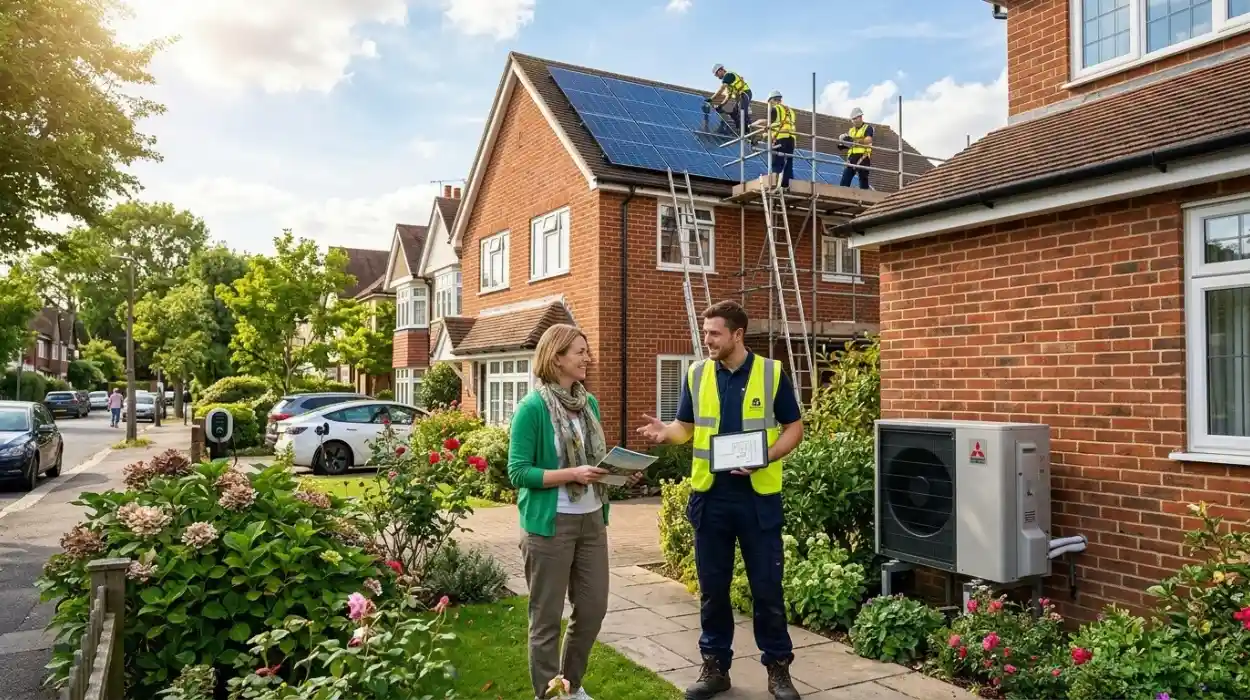
Energy-saving improvements can range from relatively simple insulation work to larger retrofit projects. Depending on the programme and property, support may cover measures such as loft, wall or underfloor insulation, smart heating controls, solar panels and air source heat pumps.
The Warm Homes: Local Grant is particularly relevant because it is designed to help eligible households improve the energy performance of privately owned homes in England. The government says eligible households may receive improvements arranged and paid for through the local authority, although landlords may have to contribute in some circumstances.
For an Ealing household, this could mean that an older or poorly insulated property is assessed before particular improvements are recommended. Rather than choosing an expensive technology first, the assessment considers what measures could make the property more energy efficient.
Warm Homes: Local Grant in Ealing
The Warm Homes: Local Grant is currently one of the main schemes Ealing residents should investigate. Ealing Council explains that the programme can support upgrades for homes that are difficult to keep warm, with possible measures including insulation, heat pumps and solar panels.
Government guidance states that the scheme is available in England for privately owned homes, including owner-occupied and privately rented properties, where the property has an EPC rating between D and G. Household income is normally expected to be £36,000 or less, although some households above that threshold may still qualify because of their postcode or certain benefits.
This means a homeowner in areas such as Acton, Hanwell, Northolt, Greenford, Southall, Perivale or Ealing Broadway should not assume they are automatically eligible simply because their home is older. The household and property need to meet the relevant criteria.
Who Is Most Likely to Qualify?
The eligibility rules mean that the scheme is particularly relevant to households experiencing higher energy costs or living in homes with lower energy efficiency.
A family living in an older Ealing house with an EPC rating of E, for example, may want to investigate whether its income and circumstances meet the scheme requirements. Similarly, a private tenant in a property with poor insulation may be able to explore support, although the landlord’s involvement can be required for certain improvements.
Government guidance also allows some households to qualify through specified postcode areas or benefits. This is why checking eligibility is more useful than assuming that income alone determines whether support is available.
The scheme is not designed as a general cash payment that residents can spend however they wish. Where a household qualifies, the improvement work is assessed and arranged through the relevant programme.
Healthy Homes Ealing Can Help Residents Find Support
For people who are unsure where to begin, Healthy Homes Ealing is an important local starting point. Ealing Council describes the service as its main support route for residents with energy concerns.
The service provides free advice about improving energy efficiency, staying warm during winter, staying cool during hot weather and finding relevant grant programmes. The council’s Green Doctors can also provide energy advice consultations and help residents understand available support.
The Healthy Homes Ealing helpline is currently listed as 0800 083 2265, with advice available Monday to Friday from 9am to 5pm. Residents can also register for a free Green Doctors consultation.
For someone who has never applied for an energy grant before, this can be a practical first step because the available programmes and eligibility conditions can change.
Why Your EPC Rating Matters
An Energy Performance Certificate provides an indication of how energy efficient a property is and is particularly important for several home energy schemes.
Under the Warm Homes: Local Grant, eligible homes generally need to have an EPC rating between D and G. A household that does not know its property’s current rating can use the government service to check its EPC information when assessing eligibility.
This makes checking the EPC a sensible step before planning major work. A property with poor insulation may have opportunities for improvement that are more appropriate than immediately replacing its heating system.
Ealing Council also recommends a “fabric first” approach, meaning that reducing heat loss through measures such as insulation should be considered before upgrading heating systems.
Insulation Is Often the First Improvement to Consider
Insulation can be particularly important in older properties where heat escapes through roofs, walls, floors and gaps around the building.
Ealing Council highlights loft, wall and other forms of insulation as important ways to reduce heat loss. Its guidance explains that improving insulation and draught proofing can make homes more comfortable while reducing wasted energy.
For example, a family in a draughty terraced property may notice that rooms become cold quickly after the heating is switched off. Before investing in a completely new heating system, an energy assessment may identify insulation or draught-related improvements that address some of the underlying heat loss.
This is why grants should be considered as part of a wider home improvement plan rather than simply as a way to obtain one particular product.
What About Solar Panels and Heat Pumps?
Solar panels and air source heat pumps can form part of larger energy-efficiency improvements, but eligibility and suitability depend on the property and the funding scheme.
The Warm Homes: Local Grant lists solar panels and air source heat pumps among the types of improvements that may be recommended for eligible homes. However, this does not mean every applicant will automatically receive either technology. The property needs to be assessed and the improvement must fit the programme’s requirements.
A homeowner in Ealing might therefore be interested in solar power because of rising electricity costs, while another household may benefit more from insulation or heating controls.
The right improvement depends on the building, existing heating system, energy performance and household circumstances.
Are There Grants for Council Homes in Ealing?
Council tenants should not assume that private-home grant schemes are the only source of energy improvements.
Ealing Council is undertaking a significant retrofit programme across its social housing stock. Its 2026 housing information states that 732 council homes are planned for energy-saving retrofits by 2028, with possible improvements including insulation, energy-efficient windows and doors, heating upgrades, ventilation systems and roof replacements.
The council’s wider housing strategy also describes plans to expand retrofit activity across different housing tenures and work with Warmer Homes London to improve energy efficiency for Londoners.
If you are an Ealing Council tenant, the appropriate route may therefore be through your housing service rather than applying independently for a private-home grant.
What About Private Tenants and Landlords?
Private tenants can still investigate energy support, but they should understand that some improvements require landlord involvement.
The Warm Homes: Local Grant includes privately rented homes within its general eligibility framework, but the government states that landlords may need to contribute towards some improvements.
A tenant living in a poorly insulated flat in Southall, for example, may want to speak to their landlord before arranging major improvements themselves. Tenants should not assume they can install structural or external measures without permission.
Landlords also have separate responsibilities relating to property condition and energy efficiency. Ealing Council notes that privately rented properties generally need to meet minimum EPC requirements unless a valid exemption applies.
Do Energy Improvements Need Planning Permission in Ealing?
Not every energy-saving improvement requires planning permission, but some projects can involve planning or building-control considerations.
Ealing Council specifically warns that energy improvements such as external wall insulation, solar photovoltaic panels, solar thermal panels and certain window changes may require planning permission in some circumstances, particularly where conservation-area restrictions apply.
This is especially relevant in parts of Ealing where properties may have particular architectural or conservation considerations.
Before starting substantial external work, homeowners should check the current planning requirements rather than assuming that an energy-efficiency project automatically falls under permitted development.
What Happened to the Great British Insulation Scheme?
People searching online for Ealing energy grants may still find information about the Great British Insulation Scheme (GBIS). However, this scheme has now closed.
Ofgem states that the Great British Insulation Scheme ended on 31 March 2026. It previously provided free or cheaper insulation through participating energy suppliers.
This distinction matters because older articles and social media posts can continue appearing in search results. Residents should check whether a programme is currently open before sharing personal information or agreeing to work.
Current support should be checked through Ealing Council, GOV.UK, Ofgem or the relevant official programme rather than relying on outdated grant articles.
A Practical Example for an Ealing Homeowner
Imagine a homeowner in Northolt living in an older property with an EPC rating of E. The household is concerned about winter heating costs and wants to improve insulation.
Instead of immediately paying a contractor for work, the homeowner could first check the Warm Homes: Local Grant eligibility requirements and contact Healthy Homes Ealing for advice.
If eligible, the home could be assessed to identify appropriate improvements. Depending on the assessment and funding, the work might involve insulation, heating improvements, smart controls, solar panels or another suitable measure.
If the household does not qualify, the energy advice service can still help identify lower-cost efficiency measures and other support that may be available.
How to Apply for Energy Saving Support in Ealing
The safest approach is to start with eligibility rather than choosing a contractor.
Check your property’s EPC, household circumstances, tenure and postcode. Then use the official Warm Homes: Local Grant eligibility service and Ealing Council’s Healthy Homes Ealing information.
If you are offered an assessment, keep records of the information provided and understand what work is being proposed. Ask who is responsible for arranging the work, whether you need to contribute, and whether planning or landlord permission is required.
Be particularly cautious about unsolicited callers promising guaranteed grants. Government and council schemes have specific eligibility requirements, and qualifying for a programme does not necessarily mean every type of improvement will be funded.
Making an Ealing Home More Energy Efficient
Local energy grants can make energy-saving improvements more accessible, but there is no single scheme that suits every household. The Warm Homes: Local Grant is currently a key programme for eligible privately owned homes, while Healthy Homes Ealing provides local advice about grants and energy efficiency.
Council tenants may have access to separate retrofit programmes, while private tenants may need their landlord’s participation. Homeowners also need to consider EPC ratings, planning requirements and the suitability of individual measures.
For residents in Ealing, the most practical approach is to check current official eligibility first, understand what the property needs and then investigate funding before committing to expensive work.
Frequently Asked Questions About Energy Saving Grants In Ealing
Are there grants for energy-saving home improvements in Ealing?
Yes. Eligible Ealing households may be able to access the Warm Homes: Local Grant, while Ealing Council’s Healthy Homes Ealing service can provide advice about available grant programmes and energy-efficiency improvements.
What is the Warm Homes: Local Grant?
The Warm Homes: Local Grant is a government-funded programme supporting eligible privately owned homes in England with energy-efficiency and low-carbon heating improvements. Potential measures include insulation, solar panels, smart controls and air source heat pumps.
Who can qualify for the Warm Homes: Local Grant in Ealing?
Eligibility generally involves living in a privately owned home with an EPC rating of D to G and meeting income, benefits or postcode-related criteria. The government states that household income is normally £36,000 or less, although some households above this level may qualify through other routes.
Can private tenants in Ealing get energy-saving grants?
Private rented properties can fall within the Warm Homes: Local Grant eligibility framework. However, landlords may need to contribute towards some improvements, so tenants should check the requirements and discuss major work with their landlord.
Does Ealing Council offer free energy advice?
Yes. Healthy Homes Ealing provides free advice about making homes more energy efficient, reducing energy costs and accessing available grants. The council currently lists the Healthy Homes Ealing helpline as 0800 083 2265.
Can I get a grant for solar panels in Ealing?
Solar panels are among the measures that may be available through the Warm Homes: Local Grant for eligible properties. However, funding is subject to the scheme’s eligibility requirements and a property assessment; solar panels are not automatically provided to every applicant.
Is the Great British Insulation Scheme still available in Ealing?
No. The Great British Insulation Scheme closed on 31 March 2026. Residents searching for current insulation support should check newer programmes such as the Warm Homes: Local Grant and the latest information from Ealing Council.