

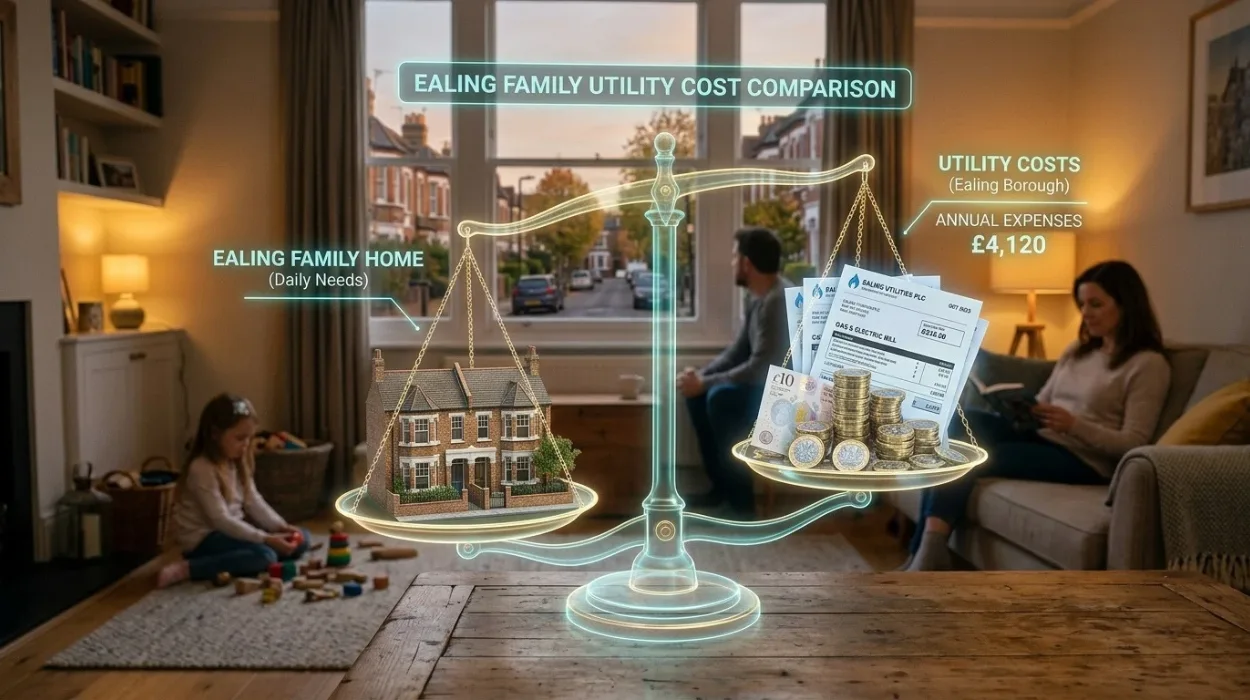
Families living in Ealing houses often have different household costs from people living alone in flats or smaller properties. One of the most common questions for families moving to or already living in Ealing is whether having more people and more space automatically means higher utility bills.
In most cases, a family home can use more energy and water than a smaller household, but the difference is not determined by family size alone. The size and construction of the house, heating system, insulation, number of rooms in use, appliances, water consumption and household habits can all influence monthly costs.
For families in areas such as Ealing Broadway, Hanwell, Northfields, West Ealing, South Ealing, Acton, Perivale, Greenford and Southall, understanding these factors can make household budgeting much easier. Gas, electricity and water are particularly important because their costs can change according to consumption.
Why Families May Have Higher Utility Bills
A family household generally has more daily activity than a one-person or two-person household. More people may mean more showers, baths, cooking, laundry, electronic devices, lighting and hot-water use.
A family living in a four-bedroom house, for example, may heat several rooms during winter. A single person in a one-bedroom flat might only heat one or two rooms. This difference can have a substantial effect on gas consumption.
However, having more residents does not automatically mean every family will have an unusually high bill. Energy-efficient appliances, good insulation, sensible heating controls and careful energy use can reduce consumption.
This is why the question of whether utility bills are higher for families living in Ealing houses is best answered by looking at both household size and property characteristics.
How House Size Affects Utility Costs
House size is one of the most important factors affecting energy consumption.
A larger Ealing house usually has more rooms, a greater internal area and potentially more external walls through which heat can escape. During colder months, heating several bedrooms, living areas and other occupied spaces can increase gas or electricity consumption.
For example, a family living in a three-bedroom terraced house in Hanwell may use more energy than a couple living in a compact flat near Ealing Broadway. However, the difference depends on the age and energy efficiency of each property.
An older house with draughty windows and limited insulation can sometimes require considerably more heating than a newer, well-insulated property.
Gas Bills And Family Heating Habits
For many Ealing houses, gas is particularly important because it may be used for central heating and hot water.
Families often spend more on heating because there are more rooms and people in the property. Children may spend time at home after school, adults may work from home, and bedrooms or living spaces may need to remain comfortable for longer periods.
Winter can therefore produce noticeably higher gas consumption.
Ofgem’s energy price cap provides a useful reference for households on default tariffs. From 1 October to 31 December 2026, the typical annual price-cap figure for a household paying by Direct Debit is £1,723 for gas and electricity combined. This is based on typical consumption and is not a fixed maximum bill for an individual household.
The average Direct Debit gas unit rate for this period is 7.97 pence per kWh, with a daily standing charge of 29.68 pence. Actual rates vary by region, payment method and meter type.
Electricity Use In A Family Home
Electricity consumption can also increase as household size grows.
A family may have several televisions, computers, games consoles, chargers, kitchen appliances and other electrical equipment operating throughout the day. Washing machines and tumble dryers can also contribute significantly to electricity consumption.
Cooking is another consideration. A household preparing several meals every day may use more electricity or gas than a household where meals are prepared less frequently.
Remote working and home study can add further electricity use because computers, monitors, lighting and other equipment may remain switched on for several hours.
For the October to December 2026 price-cap period, the average electricity unit rate for Direct Debit customers is 26.32 pence per kWh, with a daily standing charge of 54.83 pence. These figures apply as an England, Scotland and Wales average, while actual regional rates differ.
Do Families In Larger Ealing Houses Always Pay More?
Not necessarily.
A large house can sometimes have lower energy consumption than a smaller property if it has good insulation, efficient heating and responsible energy use.
Imagine two Ealing households. One family lives in a large but recently improved house with effective insulation, modern heating controls and efficient appliances. Another household lives in a smaller older property with poor insulation and an inefficient heating system.
The smaller home could potentially require more energy to maintain a comfortable temperature.
This is why comparing bills purely by the number of bedrooms can be misleading. The condition and energy performance of the building matter considerably.
The Importance Of Insulation In Ealing Houses
Insulation helps reduce heat loss. A well-insulated home can retain warmth for longer, reducing the amount of energy required from the heating system.
Loft insulation, cavity-wall insulation where suitable, solid-wall improvements, floor insulation and draught-proofing can all contribute to better energy efficiency.
Windows and doors are also relevant. Older single-glazed windows or poorly sealed doors may allow heat to escape, increasing the demand for heating.
Families considering renting or buying an Ealing property can look at its Energy Performance Certificate, commonly known as an EPC. The EPC provides information about the property’s energy efficiency and potential improvements.
How Water Bills Can Change For Families
Utility costs are not limited to gas and electricity. Water is another household expense, and family size can have a noticeable effect on water consumption.
More residents generally means more showers, baths, toilet use, washing-machine cycles, cooking and general household water use.
In an Ealing house with several children, for example, the number of daily showers and laundry loads can be considerably higher than in a one-person household.
Whether a household pays a metered water bill or another type of charge can affect how closely the final cost reflects actual usage. Families should therefore understand how their water charges are calculated and monitor consumption where possible.
Why Laundry Can Increase Household Costs
Laundry is one of the everyday activities that can increase both water and energy use.
A family with children may run washing machines several times a week. Tumble drying can also use significant electricity, particularly if clothes are dried frequently rather than air-dried.
The actual cost depends on the appliance, programme, temperature and frequency of use.
Using appropriate wash cycles and avoiding unnecessary loads can help households manage consumption without changing essential routines.
Does Family Size Affect Council Tax?
Council Tax is different from gas, electricity and water because it is not generally charged according to how much energy or water a household consumes.
For an Ealing household, Council Tax depends primarily on the property’s valuation band and the applicable local authority charge. The number of people living in the property can matter in specific circumstances, including eligibility for certain discounts or exemptions.
This means a larger family does not simply receive a larger Council Tax bill because it has more members in the household.
When calculating the total cost of living in an Ealing house, however, families should include Council Tax alongside energy, water, broadband, insurance and other household expenses.
How Seasonal Changes Affect Family Bills
Energy costs can vary considerably throughout the year.
During warmer months, families may use less central heating. Gas consumption can therefore fall if gas is mainly being used for heating and hot water.
Winter is different. Shorter days and colder temperatures can increase heating requirements. A family spending more time at home may also use additional electricity for lighting, cooking and entertainment.
This seasonal pattern means a household’s January energy bill should not necessarily be compared directly with its July bill without considering how much energy was actually consumed.
What About Families Working From Home?
Working from home can influence utility costs because the house is occupied for more hours.
An adult working remotely may use a computer, monitor, lighting, broadband equipment and heating during the daytime. If children are also studying at home or spending more time indoors, electricity and heating requirements can increase further.
The effect will depend on the household and property. A well-insulated home may remain comfortable without excessive heating, while a draughty property may require more energy.
Families can monitor their usage through regular meter readings or a smart meter to understand whether daytime occupancy is significantly changing consumption.
How Smart Meters Can Help Families
A smart meter does not automatically make energy cheaper, but it can make consumption easier to understand.
Families can use available smart-meter information to see how much energy they are using and identify periods when consumption is particularly high.
For example, if electricity use rises sharply on certain days, household members can consider whether this coincides with extensive cooking, laundry, heating or appliance use.
Understanding consumption in kilowatt hours can be more useful than simply looking at the final pound amount on a bill.
What Families Should Check Before Renting An Ealing House
Anyone considering a family rental in Ealing should look beyond the advertised rent when estimating monthly housing costs.
Ask whether gas, electricity or water are included in the rent. In many standard private tenancies, tenants pay their own household energy bills.
It is also sensible to check the property’s EPC, heating system and approximate age. A house with modern heating and good insulation may have different running costs from an older property with greater heat loss.
On moving day, tenants should record meter readings and keep photographs where appropriate. This provides a useful record of the starting position for their energy accounts.
How Families Can Manage Utility Costs
The most effective approach is usually to understand where energy and water are being used rather than simply trying to reduce everything.
Heating controls should be used appropriately, and rooms that do not need constant heating can be managed according to household requirements. Draughts can be addressed where practical, while insulation improvements can help reduce heat loss over the longer term.
Families can also review appliance use. Running full washing-machine or dishwasher loads, using suitable programmes and avoiding unnecessary tumble-drying can reduce energy and water consumption.
It is also worth checking the household’s energy tariff. Ofgem states that customers on default tariffs may be able to change tariff or payment method, depending on the options available to them.
What If A Family Is Struggling With Energy Payments?
A household that is finding it difficult to pay an energy bill should contact its supplier rather than allowing the situation to continue without communication.
Ofgem says suppliers must help customers who ask for support, and possible arrangements can include repayment plans or emergency credit in relevant circumstances.
Families should also keep bills, meter readings and payment records organised. Understanding whether a problem is caused by increased consumption, an estimated reading, tariff changes or accumulated debt can make it easier to discuss the situation with the supplier.
Are Utility Bills Higher For Families Living In Ealing Houses?
In general, families living in Ealing houses may have higher total utility consumption than smaller households because more people usually means greater heating, hot-water, electricity and water use.
However, household size is only one part of the picture. A property’s size, insulation, heating system, age, energy efficiency and daily routines can have an equally important effect.
A family living in a well-insulated three-bedroom home may have more manageable energy consumption than a smaller household occupying an inefficient property. The most useful comparison is therefore based on actual kWh consumption and household circumstances rather than simply the number of people living in the property.
For families planning their Ealing household budget in 2026, Ofgem’s price-cap figures provide a useful reference point, but actual costs depend on individual usage and tariff arrangements. The price cap is reviewed every three months, so households should check the latest rates rather than relying on an old annual estimate.
Frequently Asked Questions
Are utility bills higher for families living in Ealing houses?
They can be, because families generally use more heating, hot water, electricity and water. However, the actual cost depends on property size, insulation, heating efficiency, tariffs and household habits.
How much energy does a family house in Ealing use?
There is no single consumption figure for every Ealing family home. A property’s size, construction, heating system, occupancy and daily routines all influence gas and electricity use.
Does a bigger Ealing house always have higher energy bills?
No. A larger home may use more energy, but insulation, heating efficiency and household behaviour can make a significant difference. An efficient large property may consume less energy than a smaller inefficient one.
Why are family energy bills higher in winter?
Families usually need more heating during colder weather. Heating more rooms for longer periods increases gas or electricity consumption, while shorter daylight hours can also increase lighting use.
Can children increase household utility costs?
Children can contribute to higher household consumption through additional showers, laundry, hot water, cooking, lighting, electronic devices and heating. The effect varies considerably between households.
Does Ealing location affect energy prices?
The exact energy rates can vary by region, payment method and meter type. Ofgem publishes regional price-cap rates, so households should check the applicable rate for their postcode and tariff rather than assuming every Ealing property has identical prices.
How can families reduce utility costs without reducing comfort?
Families can monitor kWh consumption, improve insulation where appropriate, manage heating controls, avoid unnecessary appliance use, run efficient laundry cycles and review available energy tariffs. Smart-meter information can also help identify periods of unusually high consumption.