
Ealing is often recognised for its parks, independent businesses, historic streets and strong neighbourhood identity, but one of its most valuable features is less visible: the network of community spaces where people exchange information, meet one another and take part in local life. Community noticeboards in Ealing may appear simple, yet they can play an important role in connecting residents with events, clubs, volunteering opportunities, local services and neighbourhood activities.
For someone new to the borough, these noticeboards and community spaces can provide an easy introduction to local life. For long-term residents, they can help maintain relationships between neighbours and organisations. From libraries and community centres to cafés, faith centres, parks and local halls, Ealing has many places where information is shared and communities come together.
Understanding how these spaces work can make it easier to discover what is happening locally, whether you are searching for a children’s activity, a residents’ group, a community event, a charity opportunity or simply somewhere to meet people.
Why Community Noticeboards Matter in Ealing
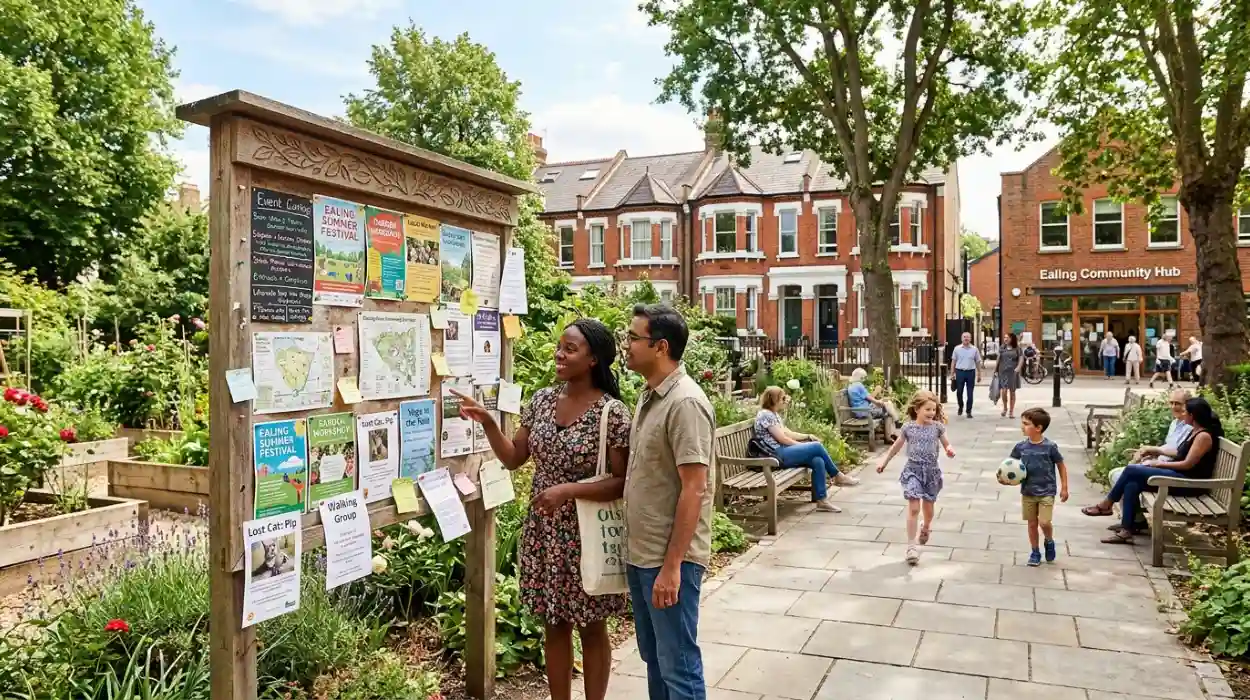
A community noticeboard is more than a place where posters are displayed. It is a small but useful part of local communication. Notices can introduce residents to events they might never encounter through mainstream advertising, while community organisations can reach people who may not regularly use social media.
This is particularly valuable in a large London borough such as Ealing, where neighbourhoods have their own identities and networks. What is happening in Ealing Broadway may be different from activities taking place in Northfields, Hanwell, Greenford, Southall or Acton.
Noticeboards can therefore help information travel at a neighbourhood level. A poster advertising a charity fundraiser, residents’ meeting, language class, exercise group or local market may reach exactly the people who are most likely to benefit.
They can also provide a more personal alternative to digital communication. Someone who does not use Facebook, Instagram or local online groups can still discover opportunities simply by visiting a library, community centre or other public space.
Libraries as Important Community Information Points
Libraries remain some of the most useful public spaces for discovering local information. They are not only places to borrow books; modern libraries can support learning, digital access, community activities and public engagement.
Ealing’s libraries serve different neighbourhoods across the borough, giving residents convenient places to find information and participate in activities. Depending on the branch and programme, visitors may encounter information about workshops, reading groups, children’s activities, support services and local organisations.
For newcomers, a library can be a particularly useful first stop. Instead of searching the entire internet for local activities, you can ask staff about community programmes or look for information displayed within the building.
Libraries also provide a valuable bridge between generations. Children, parents, older residents, students and people working remotely can all use them for different purposes. This makes them natural community hubs where people who might not otherwise meet can share the same public environment.
Community Centres Bring Neighbours Together
Community centres are another important part of Ealing’s local network. These spaces can host meetings, classes, workshops, social activities, support groups and cultural events.
Their importance becomes particularly clear during periods when residents need practical information. A community centre might provide space for a local association, charity project or advice session, allowing people to access support within their own neighbourhood rather than travelling across London.
Many community centres also provide rooms for hire, making them useful for clubs and voluntary organisations. A small group might use a room for a weekly activity, while a larger organisation could organise a public meeting or community event.
For visitors, these places can reveal a side of Ealing that is not always visible from tourist attractions. They demonstrate how local communities organise themselves and create activities around shared interests.
Ealing’s Parks as Informal Community Spaces
Ealing’s parks are among its most important public gathering places. Walpole Park, Lammas Park, Pitshanger Park and other green spaces provide opportunities for exercise, recreation, family activities and community events.
Unlike a traditional community centre, a park does not require people to join an organisation before they can use it. Residents can walk, sit, exercise, meet friends or participate in organised activities in an open environment.
Walpole Park is particularly significant because of its location near Ealing Green and Pitzhanger Manor & Gallery. Its lawns, paths and recreational areas make it a natural meeting point for different groups.
Parks can also support informal information sharing. Community events, charity activities, environmental projects and local gatherings may be promoted through nearby venues or digital community channels before taking place in the park.
For families moving into Ealing, local parks can therefore become an important part of building a social routine. A playground visit may lead to conversations with other parents, while a community sports session can introduce residents to local clubs.
Cafés and Independent Businesses as Local Meeting Points
Not every community space has an official community-centre sign above the door. Independent cafés, bookshops, restaurants and other local businesses can also contribute to neighbourhood connections.
A café with a few outdoor tables may become a regular meeting place for residents. Customers may exchange recommendations, discuss local events or discover activities through printed flyers and small displays.
Independent businesses can also support local initiatives by displaying posters for charity events, music evenings, workshops or fundraising activities. This gives community groups another way to reach people beyond formal organisations.
For tourists, these businesses can provide a more relaxed way to understand Ealing. Rather than simply visiting major attractions, sitting in a local café and observing the surrounding neighbourhood can offer insight into everyday community life.
The important point is that local connection does not always happen through an official programme. Sometimes it begins with a conversation over coffee.
Faith Centres and Cultural Organisations
Ealing’s diverse population is reflected in its religious and cultural organisations. Churches, mosques, temples and other faith-based venues can provide spaces for worship as well as community activities, charity projects, educational programmes and social gatherings.
These organisations often have strong connections with the communities around them. Notices about volunteering, fundraising, food collections, classes and community support can circulate through these networks.
Cultural organisations play a similar role. Groups focused on music, dance, language, heritage or particular cultural traditions can create opportunities for people to maintain connections with their backgrounds while sharing those traditions with the wider community.
For someone new to Ealing, these organisations can be useful gateways into neighbourhood life. However, visitors should always check whether an activity is public, whether registration is required and whether any specific arrangements apply.
Local Markets and Public Events
Markets and community events create temporary spaces for connection. A market can bring together traders, residents, families and visitors who may not normally interact.
Events such as seasonal fairs, charity fundraisers, cultural celebrations and local festivals can strengthen neighbourhood identity. They also create opportunities for small organisations and independent businesses to introduce themselves to the public.
This is where community noticeboards and local information channels become particularly useful. An event needs an audience, and posters, flyers and local announcements can help bridge the gap between organisers and residents.
For tourists, attending a local event can be an excellent way to experience Ealing beyond conventional sightseeing. Instead of seeing the borough only through its architecture and attractions, visitors can experience its people, traditions and everyday social life.
How to Find Community Noticeboards in Ealing
Finding local noticeboards does not necessarily require a complicated search. Start with places that naturally provide public information, such as libraries, community centres, leisure facilities, cafés and independent shops.
It is also worth checking community organisations and neighbourhood groups online. Many local activities now use a combination of physical posters and digital announcements. A notice might appear on a community board and then be shared through a local website or social media page.
When searching online, use the name of your neighbourhood rather than only searching for Ealing as a whole. For example, searches involving Northfields, Hanwell, South Ealing, Greenford, Southall or Ealing Broadway can produce more relevant results.
Local residents can also ask at venues they already visit. A librarian, café owner, community worker or volunteer may know about activities that are not highly visible in general search results.
What Information Can You Find on a Community Noticeboard?
The content varies from one location to another, but community noticeboards can include a surprisingly broad range of information. Typical examples include local events, workshops, classes, charity appeals, volunteering opportunities and support services.
You may also find notices for children’s activities, exercise sessions, social clubs, book groups, music events, language classes and residents’ meetings.
Some boards may include information about local businesses or services, while others focus specifically on community and charitable activities.
If you see an interesting notice, check the date carefully. Community posters can remain on display after an event has finished, particularly on busy boards. Look for contact details, registration instructions, venue information and any age or participation requirements.
How Community Spaces Help New Residents Feel Connected
Moving to a new area can be exciting but also isolating. Digital communication makes it easier to find information, yet it does not always create meaningful relationships.
Local spaces provide opportunities for face-to-face interaction. A parent attending a children’s activity may meet another family. Someone joining a walking group may discover a new part of Ealing. A volunteer helping at a charity event may develop connections with people who live nearby.
These small interactions can gradually create a sense of belonging.
For international residents and newcomers to London, community spaces can be especially valuable. They can provide opportunities to practise English, learn about local customs, find practical information and build friendships without needing to travel into central London.
Community Spaces for Different Ages and Interests
One of Ealing’s strengths is the variety of people who use its public spaces. Families may look for children’s activities and play areas, while younger adults may prefer sports, creative workshops or social events.
Older residents may value walking groups, community clubs, libraries and daytime activities. Students and freelancers can benefit from libraries, cafés and learning spaces.
Volunteering provides another route into local life. Charity shops, environmental projects, community gardens and fundraising events can allow people to contribute while meeting others.
This variety means there is no single definition of a community space. The best place depends on your interests, age, location and preferred way of socialising.
A Practical Way to Explore Ealing’s Local Community
If you are visiting or newly living in Ealing, create a simple neighbourhood discovery routine. Start by visiting a nearby library or community venue and look for current notices. Walk through the surrounding high street and check whether independent businesses display local information.
Then explore a nearby park and look for signs about public activities or events. If you find an organisation that interests you, check its current website or social media page before attending.
This approach can be more rewarding than relying entirely on general tourist guides. It allows you to discover activities that are genuinely connected with local residents.
Keeping Ealing Connected in a Digital Age
Physical noticeboards remain useful even as community communication increasingly moves online. The two systems can complement one another.
A poster provides visibility to someone walking past a venue, while a digital listing can provide additional details, registration links and updates. Together, they make local information easier to discover.
Community spaces are equally important because information alone does not create a connected neighbourhood. People need places where they can meet, participate and develop relationships.
Ealing’s libraries, parks, community centres, cafés, cultural organisations and local groups all contribute to this wider network. Each serves a different purpose, but together they help residents find opportunities and maintain a sense of neighbourhood identity.
Why Local Noticeboards Still Matter
In a fast-moving London borough, it can be easy to overlook simple forms of communication. Yet community noticeboards in Ealing remain useful because they connect people with information at a very local level.
They can introduce residents to a new club, help charities recruit volunteers, promote a neighbourhood event or simply make someone aware of what is happening a few streets away.
For tourists, they provide a glimpse into everyday Ealing. For residents, they can be practical tools for discovering opportunities and staying involved.
Ultimately, the strength of Ealing’s community is not defined only by its landmarks, shops or transport connections. It is also found in the places where people meet, share information and help one another. From a library noticeboard to a busy community centre or a gathering in a local park, these spaces continue to keep Ealing connected.
Frequently Asked Questions
Where can I find community noticeboards in Ealing?
Community information may be displayed in libraries, community centres, leisure facilities, cafés, independent shops, faith centres and other public venues. Availability varies by location, so checking locally is the best approach.
What can I find on community noticeboards?
You may find information about local events, charity activities, volunteering, classes, clubs, children’s activities, workshops, support services and neighbourhood meetings.
Are Ealing community spaces open to tourists?
Many public spaces such as parks, libraries and some community events are accessible to visitors, although individual activities may have registration or membership requirements. Always check before attending.
How can new residents meet people in Ealing?
Joining local classes, volunteering, attending community events, using libraries and participating in walking, sports or cultural groups can all provide opportunities to meet people.
Are community noticeboards still useful when everything is online?
Yes. Physical noticeboards can reach people who do not use social media and can highlight very local opportunities. They also work alongside websites and social media rather than necessarily replacing them.
Which Ealing neighbourhoods have community activities?
Neighbourhoods including Ealing Broadway, Northfields, South Ealing, Hanwell, Greenford and Southall all have their own local organisations, venues and community networks. Activities vary throughout the year.
How can I promote an event on a local noticeboard?
Contact the venue or organisation responsible for the noticeboard and ask about its posting rules. Some boards are managed by libraries, community groups or businesses and may have restrictions on commercial or political material.