
Ealing is often recognised for its parks, independent shops, diverse communities and lively neighbourhoods, but its food culture deserves equal attention. Beyond restaurants and cafés, the borough has a network of farmers, bakers, cheesemakers, growers, beekeepers, butchers, preserves producers and other small-scale makers whose products bring a strong sense of place to West London. For anyone interested in local food producers and artisan makers in Ealing, exploring markets and independent food businesses can reveal a different side of the borough.
For residents, buying directly from producers can make the weekly food shop more interesting while providing an opportunity to understand where ingredients come from. For tourists, food markets offer an accessible way to experience local life beyond conventional sightseeing. Ealing Farmers’ Market, independent bakeries, specialist food shops and neighbourhood high streets all contribute to an evolving food scene where traditional skills and contemporary tastes meet.
Why Ealing Is Worth Exploring for Local Food
Ealing’s food identity reflects the character of the borough itself. It combines established British food traditions with influences from communities across the world. This diversity can be seen in everything from bakery counters and cheese stalls to specialist groceries, preserves and prepared foods.
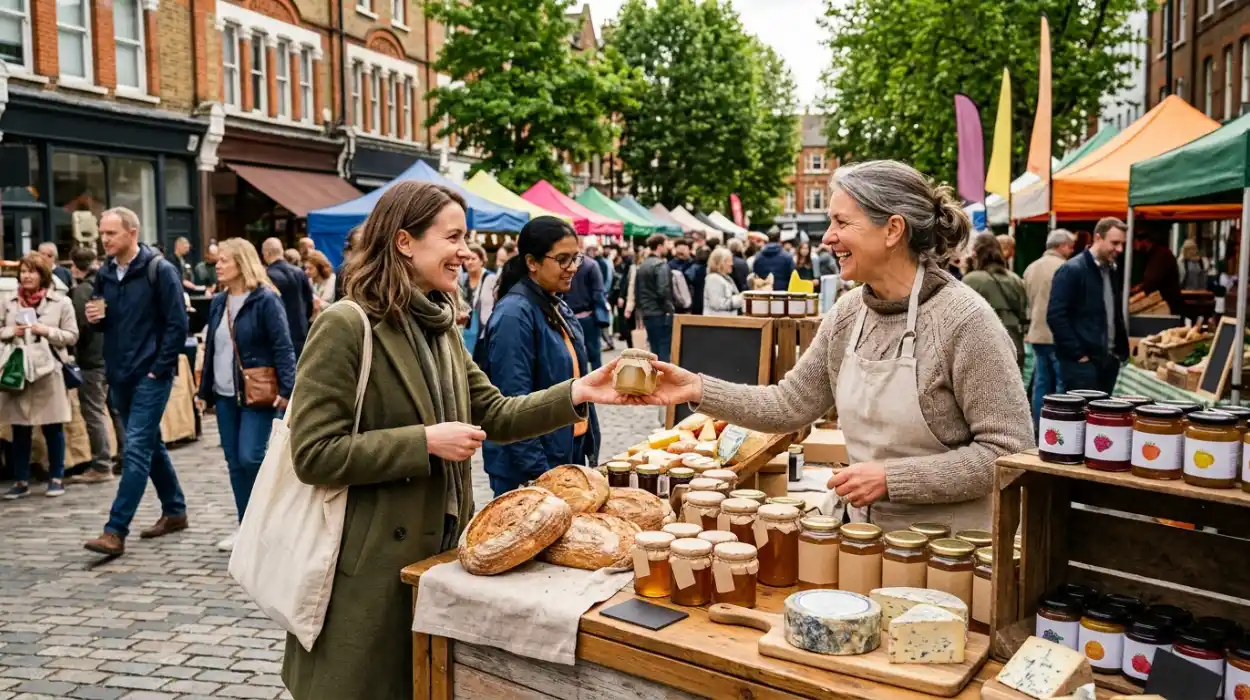
One of the most important places to understand this producer culture is Ealing Farmers’ Market in West Ealing. The market has operated since 2001 and takes place every Saturday from 9am to 1pm. Unlike a conventional retail market, its emphasis is on producers and products that are grown, raised, baked, caught or made by the sellers.
That distinction matters because meeting a producer creates a direct connection between the customer and the food. Instead of simply seeing a finished product on a supermarket shelf, shoppers can ask questions about growing methods, seasonality, ingredients, production techniques and the journey from farm or workshop to market.
Ealing Farmers’ Market: A Starting Point for Food Explorers
For visitors wanting to discover local and regional producers around Ealing, the farmers’ market is one of the easiest places to begin. It is held on Saturdays and provides a changing selection of seasonal ingredients, fresh foods and specialist products.
The market’s producer list includes a broad range of categories, including fruit and vegetables, bread and cakes, cheese and dairy, meat, poultry, fish, eggs, honey, preserves, cooked foods and drinks. Producers listed by the market include Bath Soft Cheese Company, Brambletye Fruit Farms, Celtic Bakers, Chalk Stream Foods, Duck Lane Farm, Ellie’s Dairy, Hand Picked Shellfish Company, Perry Court Farm Shop, Popina, The Fine Jamaican Sauce Co, Wild Country Organics and Wildcroft Dairy.
Not every producer necessarily attends every Saturday, so visitors should check the market’s current information before planning a specific shopping trip. This seasonal variation is part of the attraction. One visit may focus on berries and vegetables, while another could offer apples, cheese, fresh fish, bread or preserves.
For a tourist, this makes the market particularly useful as part of a relaxed West London morning. A visitor can browse the stalls, speak with producers, pick up something to eat and then continue exploring West Ealing or nearby neighbourhoods.
What Types of Artisan Food Can You Find?
The term “artisan” covers more than bread and pastries. In Ealing, the wider producer landscape includes many different food categories, giving shoppers plenty of opportunities to discover something unfamiliar.
Fresh produce is an obvious starting point. Seasonal fruit and vegetables can provide a stronger connection to the agricultural calendar than standard supermarket shopping. The market’s seasonal information highlights products such as asparagus and strawberries in May, peas in June, cherries in July, apples and plums from August and sweetcorn in September.
Dairy is another important category. Independent producers and specialist sellers can introduce shoppers to cheeses and other dairy products that are not always available through mainstream retailers. Meat, eggs, poultry and game also appear among the market’s producer categories.
Then there are products with a longer shelf life, such as honey, jams, preserves and sauces. These are especially useful for visitors who want to take home a food gift or for residents looking to add locally sourced ingredients to their kitchen cupboard.
Discover Ealing’s Independent Bakeries
Bread and baking are central to Britain’s independent food culture, and Ealing has several businesses with strong local connections.
The Bakers of Ealing is a family-run independent bakery established in 1986. Based in the heart of Ealing, it specialises in fresh cream and celebration cakes while also offering artisan cakes, bread and pastries.
For a local resident, an independent bakery can be part of everyday life: picking up bread for breakfast, ordering a birthday cake or choosing pastries for a weekend gathering. For tourists, bakeries provide an easy way to experience neighbourhood food culture without committing to a formal restaurant.
The wider borough also has a history of traditional baking businesses. Local food directories have documented long-established bakeries in Ealing and surrounding neighbourhoods, illustrating how baking has remained an important part of the area’s independent retail character.
From Farm Products to Specialist Food Shops
Not every local food discovery has to involve buying directly from a farm. Specialist independent shops can also play an important role by connecting customers with carefully selected producers.
Harrison’s in Ealing is one example of an independent fine-food shop with a strong specialist focus. Its range includes British and European cheeses, artisan charcuterie, olives, condiments, oils, cakes and baked goods alongside wines and craft beers.
Businesses like this are useful for people who want to explore food through ingredients rather than restaurant menus. A shopper might choose a cheese, pair it with artisan charcuterie and bread, and create a simple meal at home. A visitor staying in self-catering accommodation could use the same approach to assemble a picnic or informal supper.
Explore Different Neighbourhoods for Independent Food
Ealing is not one single food destination. Its different neighbourhoods offer different experiences, which makes exploring the borough on foot particularly rewarding.
West Ealing is closely associated with the Saturday farmers’ market and provides an excellent starting point for people interested in direct-from-producer food. Ealing Broadway offers a mixture of established retailers, cafés, restaurants and independent businesses, while Northfields and Pitshanger have their own distinctive high-street identities.
Acton, which sits within the London Borough of Ealing, also has an active independent food culture. Churchfield Road is known for independent shops and cafés, while local markets and food businesses add to the area’s community atmosphere.
Southall provides an entirely different culinary experience. Its food culture is strongly influenced by South Asian communities, with specialist shops, fresh produce, sweets, spices, bakeries and prepared foods creating one of West London’s most distinctive food environments.
For tourists, this neighbourhood variety means Ealing can be explored as a collection of smaller food destinations rather than as a single attraction.
Why Buying From Small Producers Matters
Shopping with independent producers is not simply about finding unusual food. It can also change the relationship between consumers and the people who make or grow what they eat.
A conversation with a producer can reveal information that is rarely visible on a supermarket shelf. You might learn when a particular vegetable was harvested, how a cheese was produced, why a preserve uses a particular fruit or which ingredients are currently in season.
There can also be a strong community dimension. Farmers’ markets give producers a physical place to meet customers, while independent bakeries and specialist shops become familiar neighbourhood landmarks. Ealing Farmers’ Market, for example, describes itself as a well-established market with regular customers who know its stallholders by name.
For consumers who care about provenance, seasonality and supporting smaller businesses, these personal connections can make food shopping more meaningful.
How to Plan a Food-Focused Day in Ealing
A food-focused day in Ealing does not need to be complicated. Saturday is particularly suitable because the Ealing Farmers’ Market provides a natural starting point.
Begin in West Ealing in the morning and allow enough time to browse the stalls rather than rushing through them. Look for seasonal produce, bread, cheese, preserves or prepared foods that you have not tried before. If you are unsure about a product, ask the producer how it is normally eaten or stored.
After the market, continue towards one of Ealing’s independent high streets for coffee, lunch or further food shopping. Depending on your interests, you could explore Ealing Broadway, Northfields, Pitshanger or Southall.
For families, a market visit can become an educational experience by allowing children to see seasonal ingredients and talk to people who produce food. For couples, it can be combined with a park walk or café stop. For solo travellers, it offers an easy opportunity to experience a local community without needing a structured tour.
What Should Visitors Look For When Buying Artisan Food?
The best approach is to focus on provenance, seasonality and personal preference rather than assuming that a product is better simply because it is described as artisan.
Ask where the product was made, what ingredients it contains and how it should be used. If buying fresh produce, consider what is currently in season. If buying bread, cheese or preserves, ask about storage and serving suggestions.
It is also worth remembering that a farmers’ market and an artisan shop are not necessarily the same thing. A farmers’ market may prioritise direct producer sales, while an independent shop may curate products from several makers. Both can be valuable, but they offer different ways of discovering food.
The Future of Ealing’s Local Food Culture
Ealing’s independent food scene reflects a wider interest in provenance, craftsmanship, seasonality and neighbourhood shopping. Consumers increasingly want to know more about the products they buy, while small producers need opportunities to meet customers directly.
Markets can provide that connection, but so can bakeries, delicatessens, specialist retailers and independent food businesses. The result is a food ecosystem that extends beyond restaurants and takeaway shops.
For Ealing, the strength lies in variety. A Saturday market can connect shoppers with farmers and specialist producers, while a neighbourhood bakery can preserve traditional skills and a specialist food shop can introduce customers to products from Britain and Europe.
This combination makes the borough particularly interesting for people who enjoy discovering food through the stories behind it.
Discover Ealing Through Its Producers and Makers
Exploring local food producers and artisan makers in Ealing offers a different perspective on the borough. Instead of simply asking where to eat, visitors and residents can ask where ingredients come from, who makes them and how local communities support independent food businesses.
From the Saturday farmers’ market in West Ealing to independent bakeries, specialist food shops and diverse neighbourhood food destinations, there are many ways to experience this side of London.
The best discoveries are often spontaneous: a loaf of bread you have never tried, a seasonal fruit you have not seen recently, a new cheese recommended by a stallholder or a jar of locally produced honey that becomes a favourite at home.
For locals, these discoveries can make an ordinary weekend food shop more rewarding. For tourists, they provide an opportunity to experience Ealing through everyday life rather than simply visiting its major attractions. If you want to understand the borough’s character through its food, start with its producers, makers and independent food businesses.
Frequently Asked Questions
Where can I find local food producers in Ealing?
Ealing Farmers’ Market in West Ealing is one of the best places to start. The market operates every Saturday from 9am to 1pm and features producers covering fresh produce, dairy, meat, fish, bread, cakes, honey, preserves and other foods.
Is Ealing Farmers’ Market open every Saturday?
Yes. The market’s current published information states that it takes place every Saturday from 9am to 1pm. However, individual producers do not necessarily attend every week, so checking the latest stall information before travelling is sensible.
What can I buy from artisan food makers in Ealing?
Depending on the market and business, you can find seasonal fruit and vegetables, bread, pastries, cakes, cheese, dairy products, eggs, meat, fish, honey, preserves, sauces and prepared foods. Availability changes according to season and producer schedules.
Are there independent bakeries in Ealing?
Yes. Ealing has several independent baking businesses. The Bakers of Ealing, for example, is a family-run bakery established in 1986 offering cakes, bread and pastries.
Is Ealing good for food shopping without using supermarkets?
Yes. Farmers’ markets, independent bakeries, specialist food shops, neighbourhood high streets and international food retailers provide alternatives for many types of food shopping. West Ealing, Ealing Broadway, Northfields, Pitshanger and Southall are particularly useful areas to explore.
Can tourists visit Ealing’s food markets?
Absolutely. Food markets are particularly suitable for tourists because they provide an informal way to experience local produce and meet independent sellers. A market visit can also be combined with walks, cafés, parks and other attractions around the borough.
How can I support local food producers in Ealing?
Buy directly from producers where possible, visit independent bakeries and specialist food shops, ask about the origin of products and return to businesses you enjoy. Sharing positive experiences with friends and leaving appropriate reviews can also help small businesses gain visibility.