
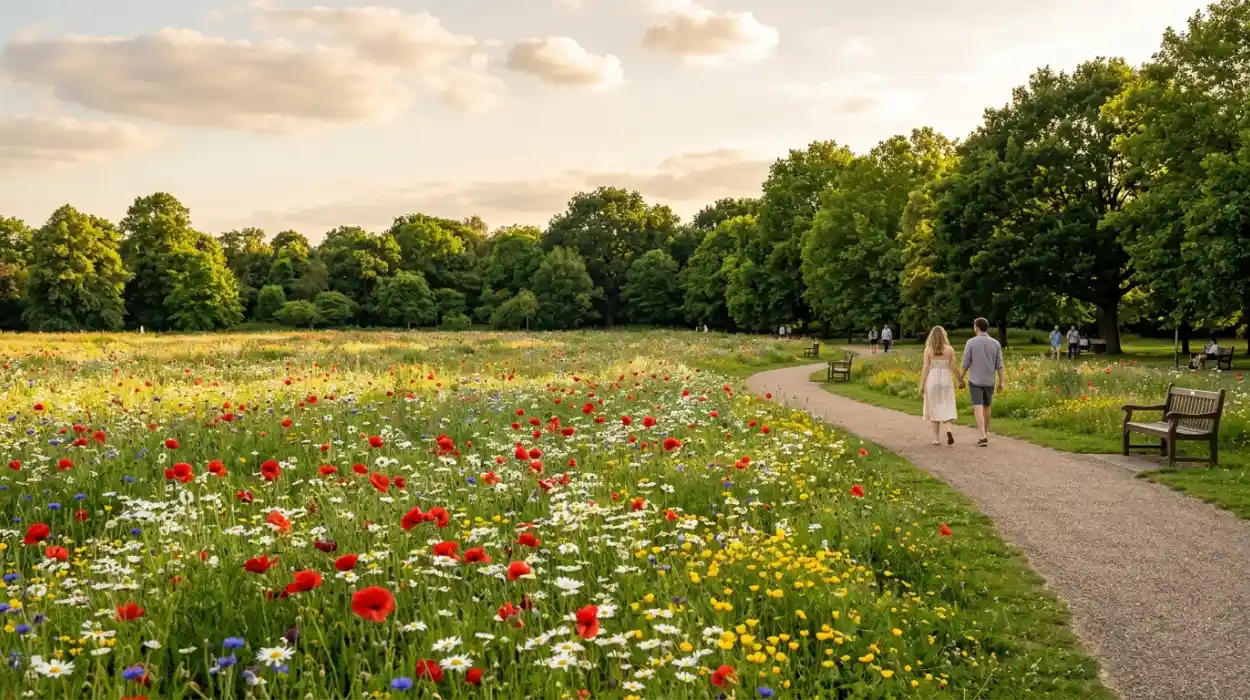
Spring and summer transform Ealing into one of West London’s most colourful destinations. As temperatures rise and daylight hours become longer, the borough’s parks, meadows, woodlands and nature reserves burst into life with spectacular displays of native wildflowers. From delicate bluebells carpeting ancient woodland floors to vibrant poppies, oxeye daisies and buttercups decorating open grasslands, Ealing offers countless opportunities to enjoy Britain’s seasonal floral beauty.
For both worldwide tourists and local residents, exploring wildflower habitats provides a peaceful way to experience nature while discovering a different side of London’s green spaces. These colourful landscapes are not only visually impressive but also play a vital role in supporting bees, butterflies, birds and other wildlife that depend on native plants for survival. Whether you are a keen photographer, a family seeking outdoor adventures or simply someone looking for a relaxing walk, Ealing’s wildflower locations promise memorable experiences throughout spring and summer.
Why Ealing Is a Wonderful Destination for Wildflower Walks
Ealing is often called one of London’s greenest boroughs, and for good reason. The area contains an impressive variety of habitats, including woodland, riverside trails, meadows, wetlands and formal parks. This diversity creates ideal conditions for many native wildflower species to flourish naturally.
Unlike carefully maintained ornamental flower beds, wildflower meadows support complete ecosystems. Native plants provide nectar for pollinating insects, seeds for birds and shelter for small mammals. Healthy grasslands also improve soil quality, reduce flooding and help capture carbon from the atmosphere.
Visitors quickly discover that every green space offers something different. Some parks feature colourful meadow displays, while woodland reserves become famous for breathtaking carpets of bluebells during spring. This variety ensures every visit feels unique throughout the flowering season.
Horsenden Hill – Ealing’s Premier Wildflower Haven
Horsenden Hill is widely regarded as one of Ealing’s finest locations for experiencing native wildflowers. This large nature reserve combines ancient woodland, open meadows, farmland and hedgerows that support exceptional biodiversity.
During late spring, expansive grasslands become covered with buttercups, red clover, bird’s-foot trefoil, common knapweed and oxeye daisies. These flowering plants attract countless bees, hoverflies and butterflies, creating vibrant ecosystems filled with movement and colour.
Woodland areas reveal bluebells, wood anemones and primroses earlier in the season before dense tree canopies fully develop. As summer progresses, flowering meadows continue changing, with different species reaching their peak at different times.
Walking across Horsenden Hill also offers panoramic views over West London, making it one of the borough’s most rewarding destinations for nature lovers and photographers alike.
Brent River Park and Its Natural Meadows
The Brent River Park forms an important ecological corridor stretching through parts of Ealing. Alongside the river, visitors discover natural grasslands, wetland vegetation and flowering riverbanks that provide excellent habitats for native plants.
Spring introduces cowslips, cuckooflowers and yellow flag irises near damp ground, while summer brings colourful displays of purple loosestrife, meadowsweet and wild carrot.
These flowering areas attract dragonflies, damselflies and numerous butterfly species, creating ideal conditions for wildlife observation. Birdwatchers also benefit because flowering habitats support insects that become essential food sources for nesting birds.
Walking riverside paths allows visitors to enjoy changing landscapes while experiencing peaceful surroundings away from busy urban streets.
Walpole Park’s Beautiful Seasonal Displays
Although Walpole Park is best known for its elegant gardens and historic setting, it also contains natural planting areas where seasonal flowers thrive.
Mature trees create shaded environments supporting woodland plants, while sunny lawns and less formal sections encourage flowering grasses and nectar-rich species. Throughout spring, visitors enjoy blossom-covered ornamental trees alongside emerging native flowers.
As summer develops, flowering borders blend beautifully with meadow-inspired planting schemes, attracting bees and butterflies throughout the park.
Families often combine flower spotting with picnics, photography and leisurely walks, making Walpole Park an accessible destination for visitors of every age.
Gunnersbury Park and Woodland Wildflowers
Bordering Ealing, Gunnersbury Park provides another excellent opportunity to experience seasonal wildflowers. Its mature woodland supports some of the earliest spring blooms before leaves fully emerge overhead.
Bluebells create striking woodland carpets during April and early May, accompanied by wood anemones, lesser celandines and primroses. These ancient woodland indicator species suggest long-established woodland ecosystems that have remained relatively undisturbed over many decades.
Open grassland areas later fill with buttercups, daisies and clover, attracting bees, ladybirds and colourful butterflies.
Because habitats vary considerably across the park, visitors enjoy different floral displays throughout the entire growing season.
Common Wildflowers You May Discover
Exploring Ealing’s parks introduces visitors to many beautiful native British wildflowers.
Bluebells remain among the most celebrated spring flowers, creating spectacular carpets beneath woodland canopies. Primroses brighten shaded paths with pale yellow blooms, while wood anemones appear among ancient woodland soils before trees become fully leafed.
Open meadows display buttercups, oxeye daisies, red clover, selfheal, yarrow and common knapweed throughout late spring and summer.
Near rivers and wetlands, yellow flag iris, purple loosestrife and meadowsweet flourish where moisture remains abundant.
Many flowering plants may seem modest individually, but together they create diverse habitats supporting hundreds of insect species and contributing significantly to local biodiversity.
The Wildlife Supported by Wildflower Meadows
Wildflowers are far more than attractive scenery. They form the foundation of healthy ecosystems by supporting an extraordinary range of wildlife.
Bees rely on flowering plants for nectar and pollen, helping pollinate both wild plants and agricultural crops. Butterflies including meadow brown, small tortoiseshell, brimstone and common blue depend upon native flowers throughout their life cycles.
Hoverflies, beetles and moths also benefit from flowering habitats, while birds such as goldfinches feed upon developing seeds later in the season.
Small mammals use long grass for shelter, and predators including kestrels and sparrowhawks benefit from healthy food chains supported by meadow ecosystems.
Every flowering plant contributes to maintaining ecological balance across Ealing’s green spaces.
The Best Time to Enjoy Wildflowers in Ealing
Timing plays an important role when planning wildflower walks.
Early spring usually begins with snowdrops, crocuses and woodland primroses. By April and May, bluebells, wood anemones and blossom trees dominate woodland landscapes.
Late May and June introduce colourful meadow flowers including buttercups, daisies, red clover and bird’s-foot trefoil. During July and August, later-flowering species such as common knapweed, yarrow and wild carrot extend the colourful display across grasslands.
Because different plants flower at different times, repeat visits reveal constantly changing landscapes from March through early autumn.
Morning and late afternoon often provide the most attractive lighting for photography while offering cooler temperatures for comfortable walking.
Tips for Photographing Wildflowers
Wildflower photography has become increasingly popular among visitors exploring Ealing’s parks.
Soft morning light creates natural colours while reducing harsh shadows. Kneeling to flower level often produces more engaging photographs that highlight individual blooms against softly blurred backgrounds.
Avoid trampling vegetation to obtain better viewpoints. Instead, use established footpaths and natural clearings that protect fragile habitats.
Including insects such as bees or butterflies within photographs adds life and tells a richer ecological story about each location.
Seasonal photography also provides an enjoyable way to document how Ealing’s landscapes change throughout the year.
Responsible Wildflower Exploration
Protecting wildflower habitats ensures future visitors can continue enjoying these beautiful landscapes.
Always remain on designated footpaths where possible to avoid damaging delicate plants. Picking wildflowers should be avoided because many species depend upon producing seeds for future growth.
Respect local conservation notices, particularly within protected nature reserves where sensitive habitats require careful management.
Take litter home, avoid disturbing wildlife and keep dogs under control in areas where ground-nesting birds or rare plants may be present.
Supporting local conservation groups and participating in community nature events also helps preserve Ealing’s biodiversity for future generations.
Planning the Perfect Wildflower Walk
A successful wildflower walk requires very little preparation.
Comfortable walking shoes, weather-appropriate clothing and drinking water make longer walks enjoyable. Bringing binoculars enhances wildlife observation, while a plant identification guide or smartphone app helps identify unfamiliar species.
Combining Horsenden Hill, Brent River Park and Walpole Park creates a varied day exploring woodland, meadow and riverside habitats.
Families often turn wildflower walks into educational adventures by encouraging children to identify colours, insects and different flower shapes without picking any plants.
Whether travelling alone, with friends or as part of a photography group, Ealing’s seasonal landscapes provide rewarding outdoor experiences for everyone.
Ealing’s spectacular displays of spring and summer wildflowers reveal one of West London’s most beautiful natural attractions. Across ancient woodland, open meadows, riverside habitats and historic parks, native flowers create colourful landscapes that support rich biodiversity while offering unforgettable experiences for visitors.
From the bluebell carpets of woodland reserves to the vibrant meadows of Horsenden Hill and the peaceful riverside trails of Brent River Park, every location highlights the importance of protecting nature within urban environments. Exploring these wildflower hotspots allows both tourists and local residents to appreciate the remarkable balance between conservation, wildlife and seasonal beauty that makes Ealing such an exceptional destination throughout spring and summer.
Frequently Asked Questions
Where can I see the best wildflowers in Ealing?
Horsenden Hill, Brent River Park, Walpole Park and Gunnersbury Park are among the best locations for enjoying seasonal wildflower displays.
When do wildflowers bloom in Ealing?
Most wildflowers bloom between March and August, with bluebells peaking in spring and meadow flowers reaching their best during late spring and summer.
Are Ealing’s wildflower walks suitable for families?
Yes. Many parks and nature reserves feature accessible walking paths that are ideal for families, photographers and nature enthusiasts.
Which wildflowers are commonly found in Ealing?
Bluebells, primroses, buttercups, oxeye daisies, red clover, bird’s-foot trefoil, common knapweed and purple loosestrife are frequently seen.
Why are wildflower meadows important?
They support pollinators, birds, butterflies, insects and healthy ecosystems while improving biodiversity and helping protect native plant species.
Can I photograph wildflowers in Ealing’s parks?
Absolutely. Photography is encouraged as long as visitors remain on paths and avoid damaging flowers or disturbing wildlife.
How can I help protect Ealing’s wildflower habitats?
Stay on marked paths, avoid picking flowers, take litter home, respect conservation guidance and support local environmental initiatives that protect green spaces.