
Autumn is one of the most beautiful seasons to explore Ealing. As summer fades, the borough’s parks, woodlands, tree-lined avenues, canals, and historic gardens gradually transform into a spectacular display of gold, amber, crimson, orange, and bronze. While visitors often associate spring with colourful landscapes, autumn offers equally impressive scenery that attracts photographers, walkers, nature enthusiasts, and families from across London and beyond.
Ealing is recognised as one of London’s greenest boroughs, with an abundance of mature trees, open spaces, conservation areas, and historic estates. This rich urban forest creates exceptional autumn displays throughout the season, making it an ideal destination for peaceful walks, wildlife watching, and seasonal photography. From quiet woodland trails to picturesque lakes and heritage gardens, every neighbourhood offers its own unique autumn experience.
Whether you are a local resident planning a weekend walk or a tourist seeking a different side of London, discovering where autumn leaves transform Ealing into a colourful natural landscape is a rewarding way to experience the borough’s changing seasons.
Why Autumn Is One of the Best Seasons to Visit Ealing
Many travellers choose to visit London during spring or summer, but autumn brings a quieter atmosphere and striking natural beauty. Cooler temperatures, crisp air, and vibrant foliage create ideal conditions for outdoor exploration without the larger crowds often found during warmer months.
The changing colours also provide an opportunity to appreciate Ealing’s historic architecture, public gardens, and waterways from a completely different perspective. Mature oak, maple, beech, horse chestnut, sycamore, sweet chestnut, and lime trees dominate many landscapes, creating impressive displays that evolve week by week.
Autumn also marks an important period for local wildlife as birds, squirrels, hedgehogs, and insects prepare for winter, making seasonal walks even more interesting.
How Autumn Colours Develop Across Ealing
The transformation of leaves is a fascinating natural process. As daylight hours become shorter and temperatures gradually fall, trees stop producing chlorophyll, the green pigment responsible for photosynthesis.
As the green colour fades, hidden pigments begin to appear. Yellow leaves reveal carotenoids, while oranges and reds develop from anthocyanins produced during autumn. Different tree species change colour at different times, creating a constantly evolving landscape across Ealing from late September until early November.
Because of this gradual transition, every visit offers something new, encouraging residents and visitors to return throughout the season.
Walpole Park Offers Classic Autumn Scenery
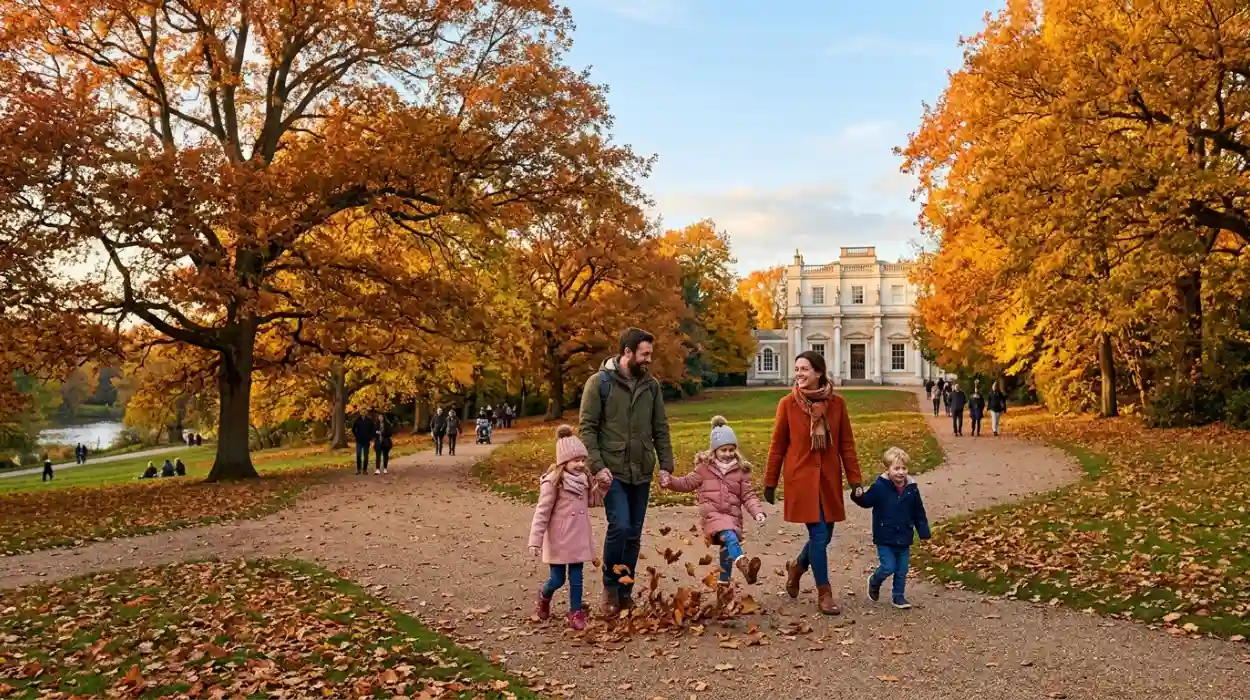
Among Ealing’s most admired green spaces, Walpole Park becomes especially attractive during autumn. Its mature trees frame open lawns with brilliant shades of gold and copper, while fallen leaves create colourful pathways perfect for leisurely walks.
The historic setting surrounding Pitzhanger Manor adds another layer of charm. Visitors can combine heritage exploration with seasonal nature, enjoying peaceful gardens that showcase both ornamental trees and native species.
Photographers particularly appreciate the reflections created after rainfall, when colourful leaves mirror beautifully in damp pathways and surrounding water features.
Morning visits often provide soft light and quiet surroundings, making this one of the borough’s most rewarding autumn destinations.
Brent Lodge Park and the Hanwell Area
Brent Lodge Park offers a varied autumn landscape that appeals to visitors of all ages.
Large open lawns are surrounded by mature deciduous trees that gradually change colour throughout October. Woodland areas become carpeted with fallen leaves, creating attractive walking routes suitable for families and casual walkers.
Nearby Hanwell also offers beautiful residential streets lined with mature trees, historic buildings, and smaller green spaces that display vibrant autumn colours without attracting large crowds.
The combination of natural beauty and local heritage makes this area particularly enjoyable for relaxed afternoon walks.
Osterley Park’s Magnificent Autumn Trees
Although located on the edge of Ealing, Osterley Park remains one of the finest places to experience autumn landscapes in West London.
Its extensive parkland contains hundreds of mature trees representing a wide variety of native and ornamental species. Long avenues become lined with golden leaves, while woodland paths create immersive autumn scenery.
Visitors often combine woodland walks with views of the historic mansion, ornamental lakes, and landscaped gardens originally designed to complement the surrounding countryside.
Because of its size, Osterley Park offers different experiences depending on the route chosen, making repeat visits worthwhile throughout autumn.
Canal Walks Along the Grand Union Canal
The Grand Union Canal provides a peaceful alternative to traditional park walks.
During autumn, overhanging trees reflect brilliant colours across the calm water, creating picturesque scenery rarely associated with urban London. Narrowboats, stone bridges, and waterside vegetation further enhance the seasonal atmosphere.
Walking beside the canal also offers opportunities to observe swans, ducks, herons, kingfishers, and other wildlife that remain active throughout autumn.
Early mornings often provide mist rising from the water, creating particularly atmospheric conditions for photography.
Woodland Areas Reveal Nature at Its Most Colourful
Ealing’s woodland habitats undergo some of the most dramatic seasonal transformations.
Ancient oak trees gradually develop deep bronze tones, while beech woodlands glow with golden leaves that illuminate forest paths. Sycamores produce vibrant yellow displays, and maples contribute striking shades of orange and red.
Woodland floors become covered with fallen leaves, creating soft walking surfaces that enhance the peaceful atmosphere. Fungi, mosses, and late autumn wildflowers also become more visible during this season, adding texture and ecological diversity.
Visitors interested in British woodland ecosystems often find autumn the most educational time of year.
Ealing Common During the Autumn Season
Ealing Common offers another excellent location for appreciating seasonal colour.
Its wide open spaces allow visitors to enjoy panoramic views of changing trees, while surrounding residential streets feature mature avenues that become particularly attractive during October.
Families frequently visit to enjoy relaxed walks, children enjoy playing among fallen leaves, and photographers capture the contrast between colourful trees and traditional London architecture.
Because the Common is centrally located, it is easy to combine with visits to nearby cafés, shops, and historic streets.
Quiet Residential Streets Filled with Autumn Colour
Some of Ealing’s finest autumn displays are not found within formal parks but along peaceful residential roads.
Neighbourhoods such as Pitshanger, Northfields, Ealing Broadway, and parts of South Ealing feature mature street trees that create colourful natural tunnels during autumn.
Walking through these quieter areas allows visitors to appreciate beautifully maintained gardens, Victorian and Edwardian homes, and seasonal planting that complements the changing foliage.
These hidden locations provide a more authentic experience of everyday life in Ealing while showcasing the borough’s commitment to preserving its urban tree canopy.
Hidden Nature Reserves Worth Visiting in Autumn
Beyond Ealing’s best-known parks, several quieter nature reserves provide outstanding opportunities to experience autumn in a more natural setting. These protected green spaces support native trees, woodland plants, wetlands, and diverse wildlife while offering peaceful walking routes away from busier attractions.
As autumn progresses, woodland edges become covered with colourful leaves, while shrubs and hedgerows produce berries that attract birds preparing for winter. Visitors may spot robins, woodpeckers, blue tits, goldfinches, wrens, and blackbirds moving between trees in search of food.
Nature reserves also allow people to appreciate how seasonal changes support healthy ecosystems. Fallen leaves gradually decompose, enriching the soil and providing habitats for insects, fungi, and countless microorganisms that contribute to the woodland’s long-term health.
Wildlife Becomes More Active During Autumn
Autumn is not only about colourful trees. It is also one of the most interesting seasons for observing wildlife across Ealing.
Grey squirrels can often be seen collecting acorns, chestnuts, and seeds before winter. Birds become increasingly active as they search for berries, insects, and other natural food sources. Along ponds, lakes, and canals, ducks, swans, coots, moorhens, and herons continue to thrive among the changing landscape.
Many mature trees also support lichens, mosses, and fungi that become particularly noticeable after periods of autumn rain. These natural features create fascinating opportunities for nature photography while highlighting the biodiversity that exists throughout the borough.
Visitors who walk quietly and patiently often discover far more than colourful leaves alone.
The Best Time to See Autumn Leaves in Ealing
Timing plays an important role when planning an autumn visit.
The first signs of seasonal colour often appear during late September, particularly on horse chestnut and sycamore trees. Throughout October, oak, beech, maple, and lime trees gradually reach their peak, creating some of the borough’s most impressive displays. Early November still offers excellent scenery, although stronger winds may begin covering pathways with fallen leaves.
Weather conditions influence the intensity and duration of autumn colours each year. Warm sunny days followed by cool nights often produce the brightest displays, while prolonged storms can shorten the season.
Checking local weather forecasts before travelling helps visitors choose the ideal time for photography and outdoor walks.
Photography Tips for Capturing Autumn Landscapes
Autumn provides exceptional opportunities for both amateur and professional photographers.
Early morning offers soft natural light, calm weather, and quieter walking paths, allowing photographers to capture colourful reflections and peaceful woodland scenes. Late afternoon also creates warm golden light that enhances the reds, oranges, and yellows of autumn foliage.
Using pathways, bridges, benches, and historic buildings as foreground features adds depth to landscape photographs. Close-up images of individual leaves, tree bark, fungi, berries, and woodland textures also tell the story of the changing season.
Visitors should always remain on established paths and avoid disturbing wildlife or removing leaves and plants from protected areas.
Enjoying Autumn Walks Responsibly
Ealing’s beautiful landscapes can be preserved by following simple responsible tourism practices.
Visitors should respect wildlife by observing animals from a distance, dispose of litter carefully, and remain on designated footpaths where appropriate. Fallen leaves may become slippery after rainfall, so wearing suitable footwear improves both comfort and safety.
Supporting local cafés, independent shops, and community businesses after an autumn walk also benefits the local economy while encouraging sustainable tourism throughout the borough.
Travelling by public transport, walking, or cycling further reduces environmental impact while allowing visitors to experience more of Ealing’s neighbourhoods at a relaxed pace.
Suggested Autumn Walking Route Across Ealing
A full day exploring Ealing’s autumn scenery can combine several beautiful locations into one memorable route.
Begin the morning at Walpole Park, where mature trees surround historic gardens and Pitzhanger Manor. Continue through nearby residential streets lined with colourful maples and ornamental trees before making your way towards Ealing Common for wider views of seasonal foliage.
Later in the day, enjoy a peaceful walk along the Grand Union Canal, where reflections of golden trees create picturesque waterside scenes. Finish your journey by visiting Brent Lodge Park or one of Ealing’s quieter woodland areas, where woodland paths become covered with vibrant autumn leaves.
This route combines heritage, wildlife, photography, architecture, and natural beauty, offering a well-rounded experience for both first-time visitors and local residents.
Why Autumn Reveals Another Side of Ealing
Every season brings something different to Ealing, but autumn offers a particularly striking combination of colour, tranquillity, and natural beauty.
The borough’s mature tree population, historic landscapes, canals, gardens, conservation areas, and residential streets all contribute to an ever-changing display that rewards slow exploration. Beyond the famous parks, hidden woodlands, quiet neighbourhoods, and peaceful waterside paths provide equally impressive autumn experiences that many visitors overlook.
For photographers, walkers, families, and nature lovers, autumn is an ideal time to discover Ealing beyond its best-known attractions. Each colourful tree, leaf-covered pathway, and peaceful green space reflects the borough’s long-standing commitment to protecting nature while creating welcoming places for both residents and visitors.
Whether you spend an hour enjoying a local stroll or dedicate an entire weekend to exploring different neighbourhoods, watching autumn leaves transform Ealing into a colourful natural landscape is an unforgettable seasonal experience that captures the true character of this green corner of West London.
Frequently Asked Questions
When is the best time to see autumn leaves in Ealing?
The best time is usually from late September to early November, with peak autumn colours typically appearing throughout October.
Which parks in Ealing have the most colourful autumn scenery?
Walpole Park, Brent Lodge Park, Ealing Common, and nearby Osterley Park are among the best places to enjoy vibrant autumn foliage.
Are there quieter places to enjoy autumn colours in Ealing?
Yes. Residential streets, canal paths, woodland walks, conservation areas, and local nature reserves often provide peaceful alternatives to the more popular parks.
What tree species create Ealing’s autumn colours?
Common species include oak, beech, maple, sycamore, horse chestnut, lime, sweet chestnut, and ornamental cherry trees, each producing distinctive seasonal colours.
Is autumn a good season for photography in Ealing?
Absolutely. Colourful foliage, historic buildings, canal reflections, woodland paths, and soft seasonal light make autumn one of the best times for landscape photography.
Can families enjoy autumn walks around Ealing?
Yes. Many walking routes are suitable for families, offering opportunities to enjoy nature, observe wildlife, collect seasonal memories, and appreciate the changing landscape.
Why is Ealing considered one of London’s greenest boroughs?
Ealing is known for its extensive parks, mature tree-lined streets, woodlands, canals, conservation areas, and well-maintained public green spaces that provide year-round natural beauty.