
Ealing is often described through its parks, historic streets, independent businesses and excellent connections to central London, but the borough’s public life is equally shaped by the places where people naturally gather. From town-centre spaces and civic areas to market environments, green open spaces and informal meeting points, Ealing has a varied collection of places where residents and visitors can pause, meet friends, attend events or simply watch everyday life unfold.
Understanding public squares and gathering spaces throughout Ealing offers a useful way to explore the borough beyond conventional attractions. These spaces are not all formal squares in the traditional European sense. Some are landscaped areas, pedestrianised sections, park entrances, community spaces or busy town-centre locations that function as meeting points. Together, they contribute to Ealing’s social identity and make the borough more walkable and welcoming.
What Makes a Public Gathering Space Important?
A public gathering space is more than an attractive piece of open land. Its value comes from how people use it. A successful gathering place gives residents somewhere to meet, rest, talk, celebrate, wait, eat, socialise or participate in community life.
In Ealing, these spaces perform different roles depending on their location. A town-centre space may be busy with shoppers and commuters, while a green setting can encourage relaxation and informal recreation. A community venue might become particularly important during local events, seasonal celebrations or neighbourhood activities.
The most useful gathering spaces are generally accessible, easy to reach and connected with surrounding streets, public transport, shops and community facilities. Seating, planting, pedestrian access and nearby amenities can make an otherwise ordinary urban space significantly more inviting.
Ealing Broadway as a Major Meeting Point
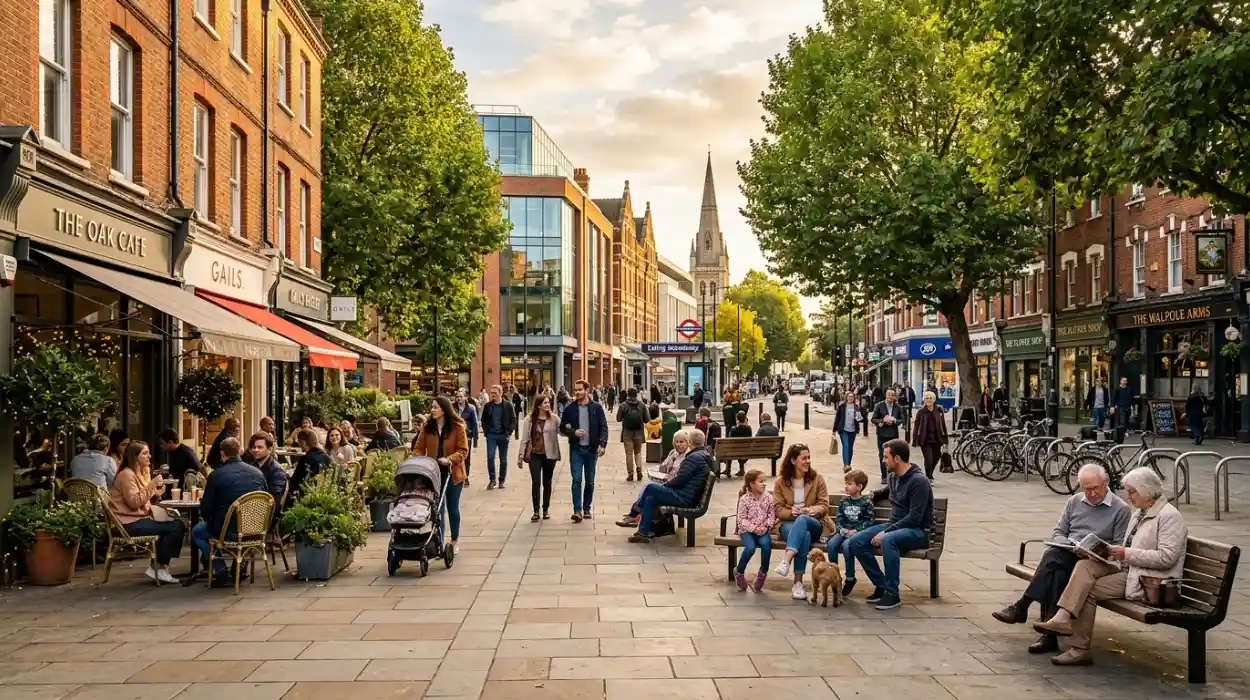
Ealing Broadway is one of the most important activity centres in the borough. Its combination of transport connections, retail areas, restaurants, cafés and pedestrian movement makes the surrounding town centre a natural meeting point.
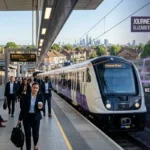
For visitors arriving by rail or the Underground, Ealing Broadway provides an obvious starting point for exploring the area. Residents also use the town centre for everyday activities, meaning the public spaces around it can feel particularly lively.
The area demonstrates an important characteristic of urban gathering spaces: they do not need to be completely quiet or traditionally beautiful to be socially significant. A busy town centre can function as a meeting place because people naturally pass through it and have reasons to stop.
The Green Spaces That Act Like Public Squares
Ealing’s parks are among its most important gathering environments. Although they are not squares in the architectural sense, they perform many of the same social functions.
Walpole Park is a particularly significant example. Close to central Ealing, the park provides open lawns, pathways and landscaped surroundings where people can walk, sit, exercise and spend time outdoors. It also provides a setting for community activities and public events.
Lammas Park offers another important social environment. Its open areas attract walkers, families, runners and people looking for a place to relax. During warmer weather, green spaces such as this can become informal meeting places where people spend considerably more time outdoors.
Further north, Pitshanger Park provides a community-oriented green setting within the wider Pitshanger area. These parks demonstrate that gathering spaces can combine recreation, relaxation and social interaction without requiring a formal urban plaza.
Ealing Common and the Character of Open Space
Ealing Common provides another distinctive example of how open land can shape local identity. Its broad green setting contrasts with the surrounding urban streets and provides visual relief from the built environment.
Common land has historically served practical and social purposes in British towns and villages. Today, Ealing Common contributes to the borough’s landscape by providing space for walking, informal recreation and community activity.
For visitors, it can also act as a useful pause between different parts of Ealing. Someone exploring the borough on foot can move from commercial streets into a much more open environment without travelling far.
Hanwell’s Community Gathering Spaces
Hanwell has its own network of places where residents meet and spend time. The area combines traditional high-street activity with parks, cafés, local businesses and community facilities, creating a more neighbourhood-focused atmosphere.
Hanwell Broadway is an important local centre where everyday shopping and social activity overlap. Unlike a formal civic square, a high street can become a gathering place because people naturally encounter one another while completing ordinary tasks.
This is particularly relevant to understanding Ealing as a borough of distinct neighbourhoods. Public life does not happen in one central location. Instead, different communities have their own meeting points, commercial centres and green spaces.
Southall’s Public and Community Spaces
Southall adds another dimension to Ealing’s gathering places. The neighbourhood is well known for its diverse cultural identity, busy commercial environment and strong community life.
Southall Broadway demonstrates how a commercial street can function as a social environment as well as a shopping destination. People meet family members, visit restaurants, browse shops and participate in everyday community life.
Southall’s public spaces are especially interesting for visitors because they show how London’s multicultural neighbourhoods create their own forms of gathering. Food, festivals, religious traditions, independent businesses and family networks all contribute to the atmosphere of the area.
Public Spaces and Local Events
Gathering spaces become particularly valuable when Ealing hosts public events. Seasonal celebrations, cultural activities, community festivals and outdoor programmes can temporarily transform ordinary spaces into lively social environments.
An area that normally functions as a pedestrian route may become a performance space. A park may host organised activities, while a town-centre location can become a place for public celebrations.
This temporary transformation shows why flexible public spaces are important. They allow communities to use the same environment for different purposes throughout the year.
For visitors, checking local event information can make a trip to Ealing more interesting. A familiar park or town centre can feel completely different when a community event is taking place.
Gathering Spaces for Families
Families often judge public spaces differently from commuters or individual travellers. Accessible paths, open areas, seating, nearby toilets and places to buy refreshments can influence whether a location feels comfortable for parents and children.
Ealing’s parks are particularly valuable in this respect. Parents can combine outdoor activity with a visit to nearby cafés, shops or attractions, creating a flexible day out without needing to travel into central London.
A family visiting Ealing for the first time might spend the morning exploring the town centre, have lunch nearby and then move into a park for relaxed outdoor time. This combination makes public gathering spaces useful parts of a wider itinerary rather than destinations that need to be visited independently.
Spaces for Young People and Social Interaction
Public gathering places also play an important role for teenagers and young adults. Parks, pedestrian areas, cafés and town centres can provide informal spaces for socialising without requiring an organised activity.
This is particularly important in a large urban borough. Not everyone wants to spend money every time they meet friends, so accessible public areas provide opportunities for social interaction without a formal admission cost.
The design of a public space can influence how comfortable it feels. Seating, shade, lighting, pedestrian movement and surrounding activity all affect whether people want to stay for a few minutes or several hours.
Why Seating, Trees and Pedestrian Access Matter
The design details of public spaces can have a major influence on their success. A beautifully landscaped location may not work well if there is nowhere to sit, while a simple space can become popular when it provides comfortable seating and good pedestrian access.
Trees and planting are especially valuable in Ealing. They provide shade during warmer weather, improve visual character and help soften the appearance of busy urban environments.
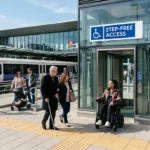
Accessibility is equally important. Step-free routes, suitable surfaces and sufficient space can make public areas easier to use for wheelchair users, older residents and families with pushchairs.
A good gathering space should therefore serve different types of users rather than being designed around one particular activity.
How Public Spaces Support Local Businesses
Gathering places and local businesses often reinforce one another. People who spend time in a public space may visit nearby cafés, restaurants, shops and markets, while businesses can make an area more attractive by creating reasons for people to stop.
This relationship is visible throughout Ealing’s town centres. A pedestrian walking through a busy commercial area may decide to stop for coffee, meet friends for lunch or browse independent shops.
For visitors, this makes public spaces useful starting points for discovering local businesses. Rather than planning every meal around major tourist attractions, travellers can explore the businesses surrounding Ealing’s everyday meeting places.
Exploring Ealing’s Gathering Spaces on Foot
Walking is one of the best ways to understand the relationship between Ealing’s public spaces. The borough’s neighbourhoods are varied enough that a short walk can move between commercial streets, residential areas and green spaces.
A visitor could begin at Ealing Broadway, explore the surrounding town centre and continue towards Walpole Park. Another route might combine Hanwell’s local centre with nearby green spaces, while a Southall walk could focus on its vibrant commercial and cultural environment.
The advantage of walking is that you experience transitions rather than isolated destinations. You can see how a busy street becomes quieter, how shops connect with parks and how residents use different spaces throughout the day.
Public Spaces for Solo Visitors
Ealing’s gathering spaces can also work well for solo travellers. Not every visitor wants a tightly organised sightseeing itinerary, and public spaces provide opportunities to take a break without needing a specific activity.
A solo traveller can sit in a park, read, have a coffee nearby, observe local life or simply use a green space as a rest point between destinations.
This makes Ealing particularly appealing to travellers interested in slower exploration. Rather than rushing between landmarks, you can spend time understanding the rhythm of a neighbourhood.
The Future of Ealing’s Public Spaces
As London continues to evolve, the role of public space is becoming increasingly important. Growing populations, changing travel habits and greater interest in walking and cycling all increase the need for attractive, accessible places where people can spend time outdoors.
Ealing’s combination of parks, town centres, commons and neighbourhood gathering places gives the borough a strong foundation. Maintaining these spaces, improving accessibility and supporting community activities can help ensure they remain useful for future generations.
The future of public gathering spaces is not simply about building more squares. It is also about improving the connections between existing spaces and making them easier for different communities to use.
Why Gathering Spaces Matter to Ealing’s Identity
The character of Ealing cannot be understood through buildings and attractions alone. Its identity is also created by the places where people gather, talk, rest, shop, celebrate and spend time together.
From the busy environment around Ealing Broadway to the open landscape of Ealing Common and the community atmosphere of neighbourhood centres such as Hanwell and Southall, different parts of the borough offer different forms of public life.
For tourists, these spaces provide a chance to experience Ealing beyond its recognised attractions. For residents, they are practical parts of everyday life. Together, they demonstrate how public space can connect communities and make an urban borough feel more liveable.
Frequently Asked Questions
What are the main public gathering spaces in Ealing?
Ealing has a mixture of parks, town centres, commons and pedestrian areas that function as gathering spaces. Notable examples include Walpole Park, Lammas Park, Ealing Common, Pitshanger Park and busy neighbourhood centres.
Is Ealing Broadway a good place to meet friends?
Yes. Ealing Broadway is one of the borough’s busiest activity centres, with transport connections, shops, cafés, restaurants and pedestrian areas. Its accessibility makes it a convenient meeting point for both residents and visitors.
Which Ealing parks are best for relaxing?
Walpole Park, Lammas Park, Pitshanger Park and Ealing Common are useful options for relaxing outdoors. The best choice depends on whether you prefer landscaped surroundings, open lawns or a quieter neighbourhood setting.
Are Ealing’s public spaces suitable for families?
Many of Ealing’s parks and open spaces are suitable for families, particularly where there are accessible paths, open areas and nearby amenities. Families should check current facilities before planning a longer visit.
Where can visitors experience Ealing’s community atmosphere?
Neighbourhood centres such as Hanwell and Southall provide strong examples of local community life. Their high streets, shops, restaurants and surrounding public areas offer opportunities to observe everyday activity.
Can I visit Ealing’s public spaces without spending money?
Yes. Many parks, commons and public outdoor areas can be enjoyed without an admission fee. They provide useful options for travellers looking for affordable things to do in west London.
Why are public gathering spaces important in Ealing?
They provide places for social interaction, recreation, community events and relaxation while connecting different parts of the borough. They also contribute to walkability, local identity and the overall quality of urban life.