
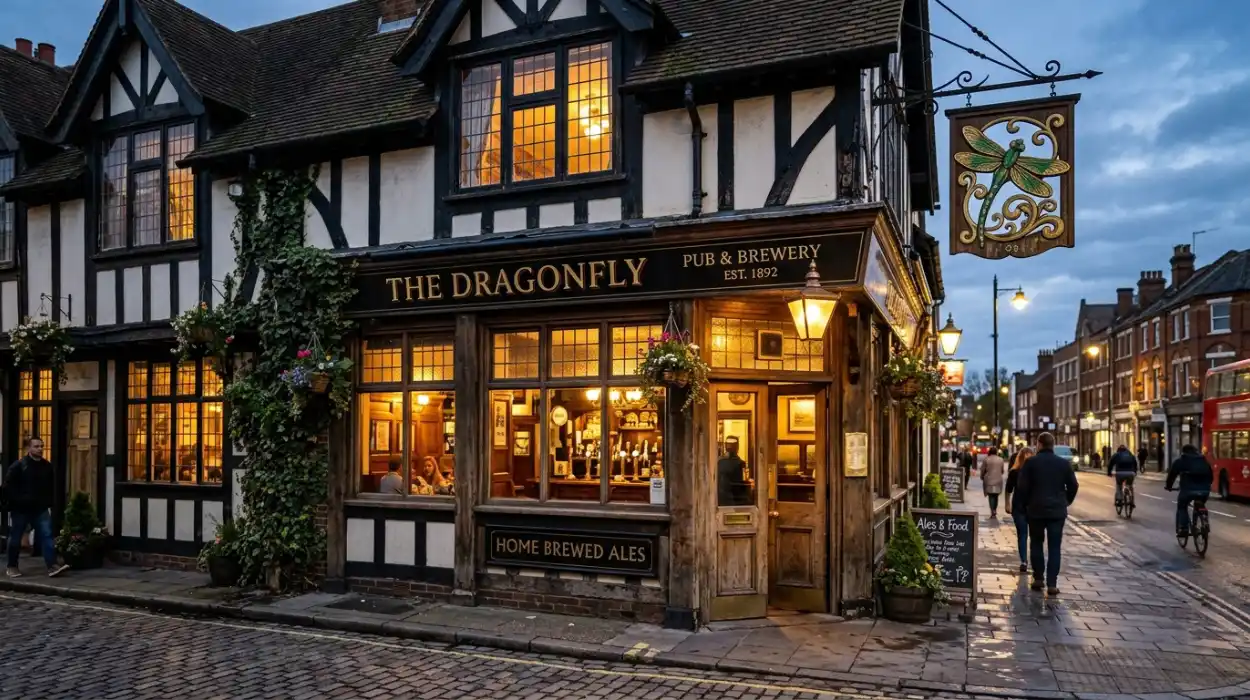
For people searching for The Dragonfly around Ealing, the name has an interesting connection with Acton’s pub and brewing history. The Dragonfly was associated with the historic George & Dragon on Acton High Street, where a microbrewery was installed and became a notable feature of the local food and drink scene. Historical sources describe the venue as a distinctive West London brewpub, combining an old coaching-inn setting with a modern brewery.
The Dragonfly name can be confusing because there are businesses with the same or similar name in other parts of Britain. For people searching specifically in the Ealing and Acton area, however, Dragonfly Brewery at the George & Dragon is the relevant local connection. The venue was located at 183 High Street, Acton, W3 9DJ, placing it within easy reach of Ealing and the wider West London area.
Although the brewery itself is no longer operating, its history remains part of Acton’s changing food and drink landscape. Understanding that history provides useful context for visitors interested in historic pubs, local brewing, British pub culture and the neighbourhood around Ealing.
The Dragonfly and Its Connection to Acton
The Dragonfly was not simply a standalone brewery. It formed part of the George & Dragon, a historic pub on Acton High Street. Historical accounts describe the building as a Grade II listed property and a former coaching inn dating back centuries, giving the venue a very different character from a modern bar or restaurant.
The combination of historic architecture and brewing made the venue particularly distinctive. Visitors could experience a traditional pub environment while also encountering the equipment and atmosphere associated with a working brewery.
This contrast helped make The Dragonfly an interesting destination for people who enjoyed discovering less conventional parts of London’s drinking culture. Rather than heading into central London for craft beer, customers in West London could explore a local brewpub in Acton.
A Historic Setting on Acton High Street
The George & Dragon’s history is an important part of the story. According to local historical coverage, the building was originally associated with a 17th-century coaching-inn tradition and survived major redevelopment that transformed much of the surrounding area.
That historical background gave the venue an atmosphere that was difficult to reproduce in a newly built pub. Wood-panelled interiors, traditional pub features and older architectural details helped create a setting that felt connected to Acton’s past.
For visitors interested in London’s historic pubs, this is one of the reasons the Dragonfly name remains memorable. It represented a combination of heritage and modern brewing rather than choosing one or the other.
How the Dragonfly Brewery Became Part of the Venue
The brewery was installed at the George & Dragon in 2014. Historical coverage describes a sizeable brewing operation in the back of the pub, with multiple tanks and fermenters. It was unusual because the brewery was designed not merely to produce beer for one pub but to supply other venues within the wider pub group.
This approach gave the brewery a practical role within the business. Instead of being purely a small attraction for visitors, it formed part of a broader production and distribution system.
For beer enthusiasts, seeing brewing equipment inside a pub adds another dimension to the experience. The large tanks provided a visual reminder that the drinks being served were connected to an actual production process rather than simply being selected from a distributor’s catalogue.
What Beer Was Associated with The Dragonfly?
The Dragonfly Brewery produced a varied selection of beers rather than focusing on just one style. Historical material from the period mentions pale ales, a best bitter, a Bavarian-style wheat beer and an oatmeal stout. Seasonal beers were also part of the brewery’s offering.
Among the beers associated with the brewery were Early Doors, Late Doors, 2 O’Clock Ordinary, Achtung and Dark Matter. Seasonal beers included Vienna Pale Ale and Blighty Best.
This range would have appealed to different preferences. Someone who preferred a lighter pale ale could choose differently from a customer looking for a traditional bitter or a darker stout.
The variety also reflected the broader development of London’s craft beer culture during the 2010s, when independent and small-scale brewing became increasingly visible across the capital.
Why Local Brewing Matters to West London
The Dragonfly’s story is useful for understanding how London’s beer culture developed beyond the traditional brewing centres. West London had its own network of pubs, breweries and beer enthusiasts, and Acton became part of that movement.
Local brewing can create a stronger connection between a venue and its neighbourhood. Customers are not simply visiting a pub; they are experiencing something that has a geographical connection to the area.
For Ealing and Acton, this is particularly relevant because both areas have developed diverse food and drink scenes. Traditional pubs sit alongside restaurants, cafés, breweries and international food businesses, creating a neighbourhood environment that appeals to both residents and visitors.
The Appeal of a Traditional British Pub
The Dragonfly also fits into a much broader British pub tradition. A good pub is not necessarily defined by its food or drinks alone. Atmosphere, architecture, conversation, local history and social interaction all contribute to the experience.
For tourists, visiting a historic West London pub can offer something different from eating in a modern restaurant. It provides an opportunity to see how local residents have traditionally used neighbourhood pubs as social spaces.
For locals, meanwhile, the attraction can be much simpler. A pub can be somewhere to meet friends after work, watch sport, enjoy live entertainment or have a relaxed drink at the weekend.
The Dragonfly for Beer Enthusiasts
Beer enthusiasts are naturally more interested in the brewing side of the story. The Dragonfly Brewery was notable because its brewing operation was visible within the pub, giving customers a direct connection between production and consumption. Historical sources describe the brewery as having several tanks and fermenters in a large rear space.
This type of setup can make a pub particularly memorable. Instead of simply ordering a beer, customers can become curious about how it was produced, which styles were being brewed and how local breweries differ from large commercial producers.
The brewery’s range also demonstrated how broad beer preferences can be. Pale ales, bitters, stouts and wheat beers each have different flavours, aromas and textures, meaning that beer tasting can become an exploration rather than simply choosing between brands.
The Dragonfly and Ealing’s Food and Drink Scene
Although The Dragonfly was located in Acton rather than central Ealing, it was part of the wider West London food and drink landscape. Acton sits close to Ealing, Chiswick and other well-connected neighbourhoods, making it relevant to people exploring the wider area.
Historical coverage of the local scene noted the growing number of cafés, bars and food businesses around Acton and the connection between the neighbourhood’s changing identity and its emerging hospitality culture.
This makes the Dragonfly story particularly interesting for visitors researching Ealing. A trip around West London does not have to be limited to Ealing Broadway or the area’s best-known attractions. Nearby Acton has its own history, independent businesses and hospitality traditions worth discovering.
What Tourists Can Learn from The Dragonfly Story
For tourists, The Dragonfly is best understood as part of London’s changing neighbourhood culture rather than simply as a current restaurant or brewery destination.
The story shows how historic buildings can be adapted for modern hospitality while retaining elements of their original identity. A centuries-old pub became home to a modern brewing operation, bringing together heritage and contemporary beer culture.
Visitors interested in London’s history may therefore find Acton especially appealing. It offers a different perspective from central London, where historic attractions are often presented primarily as tourist destinations.
Exploring Acton Beyond The Dragonfly
Anyone researching The Dragonfly can also use the opportunity to explore Acton itself. The area has several transport connections and sits between major West London neighbourhoods, making it practical for a broader day out.
Food is another reason to explore the area. Acton High Street and surrounding streets have developed a diverse selection of restaurants, cafés, pubs and takeaway businesses.
A visitor could therefore combine an exploration of historic Acton with lunch or dinner, then continue towards Ealing or Chiswick. This creates a more local experience than following a fixed central-London sightseeing itinerary.
Is The Dragonfly Still a Brewery?
This is one of the most important questions for anyone searching for The Dragonfly today. Historical beer specialist Des de Moor records that the brewery began operating as Dragonfly in 2014 but later ceased brewing, with brewing ending in January 2019 under the subsequent Portobello identity.
Therefore, visitors should not assume that references to Dragonfly Brewery in older articles mean that the brewery is still producing beer today.
This distinction matters because much of the information available online about The Dragonfly relates to its historical period. Older articles can still be valuable for understanding the venue, but they should not automatically be treated as current opening, menu or brewing information.
Why The Dragonfly Remains Relevant
Even though the brewing operation has ended, The Dragonfly remains relevant as part of Acton’s local hospitality history. Its story illustrates the development of London’s craft beer movement and the way traditional pubs adapted to changing customer interests.
It also demonstrates why local food and drink research should look beyond current menus and opening times. A venue can become significant because of its contribution to a neighbourhood, its architecture, its brewing history or the memories created by regular customers.
For Ealing residents and visitors, this provides another reason to explore Acton as part of the wider West London experience.
Practical Tips for Researching The Dragonfly
If you have found an old article referring to The Dragonfly Brewery, check the publication date carefully. Much of the detailed information about the brewery comes from the 2010s, when it was actively producing beer.
It is also worth distinguishing between The Dragonfly, Dragonfly Brewery and other businesses using the Dragonfly name elsewhere in Britain. Search results can easily mix unrelated venues.
If your interest is historical, older local publications and brewing resources can provide useful context. If your intention is to visit the current venue, however, always verify the latest status of the George & Dragon before making a journey.
The Dragonfly and West London’s Changing Identity
The story of The Dragonfly reflects a wider change across West London. Areas such as Acton and Ealing have continued to develop, with older buildings and traditional businesses existing alongside newer restaurants, cafés, bars and creative venues.
This mixture is one of the reasons neighbourhoods outside central London can be so rewarding to explore. You can encounter historic architecture, contemporary food culture and local businesses within a relatively short journey.
The Dragonfly’s brewery period was one chapter in that continuing story. It showed that a traditional Acton pub could become part of London’s modern brewing movement while retaining its historical identity.
Frequently Asked Questions
What was The Dragonfly in Acton?
The Dragonfly was the name associated with a brewery operating at the historic George & Dragon pub on Acton High Street. The brewery opened in 2014 and became a notable part of the local West London beer scene.
Where was Dragonfly Brewery located?
Dragonfly Brewery was located at the George & Dragon, 183 High Street, Acton, W3 9DJ. The venue was within the wider Ealing area and close to several West London neighbourhoods.
What beers did The Dragonfly Brewery produce?
Historical sources mention beers including Early Doors, Late Doors, 2 O’Clock Ordinary, Achtung and Dark Matter, alongside seasonal beers such as Vienna Pale Ale and Blighty Best.
Is Dragonfly Brewery still brewing beer?
No. Brewing at the venue eventually ceased, with beer historian Des de Moor recording January 2019 as the end of brewing under the later Portobello identity.
Was The Dragonfly close to Ealing?
Yes. The Dragonfly Brewery was in Acton, which is immediately connected with the wider Ealing area. Its location made it relevant to people exploring West London, including visitors staying around Ealing.
Why was The Dragonfly popular with beer enthusiasts?
Its combination of a historic pub and visible brewing operation made it distinctive. Customers could enjoy beer in a traditional setting while experiencing a modern microbrewery within the building.
What should I know before visiting the former Dragonfly location?
The brewery’s historical status means older online articles may not accurately describe the current venue. If you plan to visit the George & Dragon or the site today, check current business information before travelling rather than relying solely on historical Dragonfly Brewery listings.