
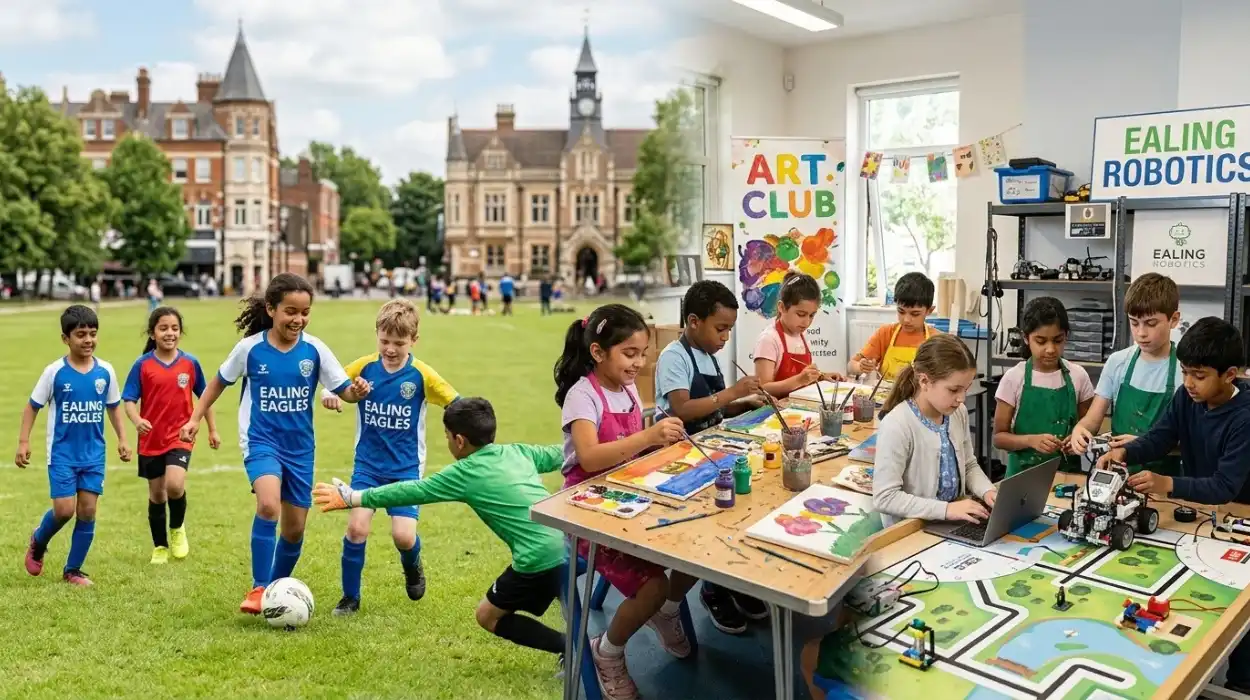
Finding the right after school clubs and activities in Ealing can make afternoons more enjoyable while helping children develop new interests, friendships and practical skills. Families in Ealing have access to a wide range of options, from school-linked childcare and sports clubs to dance, music, martial arts, creative activities and community programmes.
The right activity depends on a child’s age, personality, school timetable, interests and how much structured care the family needs after lessons finish. Some children benefit from football or swimming, while others may prefer art, music, dance, drama, coding or quieter educational activities.
Ealing also has a useful network of parks, sports centres, libraries, community centres and children’s services, so families do not necessarily need to travel into central London to find worthwhile activities.
What Types Of After School Clubs Are Available In Ealing?
Ealing’s after-school provision covers both childcare and organised activities. The council explains that after-school clubs are generally linked with primary schools and provide care and play for children aged four to twelve during the school year. Many clubs also offer collection services from local schools.
This distinction is important when searching online. An after-school club can mean supervised childcare until parents finish work, whereas an activity club may focus on one particular interest such as football, dance, tennis or music.
For families needing regular childcare, a school-linked club may be the most practical arrangement. For children who already have care at home, a weekly specialist activity can provide an opportunity to develop a particular skill.
Sports Clubs For Active Children
Sport is one of the most popular categories of after-school activity in Ealing. The borough has indoor sports centres, swimming pools, outdoor pitches, tennis courts, multi-use games areas and other facilities for different ages and abilities.
Football, basketball, rugby, cricket, tennis, swimming and athletics can all provide structured ways for children to stay active after school. Sports can also introduce children to teamwork, regular practice and competition.
Ealing Council currently lists more than 100 sports clubs in and around the borough, with junior opportunities available across several disciplines. Its listings include junior basketball, netball, boxing, canoeing, rugby, tennis, trampolining and other activities.
For a child who enjoys being outdoors and making friends quickly, a team sport may be particularly appealing. For a child who prefers individual progress, swimming, tennis or martial arts may offer a different type of experience.
Football, Rugby And Team Sports
Football remains a familiar starting point for families searching for children’s activities. Local pitches, sports centres and community clubs provide opportunities for children to practise skills and play with others.
Rugby is another established option in west London, with Ealing Council’s sports-club directory listing junior opportunities associated with clubs including Ealing Trailfinders and Actonians Rugby Club. Availability, age groups and training times vary by provider.
Team sports can be particularly useful for children who enjoy social activities. Rather than simply exercising, they learn to communicate, follow instructions and work towards a shared objective.
Parents should check the club’s current age groups, trial arrangements, membership fees, training location and safeguarding information before enrolling.
Dance, Music And Creative Activities
Not every child wants a competitive sport. Dance, music, drama and creative clubs can provide a different after-school environment.
Ealing’s community and leisure facilities host a variety of activities, and children’s centres can provide music, dance, messy play, yoga and sensory activities for younger children.
Music can include instrumental tuition, singing and group activities, while dance can range from contemporary and street styles to culturally specific forms. Drama and creative workshops can also help children become more comfortable performing, communicating ideas and working collaboratively.
The Dominion Centre and Library, for example, currently lists groups including Paragon Dhol Academy, Gukwoone Martial Arts and Ealing Music Service among activities based at or associated with the centre.
Art And Creative Clubs For Children
Art clubs can be a good option for children who enjoy drawing, painting, making things or working on longer creative projects.
Ealing also has community organisations providing out-of-school creative opportunities. A.P.P.L.E, for example, describes free recreational, educational and creative activities for children and young people, including after-school art clubs and community creative projects. Its activities have also included sports, outdoor play, cooking and gardening.
Availability can change according to projects, funding and school terms, so parents should check the current programme before travelling.
For children who find large competitive groups overwhelming, a smaller creative activity may provide a more comfortable way to build confidence and social connections.
Martial Arts And Self-Discipline Activities
Martial arts can combine physical activity with structured learning. Children generally practise movement, technique, concentration and following instructions rather than simply playing a game.
Local Ealing activity listings include martial arts provision, with Gukwoone Martial Arts currently listed at the Dominion Centre. Other sports-centre facilities across the borough also include martial arts and dance studios.
When choosing a martial arts club, parents should consider the teaching style, class size, age suitability, qualifications, safeguarding arrangements and whether children are expected to participate in competitions.
The most suitable class is often one where the child feels comfortable returning regularly rather than one chosen purely because it is close to home.
Swimming And Aquatic Activities
Swimming is another useful after-school option because it combines physical exercise with an important practical life skill.
Ealing has several sports and leisure centres with swimming facilities, while the council’s sports information provides access to facilities and activity-finder resources for residents looking for local opportunities.
Swimming lessons can work particularly well for children who prefer structured individual progression. A child can move through different ability levels as confidence and technique develop.
Parents should check lesson availability, age requirements, term dates, assessment arrangements and current pricing directly with the relevant centre or provider.
Educational And Tuition-Based Activities
After-school activities do not have to be purely recreational. Some children benefit from structured educational sessions covering subjects such as mathematics, languages or general study skills.
The Dominion Centre and Library currently lists several educational groups, including maths tuition, Kumon and other educational sessions.
These activities can be useful when a child enjoys learning outside the classroom or needs additional practice. However, the experience should still fit comfortably alongside schoolwork, homework and free time.
A balanced weekly schedule is usually more manageable than filling every afternoon with organised lessons.
Free And Low-Cost Activities In Ealing
Families looking for affordable options have several possibilities. Ealing Council highlights libraries, children’s centres, walking, cycle training and other free or low-cost leisure activities. Children’s centres can offer informal play, music, dance, messy play, yoga and sensory activities.
Ealing’s Play Service also provides activities for children aged zero to twelve, including drop-in play sessions, children’s centres and after-school childcare schemes.
For older children, local parks and outdoor facilities can complement organised clubs. Football pitches, basketball hoops, multi-use games areas and tennis facilities can give children opportunities to stay active without attending a formal weekly class.
After School Clubs For Working Parents
For working parents, the practical question is often not simply “What activity does my child like?” but “What provision works with our working hours?”
Ealing’s school-linked after-school clubs can provide supervised care and play after the school day. The council’s Family Information Service directory can help parents search for registered childcare providers and other childcare options.
Some providers collect children directly from school, which can make the arrangement significantly easier for working families.
Before booking, parents should confirm collection arrangements, closing time, registration requirements, fees, food provision and what happens if school finishes early.
Choosing An Activity By Age
Younger children often benefit from activities that combine movement, creativity and social interaction. Play sessions, swimming, dance, sensory activities and introductory sports can all be appropriate depending on the child’s development.
Primary-school children have a wider range of possibilities, including football, tennis, martial arts, music, art, dance, gymnastics and educational clubs.
Older children may want greater independence. They might prefer team sports, specialist music tuition, youth activities, fitness, creative projects or longer-term skill development.
The child’s own interest matters. An activity that looks impressive to adults may not work if the child does not enjoy attending.
How To Choose The Right After School Club In Ealing
Start by deciding what the family actually needs. If childcare is the priority, look at school-linked after-school clubs first. If the child needs a hobby, search by interest such as football, dance, music, art or martial arts.
Next, consider location. A club near the school or home can be easier to maintain during a busy school week than an activity requiring a long journey across Ealing.
Then check the practical details: age range, session length, term dates, fees, equipment, collection arrangements and availability.
Safeguarding should also be part of the decision. Ealing Council advises parents to make appropriate checks when choosing sports clubs and notes that junior providers should have child protection and welfare policies in place.
A Simple Weekly Activity Plan
A balanced week might include one team sport, one creative activity and plenty of unstructured time.
For example, a primary-school child could attend football on one afternoon, art or music on another, and spend a third afternoon at home or in a local park. Another child might prefer swimming once a week and martial arts once a week.
The aim does not have to be to maximise the number of clubs. Regular attendance at an activity the child genuinely enjoys can be more useful than an overloaded timetable.
Free play, family time and rest remain important parts of childhood too.
What About Children With Additional Needs?
Families should consider accessibility and individual support when selecting an after-school activity. The appropriate choice can depend on the child’s communication style, sensory preferences, mobility, confidence and support requirements.
Parents should speak directly with providers about reasonable adjustments, staff experience, group sizes and the environment before booking.
Ealing’s wider sports and leisure provision states that activities are available for people of different ages and abilities, while the borough also provides community and family services that can help parents identify suitable local opportunities.
There is a broad range of after school clubs and activities in Ealing, covering childcare, sports, swimming, football, rugby, tennis, dance, music, art, martial arts, educational tuition and community activities.
The borough’s school-linked childcare provision can help working parents, while its sports clubs and leisure centres give children opportunities to develop physical skills. Libraries, children’s centres and community organisations provide alternatives for families looking for creative, educational or lower-cost activities.
The best choice for an individual child depends on their age, interests, timetable, location and support needs. Before committing, check current availability, costs, safeguarding arrangements and session times directly with the provider.
For families living in Ealing, Acton, Hanwell, Greenford, Northolt, Perivale, Southall and surrounding areas, the variety of local provision means an engaging after-school routine can often be created without travelling far from home.
Frequently Asked Questions About After School Clubs And Activities In Ealing
What are the most popular after-school activities in Ealing?
Common options include football, swimming, tennis, rugby, basketball, dance, music, martial arts, art and educational tuition. Ealing Council’s sports directory lists numerous junior sports clubs across the borough.
Are there free after-school activities in Ealing?
Some activities are free or low-cost, particularly certain children’s centre, community and play-service programmes. Availability varies, so families should check current local listings and eligibility requirements.
Where can I find registered after-school childcare in Ealing?
The Ealing Families Directory provides information about childcare options, including after-school clubs, children’s centres, childminders and holiday schemes.
Are there sports clubs for children in Ealing?
Yes. Ealing has more than 100 sports clubs in and around the borough, with junior opportunities across activities including basketball, netball, boxing, rugby, tennis, trampolining and other sports.
Can children do music and dance after school in Ealing?
Yes. Children’s centres and community venues provide music and dance activities, while local centres also host specialist groups and classes. Current provision varies by venue and term.
How do I choose an after-school club for my child?
Consider the child’s age, interests, travel distance, timetable and support needs. Then check the provider’s safeguarding arrangements, staff, fees, session times, collection arrangements and current availability.
Are there after-school clubs suitable for younger children?
Yes. Ealing’s Play Service provides activities for children aged zero to twelve, while school-linked after-school clubs generally provide care and play for children aged four to twelve.