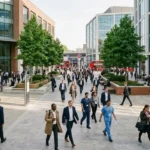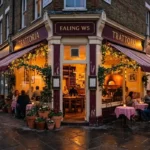

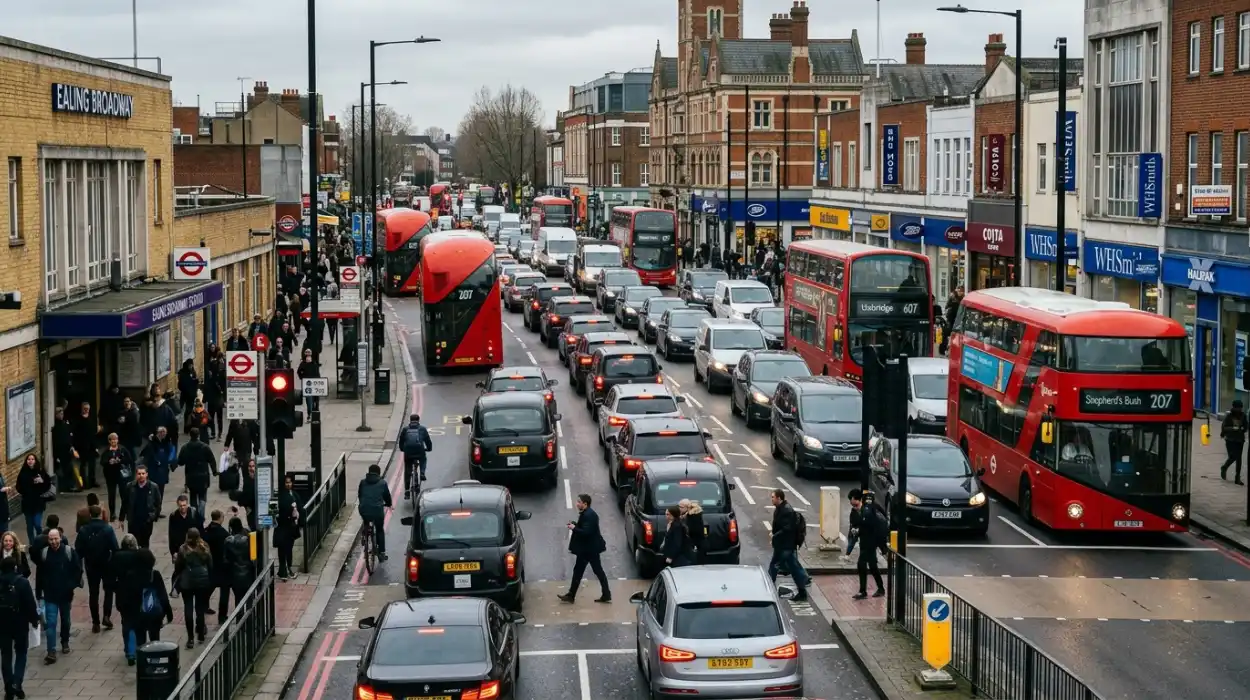
Ealing is a popular part of West London, known for its parks, shopping areas, restaurants, residential neighbourhoods and excellent connections to Central London. However, the same features that make the borough attractive also contribute to Ealing’s traffic problems. Busy roads, commuter journeys, school traffic, delivery vehicles, roadworks, parking pressure and growing demand for travel can all contribute to congestion at different times of the day.
For local residents, traffic is more than an inconvenience. Congestion can make everyday journeys longer, affect bus reliability, create difficulties for pedestrians and cyclists, and increase noise and air pollution. Visitors can experience similar frustrations when travelling towards Ealing Broadway, South Ealing, West Ealing or other busy areas.
The question is therefore not simply why Ealing has congestion, but what can realistically be done to make movement around the borough easier, safer and more sustainable.
Why does Ealing experience traffic congestion?
Traffic congestion occurs when the number of vehicles using a road approaches or exceeds the road’s available capacity. In Ealing, several factors can contribute to this situation simultaneously.
The borough has a large residential population and attracts people from neighbouring parts of West London for employment, shopping, education, healthcare, restaurants and leisure. This creates both local and through-traffic.
Commuters travelling towards Central London can add significant pressure during weekday mornings, while the evening rush can create another peak as people return home. Shopping areas and popular high streets can experience additional congestion when drivers are searching for parking or making short journeys by car.
Traffic can also be affected by roadworks, temporary closures, collisions, construction activity and changes to traffic signals. A problem on one important route can cause vehicles to divert onto surrounding residential streets.
Which areas of Ealing are most affected?
Traffic conditions change throughout the borough, so congestion is not limited to one road or neighbourhood. Areas around Ealing Broadway can become particularly busy because of the combination of shops, restaurants, offices, residential streets and transport connections.
Major routes around Uxbridge Road can also experience periods of heavy traffic because the road serves both local journeys and longer cross-West London trips.
Other busy areas can include roads around South Ealing, West Ealing, Ealing Common and Northfields, particularly during commuter and school-run periods.
Drivers should also remember that traffic congestion is highly time-dependent. A journey that takes 15 minutes during a quiet period could take considerably longer during a weekday peak. Weather, roadworks, incidents and local events can change conditions unexpectedly.
How does traffic affect Ealing residents?
For residents, congestion can affect much more than journey times. People who drive to work or take children to school may spend additional time sitting in queues, while bus passengers can experience slower journeys when buses share congested roads with other vehicles.
Traffic can also affect people who do not drive. Busy roads can make walking and cycling feel less comfortable, particularly where pedestrian crossings are difficult to navigate or vehicles are moving through junctions continuously.
Noise is another concern. Repeated acceleration, braking, horns and engine noise can affect people living close to heavily trafficked roads.
There is also an environmental dimension. More vehicles spending longer periods in traffic can contribute to local emissions. Reducing unnecessary car journeys and improving alternatives can therefore support both transport efficiency and the quality of the urban environment.
Why are school runs a traffic issue?
The school run is an important part of the daily traffic pattern in many London neighbourhoods, including Ealing. Parents may drive children to school because of work schedules, distance, accessibility requirements, weather or concerns about road safety.
The problem occurs when many vehicles arrive at similar times in relatively small areas. Roads outside schools can become crowded with cars stopping, turning and waiting.
A small number of vehicles stopping in unsuitable locations can have a disproportionate effect. Parked cars may narrow the usable road space, while vehicles stopping near junctions or pedestrian crossings can reduce visibility and create additional safety concerns.
Walking buses, cycling, public transport and car-sharing can help reduce the number of individual vehicle journeys where these options are practical. Schools and families can also work together to encourage safer drop-off arrangements.
Could better public transport reduce congestion?
Improving public transport is one of the most important ways to reduce dependence on private cars. Ealing already benefits from a strong network of Underground, rail and bus services, but the quality and convenience of public transport can still influence whether people choose it over driving.
If buses are reliable, frequent and reasonably quick, residents may be less likely to use a car for short and medium-distance journeys. The same applies to rail and Underground connections for longer trips.
Bus priority measures can be particularly useful because they allow buses to avoid some of the delays experienced by general traffic. However, such measures need careful planning so that they improve journey reliability without creating unacceptable problems elsewhere.
For tourists, good public transport can also reduce pressure on Ealing’s roads. Visitors staying in West London can often reach local attractions, restaurants and shopping areas without bringing a car into the busiest parts of the borough.
Can walking and cycling help solve Ealing’s traffic problems?
Not every journey needs a car. Short trips are often suitable for walking or cycling, provided people have safe, comfortable routes.
A resident travelling a short distance to a local shop may choose to walk rather than drive if the route is pleasant and accessible. Someone commuting locally might consider cycling if there are suitable cycle routes and secure places to leave a bicycle.
Improving pavements, crossings, cycle infrastructure and junction design can make active travel more attractive. The objective should not be to force everyone out of cars, but to give people realistic alternatives for journeys where driving is unnecessary.
This approach can also benefit drivers. If more people walk, cycle or use public transport for short journeys, fewer vehicles compete for limited road space.
What role does parking play in congestion?
Parking and traffic are closely connected. Drivers searching for a space can circulate around busy streets, increasing the amount of traffic without actually taking anyone closer to their destination.
Illegal or poorly positioned parking can also reduce road capacity. A vehicle blocking a lane, bus stop, junction or loading area can create delays that spread beyond the immediate location.
Better management of parking can therefore form part of a wider traffic strategy. Drivers need clear information about where they can park, how long they can stay and whether permits or payments are required.
Ealing’s controlled parking zones can help manage demand in residential areas, but the effectiveness of parking policies depends on clear signs, enforcement and suitable alternatives.
Could traffic management improve congestion?
Traffic management can make a significant difference when designed around actual travel patterns. Signal timings, junction layouts, bus lanes, pedestrian crossings and road priorities all influence how efficiently traffic moves.
One important principle is to identify where congestion is actually being created rather than simply widening every road. Increasing road capacity can sometimes encourage more people to drive, potentially recreating congestion later.
Smart traffic signals can help respond to changing traffic volumes, while better coordination between nearby junctions can reduce unnecessary stopping.
However, traffic management needs to consider all road users. A solution that improves vehicle flow but makes crossing the road unsafe for pedestrians may not represent a successful transport strategy.
Should Ealing encourage more car-free journeys?
Encouraging fewer unnecessary car journeys could help address several problems at once. Fewer vehicles can mean less congestion, reduced pressure on parking spaces and a more pleasant environment for walking and cycling.
This does not mean cars have no place in Ealing. Some residents depend on vehicles because of mobility requirements, work, childcare, deliveries or journeys that cannot easily be completed by public transport.
The aim should therefore be choice rather than exclusion. Residents should have access to reliable public transport, safe walking routes and practical cycling infrastructure so that using a car becomes one option rather than the only realistic option.
How can technology help?
Technology can support better traffic management when it is used alongside good planning. Real-time travel information can help drivers, bus operators and passengers understand current conditions.
Digital parking information can also reduce unnecessary circulation by helping drivers identify available or appropriate parking options. Journey-planning apps can show public transport alternatives and help people choose the most efficient route.
Traffic authorities can use data to identify recurring congestion patterns. If a particular junction consistently becomes overloaded at a specific time, planners can investigate whether signal changes, road design, bus priority or other measures could improve the situation.
Technology cannot solve every transport problem, but better information can help people make more informed travel decisions.
What can local businesses do?
Businesses also have a role in reducing unnecessary traffic. Restaurants, shops and offices depend on customers and employees reaching them, but that does not always require everyone to arrive by car.
Businesses can encourage staff to use public transport, walk or cycle where practical. Providing secure cycle parking can make active travel more convenient, while clear information about nearby public transport can help visitors plan their journeys.
Delivery management is another consideration. Multiple delivery vehicles arriving separately can create additional pressure on busy streets. Coordinating deliveries, where practical, can reduce unnecessary stopping and loading activity.
Local businesses can also benefit from better traffic conditions because customers may be more willing to visit areas that are easy to reach and pleasant to walk around.
What can residents do about Ealing’s traffic?
Residents cannot solve congestion individually, but collective travel choices can make a difference. Walking for short local journeys, using buses or trains for suitable trips and sharing car journeys can reduce the number of vehicles on the road.
Planning journeys outside the busiest periods can also help when flexibility is possible. For example, changing the time of a shopping trip or appointment by even 30 minutes may sometimes avoid the worst congestion.
Residents can also report local transport problems through appropriate council channels, particularly where they identify recurring issues such as unsafe crossings, damaged roads, problematic parking or persistent traffic bottlenecks.
Community feedback can help authorities understand how transport problems affect people on the ground.
What could Ealing look like in the future?
The long-term solution to Ealing’s traffic problems is unlikely to be one single project. Congestion is a complex issue created by many different travel patterns, so it requires a combination of measures.
Better public transport, safer walking and cycling routes, sensible parking management, improved junctions, effective traffic signals and thoughtful development planning can all contribute.
New housing and commercial development should also consider transport capacity. If an area gains more residents or workers without adequate public transport and walking infrastructure, additional car journeys can place further pressure on existing roads.
A successful transport strategy should therefore look beyond today’s traffic queues and consider how Ealing will grow and change over the coming years.
What can visitors do to avoid Ealing traffic?
Visitors can make their journeys easier by planning ahead. If you are travelling to Ealing Broadway, check public transport options before deciding to drive. The area’s strong transport connections mean that leaving the car outside the busiest centre can sometimes be more convenient.
If driving is necessary, avoid assuming that the shortest road route will always be the fastest. Congestion can make a slightly longer route more efficient, although drivers should always follow current road signs and restrictions.
Visitors should also consider parking before starting their journey. Knowing where you can legally park reduces the time spent driving around looking for a space.
For tourists exploring several parts of Ealing, combining public transport with walking can provide a more relaxed experience than moving a car repeatedly between destinations.
A practical approach to solving Ealing’s traffic problems
There is no quick fix for urban congestion, but several practical measures can work together. Public transport needs to remain attractive and reliable, while walking and cycling infrastructure should make short journeys realistic alternatives.
Parking should be managed fairly, with clear information for residents and visitors. Junctions and traffic signals should be reviewed where evidence shows persistent bottlenecks. School travel plans can reduce unnecessary vehicle movements during peak periods.
At the same time, residents, businesses and visitors all have a role to play. Choosing alternatives to the car when practical can reduce pressure on the road network without removing essential access for people who genuinely need to drive.
The most effective approach is likely to be one that combines transport efficiency with quality of life.
Ealing’s Traffic Problems: What Can Be Done? is ultimately a question about how the borough wants people to move around in the future. Traffic congestion cannot be eliminated completely in a busy London borough, but its impact can be reduced through coordinated planning and practical alternatives.
Better public transport, safer walking and cycling routes, effective parking management, improved junctions and smarter traffic management can all contribute to a better-connected Ealing.
For residents, the goal is shorter and more predictable journeys. For businesses, it means keeping local areas accessible. For tourists, it means being able to explore Ealing without unnecessary travel delays.
The strongest solution is not simply to create more space for cars. It is to create a transport system where people have several reliable ways to reach their destination, allowing roads to work more efficiently while making Ealing safer and more pleasant for everyone.
Frequently Asked Questions
Why does Ealing have so much traffic?
Ealing experiences congestion because of its large residential population, commuting patterns, shopping areas, schools, businesses and important road connections across West London. Traffic can become particularly heavy during weekday peak periods.
What are the main causes of traffic congestion in Ealing?
Common causes include commuter traffic, school runs, roadworks, parking pressure, delivery vehicles, traffic incidents and high demand around busy shopping and transport areas. Several factors can combine to create significant delays.
How can Ealing reduce traffic congestion?
Ealing can reduce congestion through better public transport, bus priority, safer walking and cycling infrastructure, effective parking management, improved junctions and better traffic-signal coordination.
Does public transport help reduce traffic in Ealing?
Yes. Reliable buses, rail and Underground services can give residents and visitors practical alternatives to private cars. When public transport is convenient, some car journeys can be avoided.
Can cycling help solve Ealing’s traffic problems?
Cycling can help reduce congestion, particularly for short local journeys. Safe cycle routes, suitable junctions and secure bicycle parking can make cycling a more practical alternative to driving.
How can residents help reduce traffic in Ealing?
Residents can consider walking, cycling, public transport and car-sharing for journeys where these options are practical. Avoiding unnecessary car trips and travelling outside peak periods when possible can also help reduce pressure on local roads.
Will Ealing ever completely solve its traffic problems?
Complete elimination of congestion is unlikely in a busy London borough. However, better planning, improved public transport, active travel infrastructure, parking management and smarter traffic controls can make congestion less severe and journeys more predictable.