

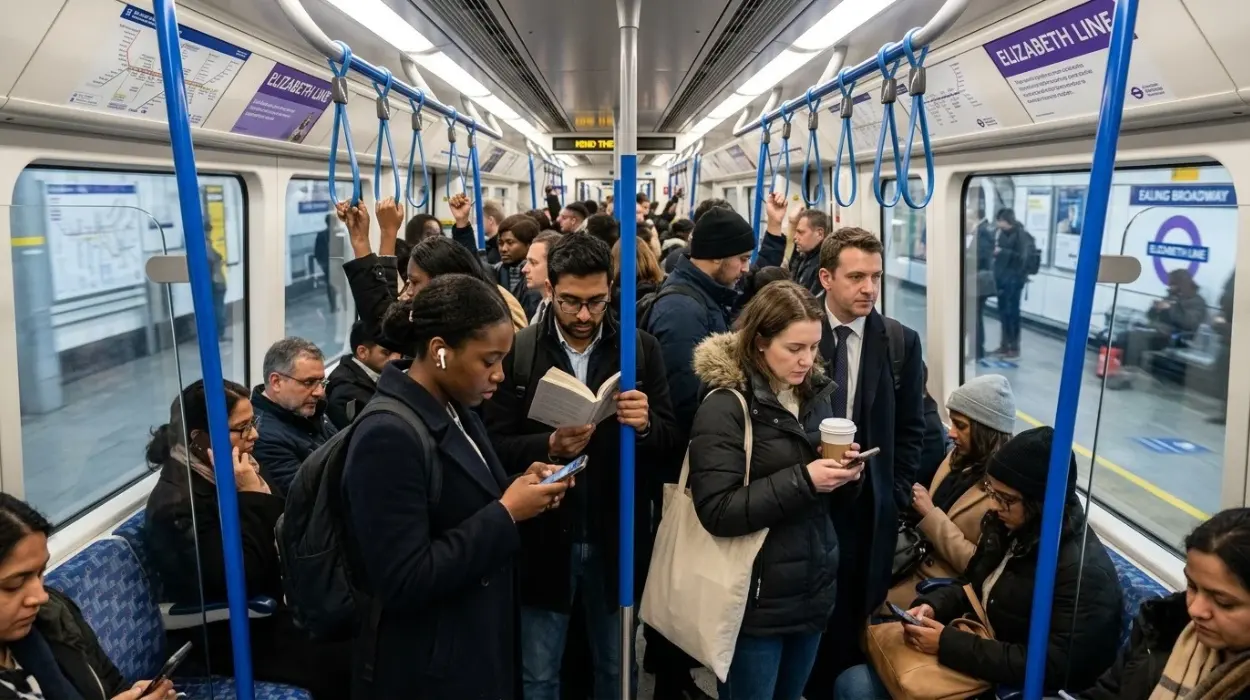
Morning travel in Ealing can feel very different depending on the time, station and train service you use. Ealing is well connected to central London and surrounding areas through several rail and Underground options, making its stations important for commuters, students, residents and visitors.
Ealing Broadway is particularly significant because it connects passengers with the Central line, District line and Elizabeth line, alongside National Rail services. This means that a large number of people can pass through the station during the weekday morning peak.
So, how crowded are Ealing trains during morning rush hours? The short answer is that they can become very busy, particularly around the main commuting period, but the experience varies considerably by time and route. TfL’s current station information indicates that Ealing Broadway is likely to be very busy during its identified busy periods, while TfL generally describes weekday travel between 09:00 and 16:30 as quieter than the morning peak.
When Is the Morning Rush Hour in Ealing?
For most commuters, the morning rush begins well before 08:00 and continues into the later morning. However, passenger numbers are not evenly distributed throughout this period.
TfL’s network-wide analysis shows that 08:00 to 08:30 can be particularly busy. Compared with this period, journeys between 07:30 and 08:00 have had 20% fewer customers, while 08:30 to 09:00 has had 14% fewer customers.
This does not mean every Ealing train will follow exactly the same pattern. Crowding depends on the particular line, destination, service frequency, disruptions and passenger demand on the day. Nevertheless, it gives travellers a useful indication of why leaving Ealing slightly earlier or later can make a noticeable difference.
For someone visiting Ealing, travelling outside the central morning peak can therefore make the station environment easier to navigate, particularly if they have luggage, children or accessibility requirements.
How Busy Is Ealing Broadway Station in the Morning?
Ealing Broadway is one of the key transport hubs in the area. Its combination of Underground, Elizabeth line and National Rail services means passengers have several ways to travel towards London and other destinations.
During busy periods, crowding is not limited to the trains themselves. The ticket hall, barriers, escalators, stairs, platforms and connecting areas can all experience increased pedestrian movement.
This distinction matters. A train does not necessarily need to be completely full for the overall journey to feel crowded. You may encounter queues at the barriers, people waiting near platform entrances or passengers moving between services.
Morning commuters are usually more familiar with this rhythm. They tend to arrive knowing which entrance to use, where to stand and which carriage normally works best for their journey. Visitors may take longer because they are checking signs, studying maps or deciding which service to board.
Which Ealing Train Services Get Busy?
There is no single “Ealing train” experience because several services operate from the area’s main transport stations.
At Ealing Broadway, the Central line provides a direct Underground route towards central and east London. The District line also serves the station, while the Elizabeth line provides rapid connections through central London and onwards towards destinations such as Heathrow and east London. National Rail services provide another option for certain journeys.
The Elizabeth line is particularly useful for passengers travelling across London. Current TfL departure information shows frequent Elizabeth line services from Ealing Broadway during the morning, including trains towards Abbey Wood and Shenfield, as well as services towards Heathrow and Reading in the opposite direction.
Because several services operate from the same transport hub, passenger demand can build quickly around popular departure times.
Does the Elizabeth Line Get Crowded from Ealing?
The Elizabeth line can be busy during weekday commuting periods, especially for passengers travelling towards central London. Its extensive east-west route makes Ealing Broadway an important interchange and starting point for people heading towards places such as Paddington, the West End and the City.
However, frequent services can also help distribute passengers across multiple trains. Current TfL departure information shows several Elizabeth line services within relatively short intervals during the morning.
For a passenger, this means there may be little benefit in rushing towards one particular train if another service follows shortly afterwards. When practical, waiting for the next train can sometimes provide a more comfortable journey.
Is the Central Line Busy During Ealing’s Morning Rush?
The Central line is an important commuting route from Ealing Broadway towards central London. Morning passengers can include office workers, students and people travelling for appointments or onward connections.
Crowding tends to become more noticeable as trains approach central London because passengers board and alight at different stations. Someone boarding at Ealing Broadway may therefore find the train comfortable initially but experience increased crowding later in the journey.
The exact experience also changes from day to day. Engineering work, service disruption, major events and weather can alter normal passenger patterns. Checking the latest TfL information before travelling is therefore more useful than relying entirely on an average expectation.
What About Ealing Common and Other Nearby Stations?
Ealing Broadway is not the only option for people living or staying in Ealing.
Ealing Common is another Underground station serving the area. It provides access to the District and Piccadilly lines and can be useful depending on the passenger’s starting point and destination. TfL also provides station-specific information about busy and quieter travel periods.
For residents, choosing a nearby alternative station can sometimes change the experience considerably. A traveller who lives closer to Ealing Common may find it more practical than travelling across Ealing to reach Ealing Broadway.
The best station therefore depends on the complete journey rather than simply which station is geographically closest to the town centre.
What Does a Crowded Ealing Train Actually Feel Like?
Crowding can mean different things to different passengers.
A moderately busy train may have most seats occupied while still providing enough standing space to move comfortably. During a heavier peak, passengers may need to stand throughout the journey, with limited personal space and more difficulty moving towards the doors.
The station itself can also feel crowded before passengers board. People may be walking quickly towards platforms, checking departure boards, waiting at barriers or changing between services.
For tourists, this can be more noticeable because London public transport has a faster pace during commuter periods. Keeping luggage compact, standing to one side on escalators and allowing passengers to leave the train before boarding can make the process smoother.
What Is the Quietest Time to Travel from Ealing?
If you have flexibility, travelling outside the main weekday peak is generally easier.
TfL states that Tube and Rail journeys are generally quieter between 09:00 and 16:30 and after 18:45 on weekdays. The organisation also notes that morning peak travel tends to be quieter on Mondays and Fridays than on Tuesdays, Wednesdays and Thursdays. Its analysis found 14% fewer customers during Monday morning peak travel and 28% fewer on Friday morning peak travel compared with the reference period used in its analysis.
These figures describe wider TfL travel patterns rather than guaranteeing a particular level of crowding on an individual Ealing train.
For tourists, a departure after 09:00 can therefore be worth considering if the itinerary allows it. For commuters, even shifting a journey by 30 minutes may make a difference.
How Can You Avoid the Worst Morning Crowds?
The simplest strategy is to avoid the busiest part of the peak when your schedule permits.
TfL specifically recommends checking quieter travel times and using its journey-planning tools before travelling. It also notes that changing travel time by just 30 minutes can result in a quieter journey.
Travellers should also check the live status of their chosen line. A disruption can change normal crowding very quickly because passengers may switch routes or wait for replacement services.
If you are travelling from Ealing Broadway with luggage, arriving a little earlier can also reduce pressure. It gives you time to find the correct platform rather than making decisions while large numbers of commuters are moving through the station.
Is Ealing Train Travel Suitable for Tourists?
Yes. Ealing’s transport connections make it practical for visitors who want to explore London while staying in or visiting the area.
The main consideration is timing. A tourist carrying luggage at 08:15 will experience the transport network differently from someone travelling at 10:30. The latter is generally outside the busiest morning period identified by TfL.
Visitors should also remember that Ealing is a residential and employment area, not simply a tourist destination. During weekday mornings, many passengers are travelling for work, education and regular appointments.
Understanding this pattern makes the environment easier to anticipate. The trains may be busy, but the crowding is part of a predictable daily commuting cycle rather than a permanent condition.
What Should Commuters and Visitors Expect?
The most realistic expectation is that Ealing’s morning trains can be busy rather than uniformly overcrowded.
The busiest experience is most likely around the core weekday commuting period, especially around 08:00 to 08:30. TfL’s broader data supports this pattern, while its Ealing Broadway station information currently identifies periods when the station is likely to be very busy.
The Elizabeth line, Central line, District line and National Rail services give passengers several transport options, which can be useful when one service is disrupted or unusually busy.
For residents, choosing the right departure time can be the biggest factor. For tourists, travelling after the morning peak can make navigating the station and boarding with luggage considerably easier.
Ultimately, Ealing’s morning rush is manageable when travellers understand when demand is highest, check live information and allow enough time for the journey.
Frequently Asked Questions
What time is rush hour in Ealing?
Ealing’s weekday morning rush generally falls during the period when people travel to work and school, with particularly busy conditions around 08:00 to 08:30. TfL data indicates that this period has higher demand than nearby half-hour periods.
Is Ealing Broadway station busy in the morning?
Yes, Ealing Broadway can become very busy during peak periods. TfL provides station-specific crowding information and currently identifies periods when the station is likely to be very busy.
Is the Elizabeth line from Ealing Broadway crowded?
The Elizabeth line can become busy during weekday commuting periods, particularly towards central London. However, frequent services can distribute passengers across multiple departures, and the exact level of crowding varies by time and day.
What is the quietest time to travel from Ealing?
TfL generally identifies 09:00 to 16:30 and after 18:45 as quieter weekday Tube and Rail travel periods.
Is Ealing Broadway or Ealing Common better for avoiding crowds?
Neither station can be described as permanently quieter because crowding changes according to time, route and passenger demand. Ealing Common offers District and Piccadilly line access, while Ealing Broadway has Central, District and Elizabeth line services.
Should tourists avoid Ealing trains during rush hour?
Tourists do not necessarily need to avoid them, but travelling outside the main morning peak can provide a more comfortable experience, particularly when carrying luggage or travelling with children.
Does changing my train time by 30 minutes really help?
It can. TfL’s analysis found fewer customers travelling between 07:30 and 08:00 and between 08:30 and 09:00 compared with 08:00 to 08:30. Individual Ealing journeys can still vary according to the service and day.